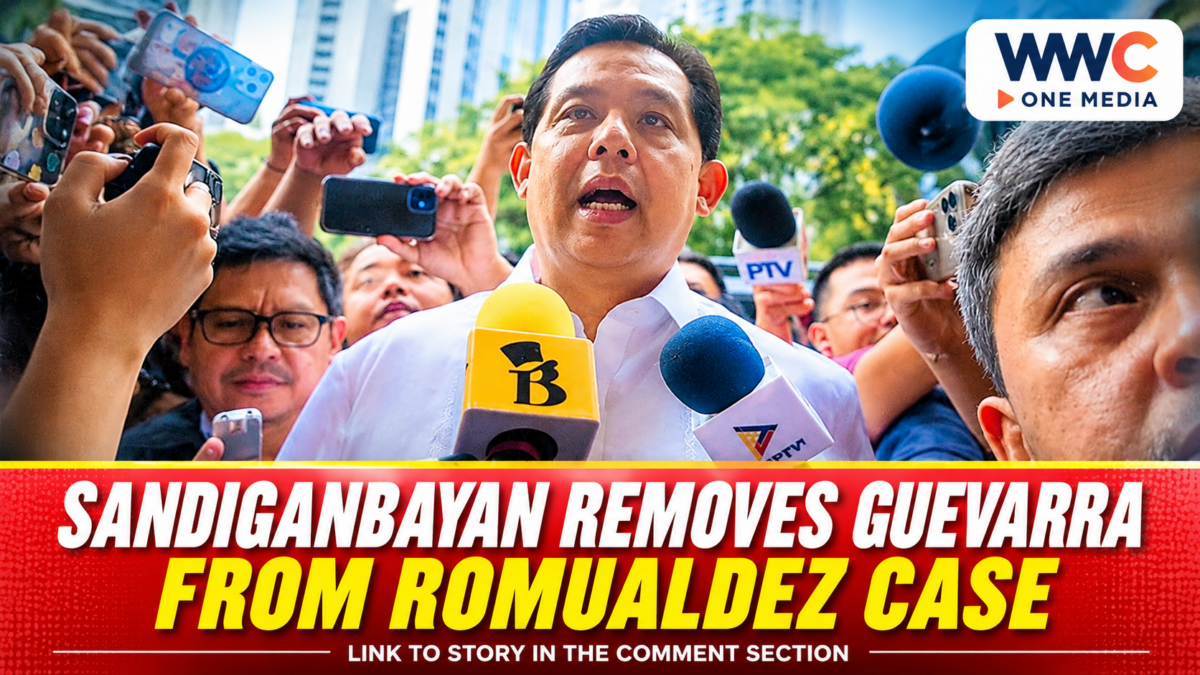
MANILA, Philippines — November 29, 2026 — The Sandiganbayan Third Division has reportedly approved the prosecution’s request to remove Felicito Cristobal Guevarra from the list of accused in the plunder case against former House Speaker Ferdinand Martin Gomez Romualdez. The reported ruling also allows prosecutors to present Guevarra as a witness during the proceedings on Romualdez’s petition for bail.
The development changes the prosecution’s proposed witness lineup and raises an important legal distinction: removing an accused from a criminal information before arraignment is not automatically the same as formally discharging that person as a state witness. The difference matters because the procedures have separate requirements and legal consequences.
The ruling concerns Criminal Case No. E-SB-26-CRM-0074, a plunder case under Republic Act No. 7080 before the Sandiganbayan Third Division. The court’s September 25, 2026 order independently confirms the case number, the charge and the parties’ scheduled proceedings.
What the reported Sandiganbayan ruling changes
The reported November resolution allows prosecutors to amend the information to exclude Guevarra from the list of accused. It also permits the prosecution to call him during the bail proceedings involving Romualdez, replacing former Department of Public Works and Highways secretary Manuel Bonoan in the proposed witness lineup.
An information is the formal document that sets out the criminal charge and identifies the accused. Changing that document can affect who remains formally charged, but the legal basis and timing of the amendment are important.
The reported ruling rests on the prosecution’s use of the pre-plea exclusion procedure under Section 14, Rule 110 of the Rules of Criminal Procedure. That provision permits an amendment to an information to exclude an accused before the person enters a plea, subject to a prosecutor’s motion, notice to the offended party and the court’s approval.
The distinction is significant because the procedure does not, by itself, establish that the person has received the separate legal status of a state witness.
The court’s September 25 order identifies Guevarra among the accused at that earlier stage of the proceedings. The actual November resolution is still needed to independently confirm the amended information and the court’s complete explanation.
Rule 110 and Rule 119 are not interchangeable
The legal question at the centre of the development is whether the prosecution is using the correct procedure to remove an accused from the information.
Under Section 14, Rule 110, an information may be amended before an accused enters a plea to exclude that person, provided the required motion, notice and leave of court are obtained. The rule also requires the court to state its reasons for allowing the amendment.
Section 17, Rule 119 deals with a different situation: the discharge of one or more accused to become witnesses for the prosecution. That process has additional requirements, including that the testimony be absolutely necessary, that there be other direct evidence to corroborate it, that the proposed witness does not appear to be the most guilty, and that the witness has not been convicted of an offence involving moral turpitude.
These are not merely different labels for the same action.
A pre-plea exclusion changes the information before the accused enters a plea. A Rule 119 discharge is a specific trial procedure with its own statutory conditions and consequences.
For readers following the case, the terminology matters. Describing Guevarra as a formally discharged state witness without confirming that the court applied Rule 119 would risk overstating the legal effect of the ruling.
The bail hearing is separate from the main plunder trial
The case also requires a distinction between the bail proceedings and the main criminal trial.
In its September 25 order, the Sandiganbayan Third Division set separate schedules for the bail hearings and the presentation of evidence in the main case. The order stated that the prosecution intended to present 23 witnesses for the bail proceedings.
A bail hearing addresses whether the prosecution’s evidence of guilt is strong enough to justify continued detention without bail under the applicable legal standard. It is not a final judgment on whether an accused is guilty.
That distinction is important when a new witness is introduced. Testimony presented during a bail hearing may affect the court’s assessment of the evidence for that particular proceeding, but it does not automatically settle the entire criminal case.
WWC previously examined this procedural distinction in its report on the Romualdez flood control case and the prosecution’s evidence during bail proceedings.
Why Guevarra’s testimony could matter
The prosecution’s reported decision to present Guevarra reflects the potential importance of testimony from someone previously included in the same criminal information.
In a case involving alleged financial transactions, a witness with direct knowledge of business records, payments or the movement of funds may be relevant to explaining how particular transactions occurred. But the value of that testimony depends on what the witness actually says, the records supporting it and the opportunity of the defence to challenge it.
The court must evaluate evidence through the proper proceedings. A witness’s willingness to cooperate does not establish that every allegation against another accused is true.
The same caution applies to any claim about the alleged movement of money. The prosecution must still present evidence, and the defence retains the right to question the witness and contest the interpretation of records.
The broader proceedings have already involved questions about the handling of evidence and the difference between the bail petition and the main trial. WWC has also covered the court’s detention order involving Romualdez, as well as questions about detention oversight at the Quezon City Jail.
What the ruling does not establish
The reported exclusion should not be interpreted as a finding that Romualdez is guilty or that the prosecution has already proved the allegations in the plunder case.
Nor does removing one accused from the information automatically dismiss the charges against the remaining accused. The reported ruling concerns the proposed amendment involving Guevarra; the allegations against the other accused remain matters for the court to resolve through the proceedings.
It is also important not to confuse permission to testify during a bail hearing with a final grant of immunity. Any protection or immunity arrangement must be assessed under its own legal basis and the relevant official documents.
The prosecution’s allegations remain allegations unless established through the judicial process. Romualdez and the other accused retain their rights under the Constitution and the Rules of Court.
What happens next
The next important steps are the formal implementation of the amended information, the presentation and examination of the proposed witness, and the continuation of the bail proceedings.
The actual November resolution and any amended information should be reviewed to determine the exact scope of the court’s approval. The prosecution’s evidence must then be tested through the applicable court process, including questioning by the defence.
The central issue is not simply whether a co-accused has been removed from the charge sheet. It is how the prosecution intends to use the testimony, what records support it and whether the evidence meets the legal standard applicable to the proceedings.
The case remains pending. A procedural ruling on the composition of the information or the presentation of a witness is not a final determination of criminal liability.
Frequently asked questions
1. Who is Felicito Cristobal Guevarra in the Romualdez case?
Guevarra was identified as an accused in Criminal Case No. E-SB-26-CRM-0074 in the Sandiganbayan’s September 25, 2026 order. The reported November ruling concerns his removal from the information.
2. Why can a court allow an accused to be removed from a criminal information?
Section 14, Rule 110 permits a pre-plea amendment excluding an accused, subject to a prosecutor’s motion, notice to the offended party and leave of court.
3. Is exclusion under Rule 110 the same as becoming a state witness?
No. Rule 110 concerns amendment of the information before plea. Rule 119, Section 17 provides a separate procedure for discharging an accused to become a prosecution witness.
4. Does Guevarra’s reported exclusion mean Romualdez has been found guilty?
No. The reported ruling is procedural. It does not constitute a final judgment on the plunder charge.
5. Does testimony during a bail hearing decide the main criminal case?
No. Bail proceedings and the main trial serve different purposes. Evidence presented during a bail hearing does not automatically resolve the question of guilt or innocence.