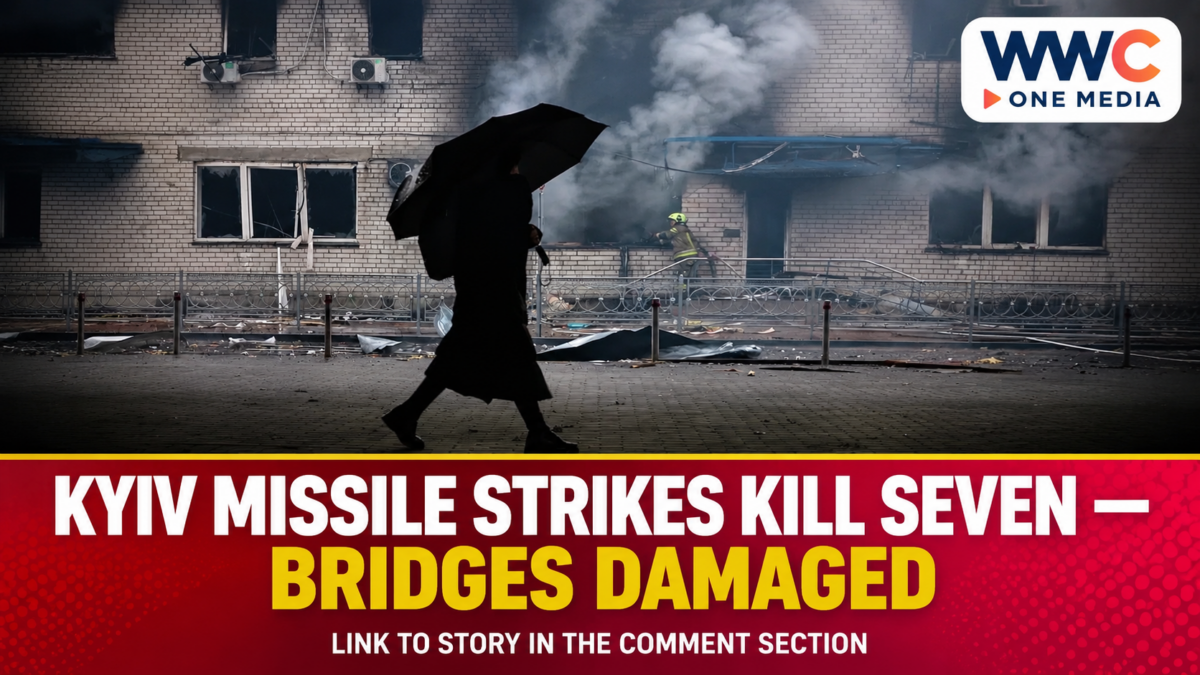
Russian missile strikes on Kyiv on November 20 killed seven people, injured 17 others and damaged three bridges across the Ukrainian capital, disrupting transportation and essential public services.
The attacks also damaged water and electricity infrastructure, leaving residents facing power interruptions, reduced water pressure and difficulties travelling across the city.
Kyiv Mayor Vitali Klitschko confirmed the revised casualty figures following an initial assessment that recorded three fatalities. Sixteen injured people were receiving hospital treatment at the time of his updated announcement.
The destruction presents another challenge for Ukraine as authorities work to maintain essential services ahead of winter while the war with Russia continues.
Kyiv missile strikes disrupt critical transportation infrastructure
Three bridges connecting communities across Kyiv’s Dnipro River sustained damage during the November 20 attack.
Municipal authorities introduced traffic restrictions while specialists assessed the condition of the affected structures.
Some transport services were reorganised, while residents were encouraged to avoid unnecessary journeys using private vehicles. Businesses and institutions were also asked to introduce remote working arrangements wherever possible.
City authorities subsequently restored traffic at one affected crossing, although restrictions remained elsewhere.
The disruption illustrates how damage to major transport infrastructure can affect an entire urban economy, extending beyond the immediate areas affected by military attacks.
For residents, interruptions can complicate access to employment, healthcare, education and essential goods.
The developments come amid continuing attacks on transport infrastructure connected to the conflict, including the previously documented damage to the Kerch Bridge.
Seven confirmed dead as authorities revise casualty figures
Kyiv’s initial emergency assessment recorded three fatalities, with preliminary information indicating that the victims included employees of the municipal water utility.
However, subsequent assessments established a higher death toll.
Klitschko later confirmed seven fatalities and 17 injured people following the attack.
Emergency medical personnel provided treatment to affected residents, while injured individuals requiring further medical attention were transferred to hospitals.
The revised figures demonstrate the importance of distinguishing preliminary emergency reports from subsequent official assessments.
The full human consequences of an infrastructure attack may become clearer only after emergency teams complete their initial response and authorities consolidate information from hospitals and affected communities.
Electricity and water disruptions deepen concerns ahead of winter
The damage extended beyond transportation infrastructure.
Municipal water facilities sustained damage, resulting in reduced water pressure in several parts of Kyiv and possible temporary interruptions to household supplies.
Electricity infrastructure was also affected, prompting emergency power interruptions in parts of the capital.
Utility specialists began working to restore services and stabilise affected networks.
Maintaining electricity and water supplies becomes particularly important during colder months, when households and public institutions depend on functioning infrastructure to support basic daily needs.
Electricity interruptions can also complicate the operation of water pumps, heating equipment and communications systems.
The challenge for municipal authorities is not simply repairing individual facilities, but maintaining the reliability of interconnected public services while the conflict continues.
International reconstruction and humanitarian assistance remain relevant to these efforts, including developments surrounding Taiwan’s financial assistance for Ukraine.
Ukraine confronts a wider infrastructure crisis
The November 20 attack followed earlier warnings from Ukrainian President Volodymyr Zelenskyy about the vulnerability of the country’s transportation and electricity networks.
During a government-level meeting on November 9, Zelenskyy discussed the consequences of Russian operations against Ukrainian bridges and energy infrastructure.
The meeting included national government representatives, regional officials, military leaders and Kyiv’s mayor.
The Ukrainian president maintained that Russia’s infrastructure campaign was intended to disrupt connections between communities and make daily life more difficult.
He also emphasised the importance of implementing existing resilience plans and coordinating additional government assistance for affected regions.
The November 20 damage highlights the continuing importance of those preparations.
From an infrastructure-management perspective, restoring services after an attack is only one part of recovery. Authorities must also consider whether repaired facilities can continue operating reliably amid further disruptions.
Why the Ukraine infrastructure crisis matters across Asia-Pacific
Although the destruction occurred in Eastern Europe, the continuing Russia-Ukraine war remains relevant to international discussions involving energy security, humanitarian assistance and economic stability.
For APEC economies, the broader geopolitical environment warrants attention because international trade, commodity markets and transportation networks can be affected by prolonged conflicts.
Further instability could influence commercial risk assessments, investment decisions and international reconstruction priorities.
However, the damage to Kyiv’s infrastructure does not establish that specific fuel prices, shipping costs or food prices across Asia-Pacific will increase.
Such outcomes would depend on wider developments in international markets and the conflict itself.
Diplomatic efforts remain another important consideration, particularly amid continuing disagreements over Europe’s role in Ukraine peace negotiations.
What happens next?
Kyiv’s immediate priorities include completing structural assessments, restoring utility services and maintaining transportation access for residents.
The municipal government must also continue coordinating emergency assistance and medical support for affected communities.
The available official updates do not establish a comprehensive timetable for completing all repairs or the total financial cost of the damage.
For Ukraine’s capital, the central challenge remains maintaining essential public services while protecting residents from the consequences of continuing hostilities.
Recovery will depend not only on repairing damaged infrastructure but also on the ability of public institutions to sustain essential services amid uncertainty.