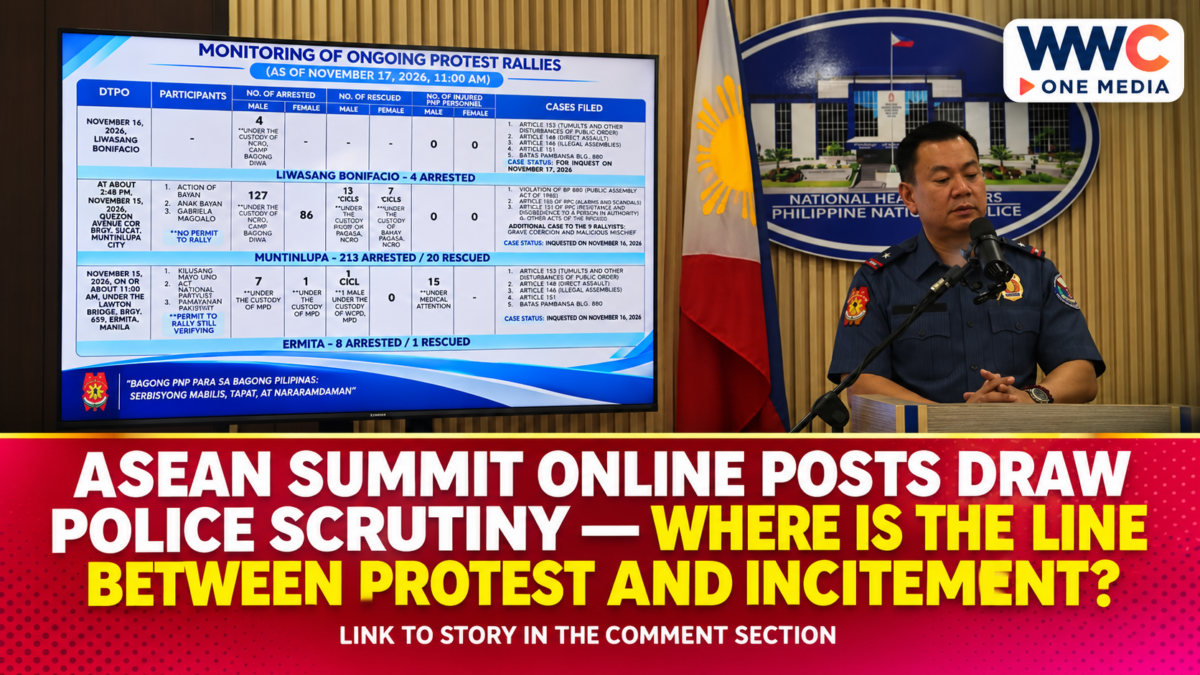
MANILA, Philippines — Nov. 27, 2026 — Philippine police are examining online misinformation associated with the recently concluded 49th Association of Southeast Asian Nations (ASEAN) Summit, bringing digital accountability, public security and freedom of expression into sharper focus.
The National Capital Region Police Office (NCRPO) has directed its cybercrime personnel to investigate the origins and authenticity of questionable social media messages involving summit security operations and determine whether existing laws have been violated.
The development brings attention to a challenge confronting governments across the Asia-Pacific: protecting major international gatherings against legitimate security threats without undermining lawful political expression.
ASEAN Summit Online Posts Face Cybercrime Scrutiny
In a statement released on Nov. 19, the NCRPO warned against the deliberate circulation of misleading information concerning police personnel and security arrangements.
The warning followed the circulation of purported text messages containing unverified claims about police officers and their handling of demonstrators.
Police Brigadier General Christopher N. Abrahano directed the Regional Anti-Cybercrime Unit to coordinate with the Philippine National Police Anti-Cybercrime Group in establishing the authenticity and origins of the messages.
The police directive concerns the verification of digital material and the determination of possible legal violations.
It does not, by itself, establish that every person associated with a questionable social media post has committed a criminal offence.
The investigation follows extensive ASEAN Summit security preparations across Metro Manila, which placed significant responsibilities on law enforcement authorities.
Peaceful Protest Remains Constitutionally Protected
The legal distinction between peaceful activism and unlawful conduct is particularly important when authorities examine online discussions surrounding political demonstrations.
Article III, Section 4 of the 1987 Philippine Constitution protects freedom of speech, expression, the press and peaceful assembly.
These protections are relevant to public criticism of government policies, political leaders and international agreements.
An invitation to attend a peaceful demonstration should not automatically be equated with encouragement to commit violence.
Whether a particular online statement constitutes an offence depends on its content, context, applicable law and supporting evidence.
The Philippine Constitution also guarantees due process and the presumption of innocence in criminal prosecutions.
These safeguards remain relevant even when investigations involve matters of national security or major international events.
Summit Security and Police Accountability
The examination of online activity comes amid broader questions concerning the management of demonstrations during the ASEAN Summit.
WWC ONE MEDIA previously examined police accountability and ASEAN protest arrests, including the legal protections available to demonstrators.
The Public Assembly Act of 1985, formally known as Batas Pambansa Blg. 880, establishes procedures for public demonstrations and the responsibilities of law enforcement personnel.
The legislation requires restraint in the policing of public assemblies and establishes conditions under which authorities may intervene.
These rules help distinguish legitimate security responsibilities from interference with constitutionally protected activity.
The same principle should guide the assessment of digital communications associated with demonstrations: allegations must be evaluated individually rather than through broad assumptions about political organisations or their supporters.
Police Must Distinguish Misinformation From Lawful Criticism
The NCRPO has maintained that police enforcement should be impartial regardless of an individual’s political beliefs, religious affiliation or organisational membership.
Its cybercrime directive seeks to determine the authenticity of disputed messages and whether their circulation involved violations of existing laws.
For investigators, identifying the original author of a message is only part of establishing the facts.
The circumstances surrounding its publication, the accuracy of its contents and the conduct of the individuals involved are also relevant to a fair assessment.
A social media investigation must distinguish between verified evidence, disputed information and allegations that have not been established.
The public, meanwhile, should exercise caution before distributing unverified security advisories or inflammatory claims.
Why Digital Accountability Matters Across the Asia-Pacific
International summits bring together competing political, economic and diplomatic interests.
Public debate surrounding these gatherings may include disagreement over trade arrangements, foreign policy, international cooperation and government decisions.
Digital platforms provide opportunities for citizens to participate in these discussions, while also creating challenges when inaccurate or deliberately misleading information circulates.
For ASEAN and Asia-Pacific economies, the policy challenge is maintaining reliable public communication while preserving legitimate debate.
Security measures that are transparent, proportionate and grounded in law can help strengthen public confidence without treating political disagreement itself as a security threat.
WWC ONE MEDIA’s post-summit security assessment also examines the importance of evaluating public safety operations against documented outcomes and legal responsibilities.
What Happens Next?
Further clarity would come from official findings identifying which online messages were authenticated, what specific legal provisions may apply and whether sufficient evidence exists to pursue complaints.
Any subsequent criminal proceedings must observe constitutional safeguards, including due process and the presumption of innocence.
The release of verified findings would also help distinguish actual security threats from lawful public criticism and unsubstantiated allegations.
The central issue is whether authorities can address potentially harmful online conduct through evidence-based enforcement while maintaining the public’s right to peaceful political participation.