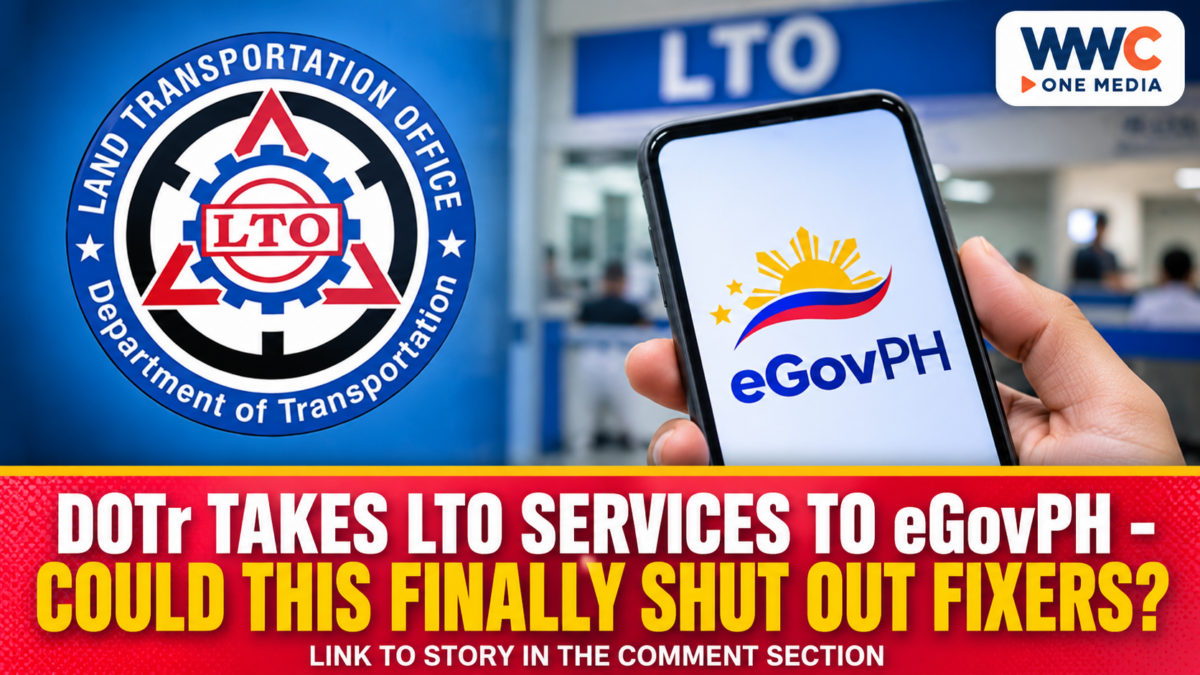
MANILA, Philippines — November 26, 2026 — The Department of Transportation is pushing a wider digital overhaul of its frontline services, with Transportation Secretary Vince Dizon directing agencies to simplify transactions and reduce opportunities for corruption. One of the most significant proposed changes is the integration of Land Transportation Office (LTO) licensing and vehicle-registration services into the government’s eGovPH application.
The plan could change how motorists deal with government offices, particularly when applying for or renewing licences and registering vehicles. It is also intended to reduce the role of fixers by making more transactions accessible through digital channels.
But the bigger question is whether moving services online will be enough to eliminate the delays, fragmented procedures and administrative weaknesses that have frustrated transport-service users.
The immediate challenge is not simply launching another digital platform. It is making sure the systems behind it work consistently.
LTO services are next in the eGovPH integration push
Dizon outlined the planned integration during a November 25 press conference at the Department of Transportation office in San Juan City, where new officials of several transport agencies were introduced.
He said LTO licensing and registration services would be integrated into the eGovPH application to eliminate fixers.
The announcement forms part of a wider instruction to simplify government transactions, review documentary requirements and reduce the need for commuters, motorists and seafarers to make repeated trips to government offices.
The proposed integration is particularly relevant to motorists who regularly deal with driver’s licence applications, renewals and vehicle registration. These transactions involve personal information, vehicle records, documentary requirements and payment processes that must be properly coordinated across government systems.
However, the announcement does not establish that all LTO services are already available through eGovPH. The department has yet to provide a complete public implementation schedule, a list of covered transactions or detailed instructions for motorists.
For now, the integration should be treated as a planned reform rather than a fully operational replacement for existing LTO channels.
Dizon also wants a faster shift away from fragmented systems
The digitalisation push comes as the LTO continues its transition towards the Land Transportation Management System (LTMS), its online platform for land-transport transactions.
The LTO’s existing portal already provides online access to services and learning resources, including driver’s licence renewal courses, the Comprehensive Driver’s Education online validation examination and motor-vehicle registration information.
WWC previously examined the LTO’s move to shut down its old STRADCOM system and shift covered transactions to LTMS. That transition illustrates why digitalisation involves more than creating an online application: agencies must also consolidate records, maintain system reliability and ensure that offices can process transactions through the new platform.
Integrating LTO services into eGovPH could make government transactions more convenient by giving users another central access point. But the effectiveness of that arrangement will depend on whether the underlying LTO systems can exchange information accurately and process applications without unnecessary manual intervention.
A digital front end cannot solve every problem if the back-office procedures remain fragmented.
New transport officials face pressure to deliver reforms
The announcement came alongside a leadership transition involving the LTO, the Maritime Industry Authority (MARINA) and the Philippine National Railways (PNR).
Markus Lacanilao, formerly LTO chief, was appointed undersecretary for maritime affairs and officer-in-charge administrator of MARINA. Noreen San Luis was introduced as the new LTO chief, while Jorjette Aquino was named acting general manager of PNR.
Dizon directed Lacanilao to modernise MARINA, citing difficulties faced by Filipino seafarers in obtaining basic documents such as seafarer books and identification cards. He also called for stricter regulation of vessels that do not comply with safety requirements.
For PNR, Aquino was instructed to accelerate major railway projects, including the Valenzuela-to-Malolos section of the North-South Commuter Railway, which has a target of becoming usable by the first quarter of 2028.
The new appointments therefore cover more than digital services. They place responsibility for land transport, maritime administration and railway delivery under officials expected to accelerate reforms during the remaining 18 months of the administration.
A barrier-less toll system is also targeted for December
Dizon also identified a pilot for a barrier-less toll collection system on expressways, targeted for December 2026.
The proposed system is intended to reduce the need for vehicles to stop at conventional toll barriers. If implemented effectively, it could help improve traffic flow, particularly during periods of heavy travel.
The department’s announcement does not yet provide a complete list of participating expressways, the technology to be used, payment arrangements or the timetable for wider implementation.
Those details will matter. Motorists need clear information about how vehicles will be identified, how toll charges will be collected, how disputed transactions will be handled and what happens when a system fails.
A technology upgrade can reduce friction, but only if it is reliable and supported by transparent procedures.
Digitalisation has a legal foundation — but implementation matters
The Philippines already has a legal framework supporting more efficient government transactions.
Republic Act No. 11032, or the Ease of Doing Business and Efficient Government Service Delivery Act of 2018, promotes simplified government procedures, transparency and the prevention of graft and corruption. It also defines a fixer as an individual who facilitates the completion of government transactions for financial gain or another advantage.
The E-Governance Act, or Republic Act No. 12254, approved on September 5, 2025, provides a broader framework for integrating government systems and delivering citizen-centred online services. It also recognises the importance of data privacy, information security and resilience against technology disruptions.
These laws establish the policy direction. They do not, by themselves, guarantee that every government transaction will become digital or that fixers will disappear.
WWC has also examined Davao City’s move to develop its own digital-signature processing capacity, illustrating how digital government depends on institutional readiness as much as technology.
The same principle applies to transport agencies. Online applications need secure identity verification, accurate databases, clear processing rules and accessible support for people who cannot easily complete transactions digitally.
The corruption test will be whether transactions become traceable
Digitising government services can reduce opportunities for unofficial payments when applicants can submit documents, pay fees and monitor applications through authenticated channels.
It can also create an electronic record of when an application was submitted, who handled it and whether it was approved or rejected. Such records can make it easier to identify unexplained delays or irregular interventions.
But digital systems are not automatically corruption-proof. Weak cybersecurity, poor access controls, unreliable databases and opaque processing rules can create new risks.
The department will therefore need to show more than the number of services placed online. Useful measures would include processing times, transaction completion rates, system availability, complaint volumes and the number of applications that can be completed without an in-person visit.
WWC’s coverage of government transaction delays and the continuing challenge of implementing the 3-7-20 rule highlights why faster service delivery requires measurable results, not just new technology.
What happens next
The next major step is the DOTr’s implementation plan for integrating LTO licensing and registration services into eGovPH.
Motorists will need to know which transactions will be covered, when the services will become available, whether existing LTMS accounts will be linked and how payments, verification and complaints will be handled.
The December target for a barrier-less toll collection pilot will also require operational details before motorists can assess its practical impact.
For now, Dizon has set a clear direction: simplify transport transactions, reduce opportunities for fixers and make government services easier to access.
The real test will come when motorists and seafarers begin using the updated systems. If the reforms reduce repeat visits, shorten processing times and make transactions easier to track, digitalisation could become a meaningful change in how the transport sector serves the public.
If the technology is introduced without fixing the procedures behind it, however, the queues and frustrations could simply move from government counters to computer screens.
Frequently asked questions
1. What transport services will be integrated into eGovPH?
Dizon announced plans to integrate LTO licensing and vehicle-registration services. A complete list of covered transactions has not yet been publicly detailed.
2. Will the eGovPH integration eliminate LTO fixers?
The stated objective is to reduce opportunities for fixers by making services more accessible through digital channels. Whether it achieves that goal will depend on implementation and enforcement.
3. Is the LTO LTMS portal already available?
Yes. The LTO operates an online Land Transportation Management System portal. The proposed eGovPH integration is a separate development and should not be confused with confirmation that all LTO services have already moved into the government application.
4. Who is the new LTO chief?
Noreen San Luis was introduced as the new LTO chief during the November 25, 2026, DOTr press conference.
5. When will the barrier-less toll collection pilot begin?
Dizon identified December 2026 as the target for a pilot. The participating expressways and detailed operating arrangements have not yet been fully announced.