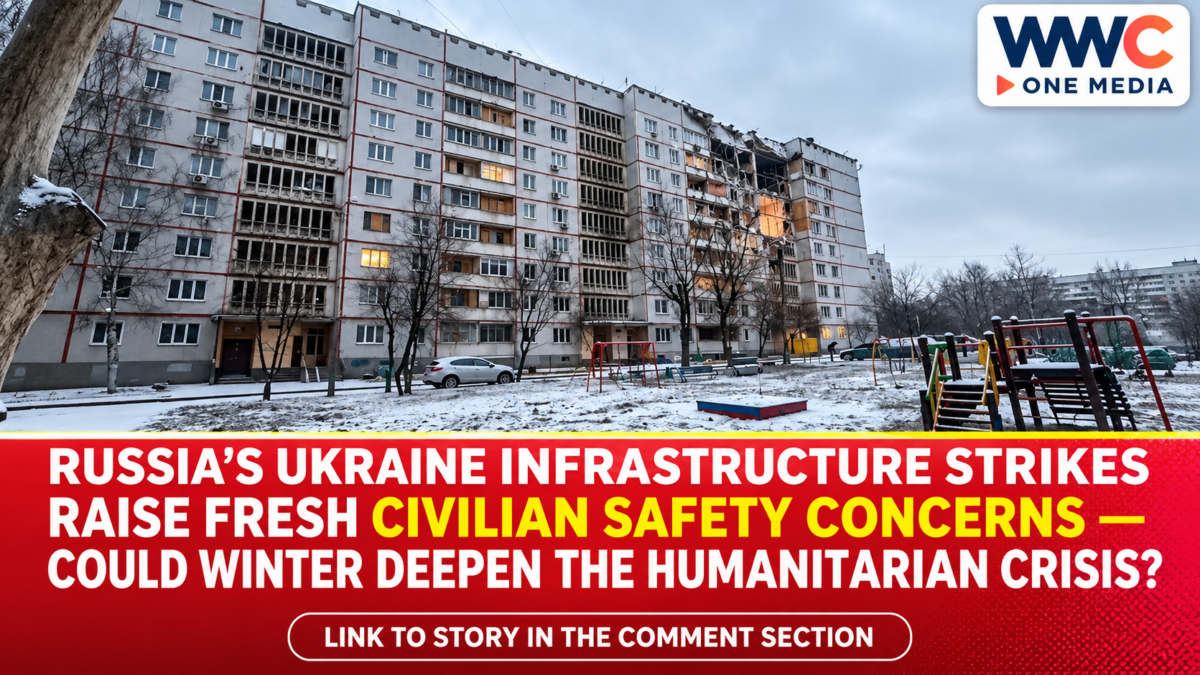
KYIV, Ukraine — Renewed Russian attacks on Ukrainian infrastructure have intensified concerns over civilian safety, commercial disruptions and the country’s ability to maintain essential services ahead of winter.
Municipal authorities in Bila Tserkva, Kyiv Oblast, confirmed on Nov. 25, 2026, that facilities belonging to logistics company Nova Post, home improvement retailer Epicentr and other commercial businesses sustained damage during an attack that killed one person.
The latest Ukraine infrastructure attacks come amid growing international pressure to protect electricity networks, heating systems and essential services from further disruption.
European Commission President Ursula von der Leyen has renewed calls for a winter ceasefire covering energy infrastructure, highlighting the increasingly urgent humanitarian consequences of the continuing Russia–Ukraine war.
Ukraine Infrastructure Attacks Damage Commercial Facilities
Authorities in Bila Tserkva confirmed that the latest attack affected both critical infrastructure and commercial establishments.
Emergency personnel responded to fires, while officials began assessing the extent of the damage.
The Kyiv regional administration confirmed that a man born in 1974 was killed in the attack on the district.
The incident places renewed attention on the vulnerability of businesses operating in areas affected by the continuing conflict.
Nova Post, also known as Nova Poshta, operates parcel delivery and logistics services that connect businesses and consumers.
Damage to commercial distribution facilities can potentially disrupt deliveries, inventory management and the movement of essential consumer goods.
The precise financial losses, shipment disruptions and expected recovery period associated with the latest incident have not been publicly established through the official records reviewed.
The developments follow earlier Russian attacks that disrupted Kyiv’s critical infrastructure, highlighting the continuing exposure of interconnected public and commercial services.
Nova Post Introduces Measures to Protect Customers and Employees
Nova Post had already implemented operational measures intended to protect customers and employees during security emergencies.
On Oct. 7, 2026, the company announced improvements to its mobile application and website, enabling customers to check whether service branches were temporarily closed because of security threats.
The company temporarily suspends operations at affected branches during air raid alerts or other potential dangers.
Customers can receive notifications concerning temporary closures and check the operational status of service locations before travelling.
These arrangements illustrate the extraordinary operating conditions facing Ukrainian businesses.
Companies must balance the continuity of commercial services with the safety of their employees and customers.
However, temporary operational safeguards do not eliminate the possibility of physical damage to buildings, equipment or commercial inventory.
The November attack’s full consequences for Nova Post’s local operations remain subject to further assessment.
Ukraine Faces Growing Humanitarian Pressure Ahead of Winter
The United Nations Human Rights Monitoring Mission in Ukraine documented a substantial increase in civilian harm during the first ten months of 2026.
Between January and October, the monitoring mission verified 2,957 civilian deaths and 17,218 injuries.
Combined civilian casualties were 63% higher than during the corresponding period in 2025.
The mission also documented an escalation in attacks against Ukrainian electricity and heating infrastructure during October.
Damage to essential systems resulted in electricity interruptions and, in some communities, disruptions to water services.
Ukrainian authorities implemented scheduled electricity outages across the country in response to the infrastructure damage.
These developments have intensified concerns surrounding Ukraine’s worsening winter energy crisis and emergency measures.
For households approaching another winter of war, reliable access to heating, electricity and water remains a fundamental humanitarian concern.
More Than 30% of Ukrainian Households Depend on District Heating
Ukraine enters the 2026–2027 winter heating season with substantial challenges affecting its energy infrastructure.
A pre-winter assessment published by the International Energy Agency on Nov. 4 identified a continuing risk of electricity shortages in the months ahead.
Ukraine has expanded distributed electricity generation, battery storage and strategic reserves of energy equipment to improve resilience.
Approximately 400 megawatts of distributed gas-fired electricity generation have been added since the previous winter.
Nevertheless, continued infrastructure damage and colder temperatures could place significant pressure on available electricity supplies.
More than 30% of Ukrainian households depend on district heating systems.
When those systems fail, households may turn to electric heating alternatives, increasing demand on an electricity network already experiencing operational difficulties.
The duration and severity of future shortages will depend on weather conditions, further infrastructure damage and the effectiveness of restoration efforts.
International Humanitarian Law and Civilian Infrastructure
The continuing attacks have also renewed attention to the legal protections governing civilian infrastructure during armed conflict.
International humanitarian law requires parties to distinguish between civilian objects and military objectives.
Civilian infrastructure is generally protected against direct attack unless it qualifies as a military objective under the applicable legal criteria.
Even when a facility qualifies as a military objective, the principles of proportionality and precautions remain applicable.
These requirements are intended to limit unnecessary civilian harm and prevent attacks that would cause excessive incidental damage relative to the anticipated military advantage.
The commercial status of a building does not, by itself, settle every legal question surrounding its protection.
Similarly, an allegation that commercial infrastructure supports military activities does not automatically establish that an attack satisfies international humanitarian law.
Determining the legal status of a particular incident requires reliable evidence concerning its circumstances.
No independent legal determination establishing the lawfulness or unlawfulness of the latest Nova Post incident has been obtained.
European Union Calls for a Winter Energy Ceasefire
On Nov. 25, European Commission President Ursula von der Leyen addressed the European Parliament and called for Russia to agree to a winter ceasefire covering energy infrastructure.
She also proposed a separate truce intended to ensure the safe movement of food exports through the Black Sea.
The proposals place humanitarian protection and international food security within the broader diplomatic discussion surrounding the conflict.
As examined in WWC ONE MEDIA’s coverage of Europe’s proposed Ukraine winter ceasefire, the initiative remains a diplomatic proposal rather than an established agreement.
For APEC economies, the proposed protection of international food shipments is particularly relevant to wider discussions about supply-chain stability, maritime trade and food security.
What Happens Next?
Ukrainian authorities must continue assessing infrastructure damage while restoring essential services and preparing for winter.
Businesses affected by the latest attacks face separate challenges involving operational recovery, employee safety and the continuity of commercial services.
Meanwhile, international diplomatic efforts remain focused on securing conditions that could reduce civilian harm and protect essential infrastructure.
The immediate question is whether diplomatic proposals can translate into practical protections before winter places additional pressure on vulnerable communities.
Frequently Asked Questions
Was Nova Post damaged in the latest Russian attack?
Yes. Municipal authorities in Bila Tserkva confirmed that Nova Post and other commercial facilities sustained damage on Nov. 25, 2026.
Was the Nova Post facility being used for military purposes?
Its alleged military use has not been independently established through the primary records reviewed.
Why are Ukraine’s infrastructure attacks particularly concerning during winter?
Damage to electricity and heating systems can interrupt essential services when households face increased energy requirements.
Has Russia agreed to a winter energy ceasefire?
The European Commission President’s Nov. 25 speech called for an agreement but did not announce Russian acceptance.
Does international humanitarian law protect civilian infrastructure?
Yes. Civilian objects are generally protected against direct attacks, subject to applicable legal criteria and the rules governing distinction, proportionality and precautions.