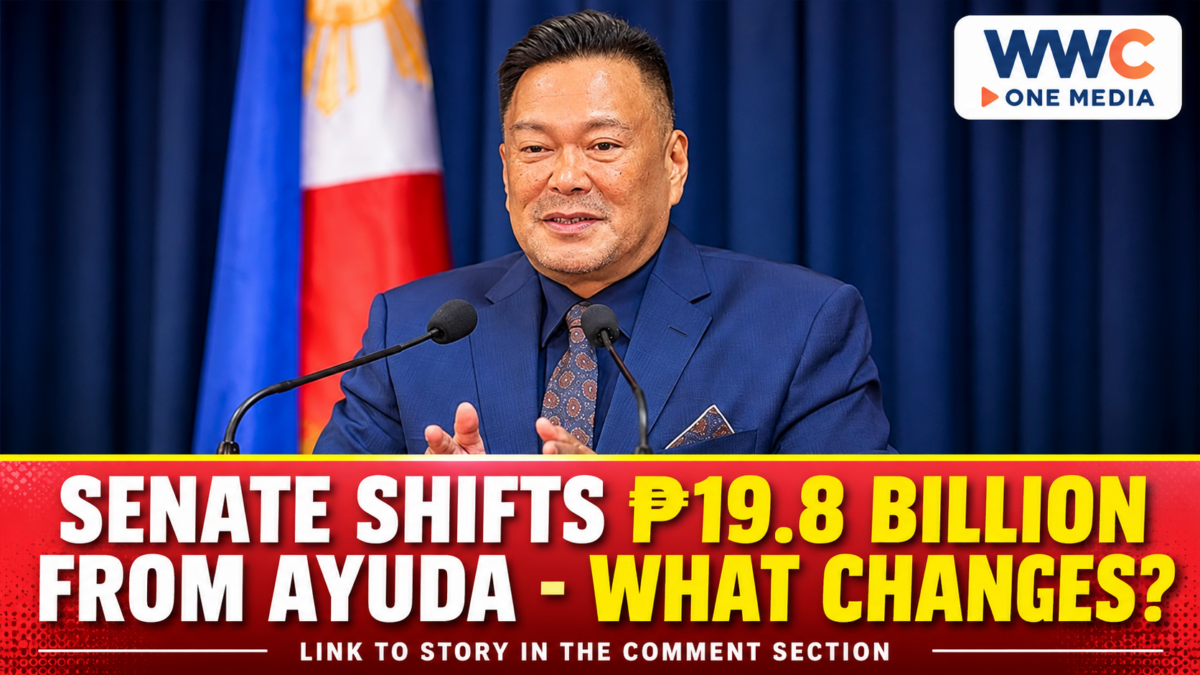
MANILA, Philippines — November 26, 2026 — Two government assistance programmes could receive less funding in 2027 as the Philippine Senate proposes moving ₱19.8 billion to the Philippine Health Insurance Corporation (PhilHealth), raising the state insurer’s proposed government subsidy to ₱94.2 billion.
The proposed realignment takes ₱9.9 billion each from the Department of Social Welfare and Development’s (DSWD) Assistance to Individuals in Crisis Situations (AICS) and the Medical Assistance Program (MAP).
Senate Finance Committee Chairperson JV Ejercito said the additional funding is intended to strengthen PhilHealth’s subsidy and support healthcare priorities, including zero-balance billing, preventive services and improvements to provincial hospitals.
The decision puts two different forms of public assistance at the centre of a difficult budget question: should government funding prioritise direct financial support for people facing immediate crises, or expand the health insurance system that is expected to protect Filipinos from medical expenses?
The proposed changes are part of the Senate’s version of the 2027 national budget. They are not yet a final reduction enacted into law.
Which ayuda programmes face the ₱19.8-billion reduction?
The first programme affected is AICS, a DSWD social protection service designed to provide immediate assistance to individuals and families experiencing emergencies or difficult circumstances.
Its support can cover hospital bills, medicines, laboratory procedures, dialysis, funeral expenses, transportation, food and other eligible needs. The amount granted depends on the applicant’s circumstances and the assessment and recommendation of a DSWD social worker.
For families dealing with serious illness, loss of income or the death of a household member, this assistance can help address expenses that cannot wait for a longer-term social protection intervention.
The proposed second reduction involves the Medical Assistance Program, which is associated with the Department of Health’s assistance for eligible patients who need help with medical expenses.
The two programmes are not interchangeable. AICS is administered by DSWD and covers several types of crisis assistance, while the DOH medical assistance programme focuses on healthcare-related needs.
That distinction matters because the proposed reduction affects more than one government service, even though both are commonly described as ayuda.
WWC ONE MEDIA previously examined how AICS assistance for public utility vehicle drivers and operators can provide targeted relief during fuel-price pressures. The programme’s reach is not limited to transport workers; its wider purpose is to help qualified individuals and families facing crises.
PhilHealth’s proposed subsidy rises to ₱94.2 billion
The other side of the realignment is the proposed increase in the government’s subsidy to PhilHealth.
The Senate’s proposed ₱94.2-billion allocation is intended to strengthen the National Health Insurance Program and support healthcare services for members, including people whose premiums are subsidised by the government.
Under the Universal Health Care Act, or Republic Act No. 11223, Filipinos are covered by the National Health Insurance Program. The law classifies members as direct or indirect contributors. Indirect contributors include people whose premiums are subsidised by the national government.
The law also provides that premium subsidies for indirect contributors must be included annually in the General Appropriations Act, with the funds released to PhilHealth.
This is why the government subsidy matters beyond the headline amount. It is part of the financing structure that supports health insurance coverage for people who may not be able to pay their own premiums.
The Senate’s proposed increase is also linked to its stated healthcare priorities, including zero-balance billing and improvements to provincial and local health facilities.
However, a larger subsidy does not automatically mean every patient will receive a cash payment or that every hospital expense will be covered.
WWC ONE MEDIA has previously explained how zero-balance billing and the no-co-payment policy work for eligible patients. Under the Universal Health Care Act, no co-payment should be charged for services provided in basic or ward accommodation, subject to the law and applicable rules. Patients should not confuse that protection with an unlimited guarantee that every service, upgrade or expense is free.
Why the AICS reduction matters to vulnerable households
The proposed reduction deserves close attention because AICS addresses financial emergencies that can affect households regardless of whether they are enrolled in other social protection programmes.
A family facing a hospital bill, a patient needing dialysis or a household dealing with funeral expenses may need immediate assistance. For these situations, a government insurance system and a crisis-assistance programme serve different purposes.
PhilHealth coverage can help reduce the financial burden of covered medical services. AICS can provide assistance for eligible expenses and other emergencies based on an individual assessment.
Reducing one programme to strengthen another therefore involves a policy trade-off. The potential benefit is a larger and more reliable public health insurance subsidy. The concern is whether the remaining crisis-assistance budget will be sufficient to meet the needs of people who require direct support.
The question is particularly relevant because the executive’s original 2027 National Expenditure Program proposed ₱33.285 billion for the DSWD’s protective services allocation that includes AICS, with a target of assisting 4.6 million vulnerable Filipinos. That proposal was subsequently subject to congressional deliberations and amendments.
The figures from the executive proposal, the House version and the Senate version represent different stages of the budget process. They should not be treated as though they were already one final approved allocation.
The issue also connects to wider social protection concerns, including how emergency support reaches households affected by economic shocks. WWC ONE MEDIA has reported on DSWD’s digital distribution of UPLIFT assistance through GCash, illustrating how government programmes are also changing the way financial aid is delivered.
The 2027 budget is not final yet
The Senate’s proposed realignment still has to pass through the remaining stages of the national budget process.
The House of Representatives and the Senate must reconcile their respective versions through the bicameral conference committee. Any final spending measure must then be approved and transmitted for presidential action before it becomes the General Appropriations Act.
That leaves room for further changes to AICS, MAP and PhilHealth allocations.
The wider budget debate also involves questions about the distribution of public funds, the implementation of health programmes and the need to ensure that appropriations translate into services. A larger budget line alone does not guarantee that patients will experience faster access, better hospital facilities or lower out-of-pocket costs.
The government will still need effective implementation, clear eligibility rules and transparent monitoring of how funds are used.
For households that rely on immediate financial assistance, the final AICS and MAP allocations will be just as important as the amount assigned to PhilHealth.
WWC ONE MEDIA has also examined the distribution of emergency aid to farmers affected by El Niño, another example of how public assistance is expected to respond to urgent household and livelihood pressures.
What happens next?
The next major test is the reconciliation of the Senate and House budget versions.
Lawmakers will have to decide whether the proposed ₱19.8-billion transfer remains intact, whether the two assistance programmes receive additional funding, or whether another compromise is reached before the 2027 budget is finalised.
For PhilHealth, the proposed ₱94.2-billion subsidy would provide a larger pool of government support for health insurance financing. For AICS and MAP, the final allocations will determine how much funding remains available for qualified beneficiaries and patients seeking assistance.
The decision is not simply about moving money from one government agency to another. It is about balancing two public responsibilities: helping people survive immediate financial crises and strengthening the system that protects them from the cost of illness.
Until Congress completes the budget process, the proposed cuts and increase remain subject to change.
Frequently asked questions
1. Which two government assistance programmes face cuts?
The proposed reductions affect DSWD’s Assistance to Individuals in Crisis Situations (AICS) and the Medical Assistance Program (MAP).
2. How much will be removed from each programme?
The Senate’s proposed version deducts ₱9.9 billion from each programme, for a combined ₱19.8-billion realignment.
3. How much is the proposed PhilHealth subsidy for 2027?
The Senate’s proposed government subsidy is ₱94.2 billion.
4. Will the 4Ps programme be cut by this ₱19.8-billion realignment?
The two programmes specifically identified in this realignment are AICS and MAP. The announced ₱19.8-billion transfer does not identify 4Ps as one of the two programmes being reduced.
5. Are the cuts already final?
No. The amounts are part of the Senate’s proposed 2027 budget version and remain subject to the congressional budget process.
6. Does a higher PhilHealth subsidy mean all hospital bills will be free?
No. PhilHealth benefits and zero-balance billing are governed by eligibility rules, covered services and applicable policies. A higher subsidy does not automatically make every medical expense free.