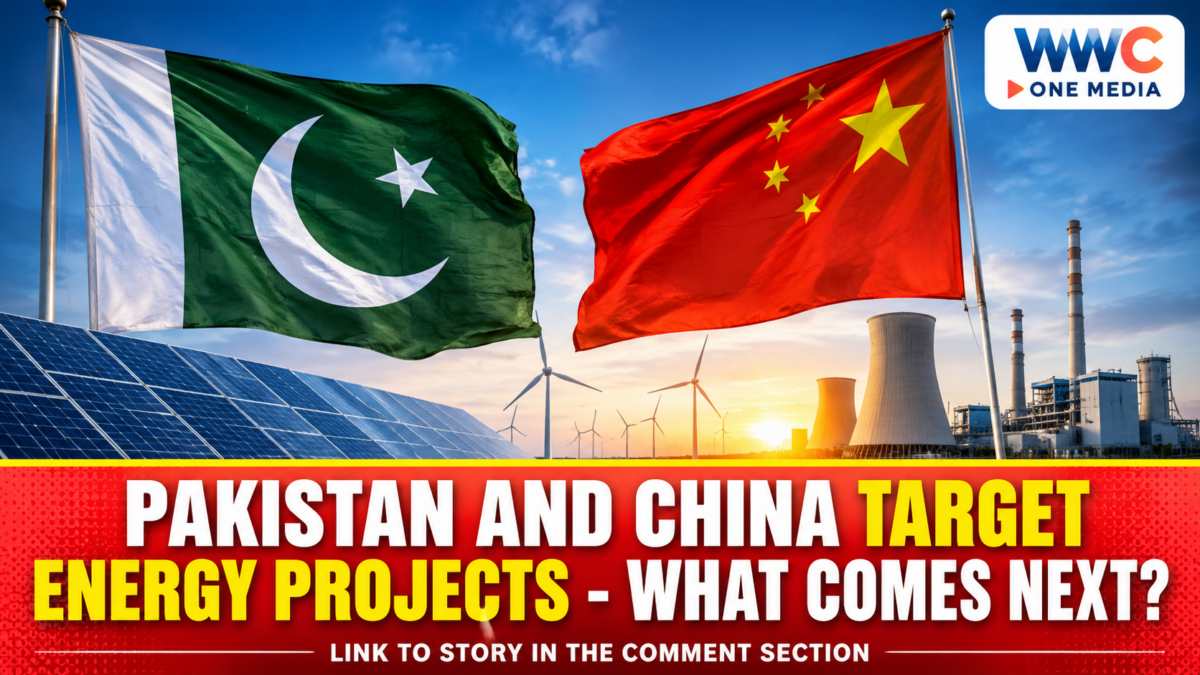
ISLAMABAD, Pakistan — November 26, 2026 — Pakistan and China are seeking to expand cooperation across oil and gas exploration, offshore development, mineral resources and fuel infrastructure, with two government-to-government projects identified for early action: a proposed liquefied petroleum gas (LPG) plant and arrangements for importing motor gasoline.
The priorities emerged from a November 24 meeting between Pakistan’s Federal Minister for Petroleum Ali Pervaiz Malik and Chinese Ambassador Jiang Zaidong in Islamabad. Pakistan State Oil (PSO) Chief Executive Officer Jawwad Ahmed Cheema and Additional Secretary (Policy) Zafar Abbas also attended.
The discussions point to a wider effort to attract Chinese companies into Pakistan’s energy supply chain. However, the announcement does not establish that the proposed projects have reached financial close, secured final contracts or entered construction.
For investors and energy businesses, the next question is whether the two governments can turn the proposed cooperation into commercially workable arrangements.
Pakistan-China energy cooperation puts LPG and gasoline first
The two sides identified an LPG plant, together with associated storage and terminal facilities, as one of their priorities for early action.
The proposed facilities are intended to expand domestic supply, improve access to LPG and help ease shortages during periods of peak demand.
LPG is widely used for household cooking and other commercial purposes. Storage and terminal infrastructure can support the movement and availability of the fuel, but the eventual effect on supply will depend on the plant’s capacity, sourcing arrangements, location and distribution network.
The second priority involves motor gasoline, commonly referred to as MoGas. The discussions covered imports, sourcing, storage and logistics.
This is a fuel-security issue as much as a commercial one. Reliable access to gasoline depends not only on purchasing arrangements but also on the infrastructure needed to receive, store and distribute supplies.
The government has not publicly specified the proposed LPG plant’s capacity, the volume of gasoline to be imported, the project costs or the expected completion dates.
Those missing details will be important in assessing the economic value of the proposals.
PSO could become a central commercial partner
Pakistan State Oil is expected to play a significant role in the proposed downstream cooperation.
The meeting discussed opportunities for Chinese companies to enter or expand their presence in Pakistan’s downstream energy sector through strategic partnerships with PSO. Petroleum storage, terminals and wider downstream infrastructure were among the areas considered.
PSO’s existing position in the market helps explain its importance to the discussions.
In its first-quarter FY2027 update, the company reported petroleum sales growth of 17.8% year on year and an overall market share of 45.9%, an increase of 4.2 percentage points. Motor gasoline sales rose 23.2% to 968,000 metric tonnes, while high-speed diesel sales reached 759,000 metric tonnes.
PSO also reported importing 16 petroleum-product cargoes totalling 756,000 metric tonnes during the quarter. It uplifted 1.019 million metric tonnes of motor gasoline and high-speed diesel from domestic refineries.
These figures illustrate the scale of the company’s fuel procurement and distribution responsibilities.
The proposed Chinese partnerships could therefore involve more than the purchase of fuel. Storage capacity, terminal access, logistics and supply-chain arrangements could all become part of the commercial discussions.
Pakistan’s recent petroleum relationship with Oman provides another example of how the country is pursuing additional supply and financing options. WWC ONE MEDIA previously examined the US$200 million credit limit extended by OQ Trading to PSO for petroleum purchases, including why a credit facility should not be mistaken for a cash grant or a guarantee of lower fuel prices.
Balochistan and offshore areas enter the investment discussion
The meeting also covered upstream oil and gas exploration, offshore development, mineral exploration and mining.
Particular emphasis was placed on the potential for investment in Balochistan and on emerging offshore opportunities, including integrated offshore hubs.
These areas could attract interest from companies with exploration, engineering, extraction and infrastructure capabilities. However, the public announcement does not identify specific mineral deposits, offshore blocks, Chinese investors or individual projects that have received approval.
The discussions also envisaged bringing together national energy companies, including Oil and Gas Development Company Limited (OGDCL), with Chinese upstream and downstream enterprises.
That approach could create opportunities across different parts of the energy value chain, from exploration and production to processing, storage and distribution.
Mining cooperation is also part of the broader relationship. In May 2026, Pakistan and China included mining and oil and gas exploration and development in their bilateral cooperation agenda. The November meeting adds a more specific commercial focus, although it does not identify completed mining agreements arising from the latest discussions.
For a wider view of how governments are trying to attract capital into strategic resources, WWC ONE MEDIA has also examined Chile’s mining partnerships with private investors, where the distinction between exploration agreements, project financing and operating production is central to understanding what investment announcements actually mean.
A joint commercial team will have to turn proposals into projects
To move the discussions forward, Pakistan and China agreed to establish a Joint Commercial Team with representatives from both sides.
Its responsibilities will include evaluating the identified opportunities, engaging prospective companies, assessing investment and partnership models, and preparing a structured roadmap for cooperation.
The proposed work covers upstream, offshore and downstream operations, including the LPG plant and MoGas import arrangements, as well as minerals and mining.
The team will be important because broad diplomatic support does not automatically produce bankable projects.
Each proposal will need a clearer commercial structure. That includes identifying the participating companies, defining their responsibilities, establishing financing arrangements, securing relevant approvals and determining how infrastructure will be developed and operated.
The government also highlighted plans to improve the investment environment through petroleum-sector deregulation, streamlined import and export procedures and stronger security arrangements.
Pakistan’s Petroleum Pricing Committee had previously set a likely target of June 2027 for petrol-price deregulation, subject to the government’s consideration and approval of the committee’s recommendations. The policy direction is relevant because a more competitive fuel market could influence how suppliers and infrastructure investors assess commercial opportunities.
The regional energy-security question
The timing also places the discussions within a wider Asia-Pacific economic context.
China hosted the 33rd APEC Economic Leaders’ Meeting in Shenzhen on November 18–19, 2026, under the theme “Building an Asia-Pacific Community to Prosper Together”. The resulting declaration highlighted trade and investment, connectivity, innovation and economic growth, while also recognising the importance of resilient supply chains and continued flows of essential goods, including energy supplies.
Pakistan’s discussions with China are a bilateral initiative, not an APEC project. Nevertheless, energy infrastructure, dependable fuel supplies and investment in natural resources are relevant to the wider regional conversation about economic resilience.
Critical minerals are another important part of that picture. Their supply chains are increasingly connected to industrial production, technology and infrastructure investment. WWC ONE MEDIA’s coverage of Taiwan’s proposed strategic investment fund for critical minerals and technology explores the competition to secure access to important resources and strengthen supply chains.
For Pakistan, the challenge will be ensuring that new investment produces viable infrastructure and transparent commercial arrangements, rather than remaining at the level of diplomatic commitments. The country’s own debate over petroleum revenues and resource distribution also underscores why the public benefits of extraction and energy development require scrutiny. WWC previously examined the questions surrounding oil and gas royalties in Sindh, including the importance of tracking how resource-related revenues reach producing communities.
What happens next?
The immediate milestone is the work of the Joint Commercial Team.
Its assessment should clarify which proposals are commercially viable, which companies may participate and what investment structures could support the projects. Further announcements would also need to establish the proposed LPG facility’s specifications, the scale and terms of gasoline imports, and the development plans for offshore and mining opportunities.
Until those details are published, the projects should be treated as priorities for evaluation and negotiation—not as completed investments.
Pakistan and China have identified areas where cooperation could strengthen fuel supply, expand energy infrastructure and develop natural-resource partnerships. Whether the initiative delivers lasting economic gains will depend on the agreements, financing and implementation decisions that follow.
Frequently asked questions
1. What energy projects are Pakistan and China prioritising?
The two sides identified a proposed LPG plant with storage and terminal facilities, as well as motor gasoline imports covering sourcing, storage and logistics.
2. Who attended the Pakistan-China energy meeting?
The meeting involved Federal Minister for Petroleum Ali Pervaiz Malik, Chinese Ambassador Jiang Zaidong, Additional Secretary (Policy) Zafar Abbas and PSO CEO Jawwad Ahmed Cheema.
3. What role could Pakistan State Oil play?
PSO is expected to be a key commercial partner in discussions about Chinese investment in downstream energy infrastructure, including petroleum storage and terminals.
4. Which regions and sectors were discussed for investment?
The discussions covered Balochistan’s investment potential, offshore development, upstream oil and gas exploration, mineral exploration and mining.
5. Have the LPG plant and gasoline import projects been finalised?
The public announcement identifies them as priorities for early action. It does not confirm final contracts, project financing, construction schedules or completed investments.
6. What happens after the meeting?
A Joint Commercial Team is expected to assess opportunities, engage prospective companies, examine investment models and prepare a roadmap for cooperation.