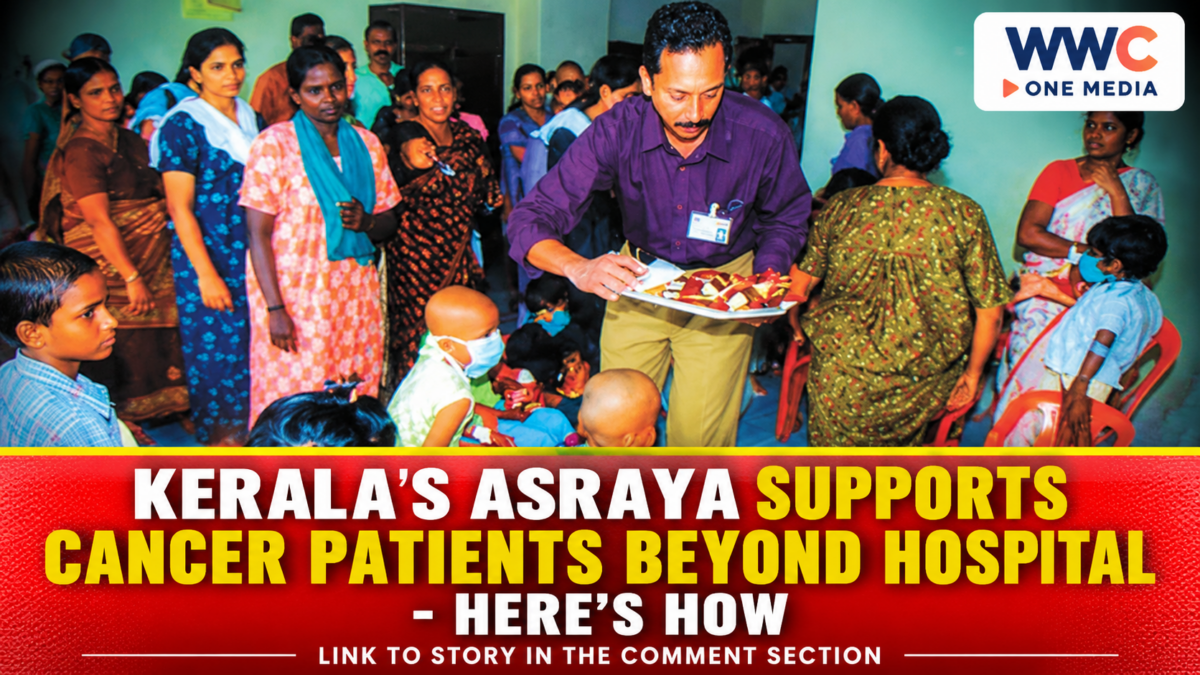
THIRUVANANTHAPURAM, Kerala — Cancer treatment does not end with hospital appointments. For many patients and their families, the struggle continues through medicine expenses, transportation, food, emotional stress and the challenge of rebuilding everyday life.
In Kerala’s capital, the Asraya Volunteer Organisation has built its work around those needs, supporting patients receiving care at the Regional Cancer Centre (RCC) in Thiruvananthapuram.
Founded by Santha Jose in 1996, the organisation provides assistance that extends beyond treatment-related expenses. Its programmes include financial support, help for patients undergoing chemotherapy, palliative care assistance, education for children from cancer-affected families and rehabilitation for households facing economic hardship.
The organisation’s approach reflects a wider reality in cancer care: medical treatment is essential, but patients may also need sustained practical and emotional support to manage the consequences of illness.
Asraya’s Work Began at Kerala’s Regional Cancer Centre
Asraya was established at the Regional Cancer Centre in Thiruvananthapuram to help patients who needed support beyond the services available through the hospital.
The organisation identifies itself as a volunteer group registered under number T 1684/99. Its work is based at the RCC premises near the Medical College in Thiruvananthapuram.
Its programmes cover several stages of the patient experience, from guidance during outpatient visits to assistance during treatment and support after hospital discharge.
One of its most visible activities takes place in the chemotherapy ward.
On working days, volunteers provide rice gruel, locally known as kanjivellam, to patients and their accompanying family members. They also speak with patients undergoing treatment and offer emotional reassurance.
The organisation says some of its volunteers are cancer survivors themselves. Their experiences allow them to offer peer support to people confronting treatment-related fears and uncertainty.
Financial Assistance Covers More Than Medicines
Cancer treatment can create financial pressure that extends well beyond hospital bills.
Families may need to pay for medicines that are not readily available through existing support arrangements, transportation to treatment facilities, surgery in special cases and medical equipment required after operations.
Asraya’s published programme includes assistance for chemotherapy medicines and other medicines obtained outside the hospital.
It also describes support for eligible patients when financial credit under government schemes has been exhausted, including payments credited to patient accounts at the Regional Cancer Centre.
The organisation lists assistance for post-surgery needs such as artificial limbs, colostomy bags, breast support and voice boxes.
It also provides transport assistance for patients who cannot travel independently.
These services address a practical problem in healthcare: access to treatment can be affected by costs that are not limited to the procedure or medicine itself.
For a family already dealing with lost income or long-term caregiving responsibilities, even repeated journeys to a hospital can become difficult to sustain.
WWC has previously examined the financial pressure faced by families navigating serious illness in its coverage of a cancer fundraiser supporting a young patient in Canada.
Support Continues Into Palliative Care
Asraya’s activities also extend to patients receiving palliative care.
The organisation says volunteers prepare health-mix porridge for patients in the palliative ward. Patients who cannot take food orally may receive diluted health-mix through nasal feeding, while some patients receive a supply of health-mix, milk powder and sugar when discharged.
Volunteers also help watch over patients when family caregivers need to step away briefly to eat, rest or purchase medicines.
This type of assistance does not replace professional medical care. Instead, it provides practical support to patients and caregivers during periods when everyday tasks can become especially difficult.
Asraya also describes training programmes conducted by oncology and trauma specialists and medical trainers. These sessions help volunteers develop skills in counselling and emotional support.
The organisation’s work demonstrates how volunteer groups can complement hospital services without taking over the responsibilities of healthcare professionals.
Children and Families Receive Support Beyond Treatment
A cancer diagnosis can affect an entire household, particularly when the patient is a parent or the family has children whose education depends on limited household income.
Asraya’s education programme is designed to help children from cancer-affected families continue their studies.
Its published eligibility information includes educational support for children recovering from cancer from Class 5 onwards and children of patients from Class 8 onwards.
Assistance can include monthly financial aid, semester fees, hostel fees and one-time support.
The organisation also assigns volunteer foster mothers to some children, providing emotional encouragement and guidance with their studies.
Career guidance is another part of the programme. Asraya says it helps students understand further education options and provides placement assistance through government and non-government agencies.
This approach recognises that the effects of cancer can continue long after treatment. A household may still face reduced income, disrupted education and the need to rebuild financial stability.
The organisation’s rehabilitation work also includes assistance for self-employment, housing-related needs and other forms of welfare support.
Why Community Support Matters in Cancer Care
India’s cancer-care system includes hospitals, specialist treatment centres, government programmes, charitable organisations and patient-support groups. Each has a different role.
The Indian Cancer Society, which organises the 2026 ICS Excellence Spotlight Awards for Cancer NGOs, describes its wider work as covering cancer awareness, early detection, financial assistance, support groups, survivor rehabilitation, research and education.
These areas highlight why cancer care cannot be measured only by the number of treatments delivered.
Patients may need help understanding their diagnosis, reaching a treatment centre, managing household expenses and adjusting to life after treatment.
WWC has also reported on digital tools being developed to help cancer patients organise appointments and treatment information.
Technology and volunteer support serve different purposes, but both reflect the growing importance of assistance that continues outside the consultation room.
For Asraya, that support is delivered through volunteers working directly with patients and families at the Regional Cancer Centre.
Recognition Brings Attention to the Work — But Sustained Support Remains Essential
Asraya’s work has developed over several decades, with its programmes covering medical assistance, emotional support, palliative care, education and rehabilitation.
The organisation’s published records list previous honours, including the Lions Excellence Award in 2017 and the Pratheeksha Puraskaram in 2016–17.
Its reported recognition in the 2026 Indian Cancer Society Spotlight Awards has brought renewed attention to its work. The precise award category and first-place result should be confirmed through the award organiser’s official winner announcement before those details are treated as independently verified.
The broader question is how community-based support can remain available to patients who need it.
Volunteer organisations depend on people willing to give their time, as well as donations and partnerships that help sustain services.
Asraya’s published donation information identifies support for medical expenses, patient meals, education, rehabilitation and other welfare needs as ways people can contribute.
Its work in Thiruvananthapuram illustrates an important part of cancer care that can be overlooked: helping patients and families manage the practical realities of illness while preserving dignity and independence.
What Happens Next?
The immediate opportunity is to sustain the services that patients already use, while ensuring that financial assistance and volunteer support remain available to families facing long treatment journeys.
For Asraya, that means continuing its work at the Regional Cancer Centre and maintaining the programmes that address medical, emotional, educational and household needs.
For the wider cancer-care community, the challenge is to ensure that patients are supported not only during treatment but also through recovery, rehabilitation and the difficult period that can follow a diagnosis.
Frequently Asked Questions
What is Asraya Volunteer Organisation?
Asraya is a volunteer organisation based at the Regional Cancer Centre in Thiruvananthapuram, Kerala. It supports cancer patients and their families through financial, practical and emotional assistance.
Who founded Asraya?
The organisation identifies Santha Jose as its founder. It began its work in 1996.
What assistance does Asraya provide to cancer patients?
Its published programmes include financial aid for medicines and surgery in special cases, chemotherapy support, palliative care assistance, transportation and help with post-surgery equipment.
Does Asraya support children from cancer-affected families?
Yes. Its education programme provides assistance for eligible children, including monthly aid, school and course fees, hostel expenses and career guidance.
Where is Asraya based?
Asraya is based at the Regional Cancer Centre, Medical College PO, Thiruvananthapuram, Kerala, India.
How can people support Asraya?
The organisation’s official website provides information about donations and other ways to contribute to medical assistance, education, patient welfare and rehabilitation programmes.