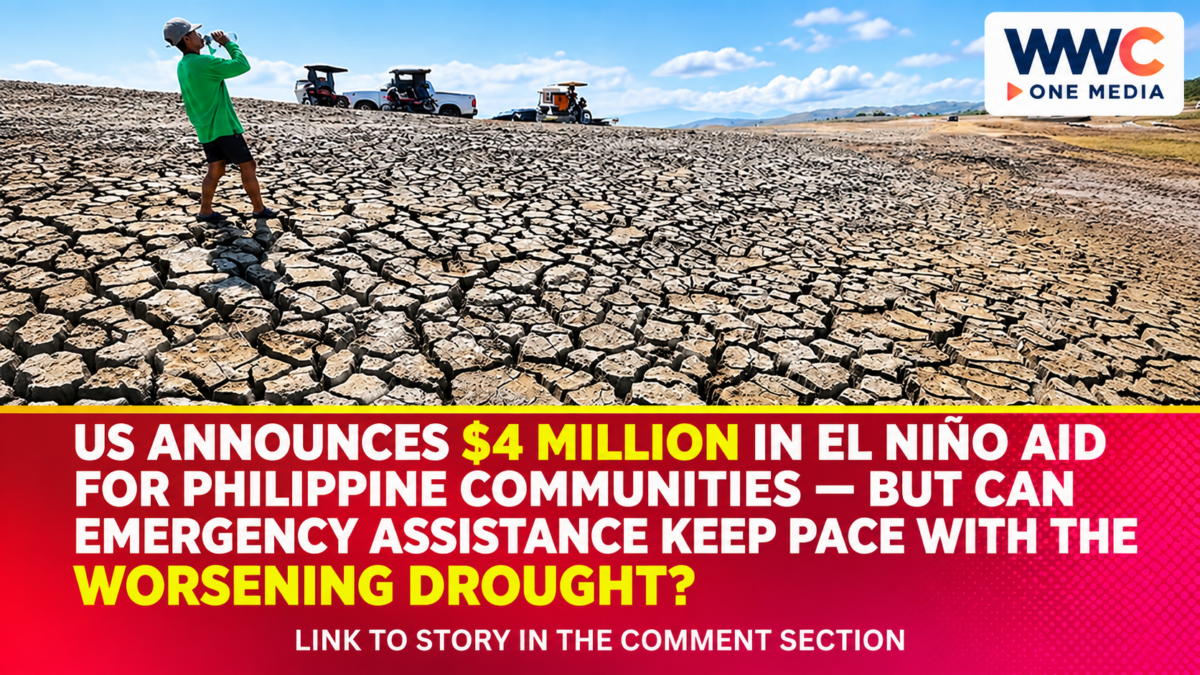
MANILA, Philippines — The United States has announced US$4 million in El Niño aid for drought-affected Philippine communities, including Camarines Sur, as the country confronts an intensifying climate phenomenon that could threaten agricultural production, household incomes and water security well into 2027.
US Ambassador to the Philippines Lee Lipton announced the assistance during a visit to Camarines Sur, where discussions with provincial officials also covered sustainable development cooperation.
The funding announcement comes as Bicol and Eastern Visayas face heightened drought risks, with the Philippines preparing for potentially more widespread rainfall shortages over the coming months.
The humanitarian challenge extends beyond immediate agricultural damage. Prolonged drought could disrupt food production, weaken purchasing power and place additional pressure on essential public services.
US El Niño Aid Comes as Drought Threat Intensifies
A very strong El Niño is already present in the tropical Pacific, with the climate phenomenon potentially reaching its peak by the end of 2026 and continuing into the first half of 2027.
The Philippine Atmospheric, Geophysical and Astronomical Services Administration (PAGASA) confirmed that five provinces experienced meteorological drought in October 2026, while 11 provinces experienced dry spells and another 10 recorded dry conditions.
November’s climate outlook also indicated unusually low rainfall across much of the Philippines, accompanied by warmer temperatures.
These conditions threaten agricultural communities dependent on regular rainfall and reliable irrigation systems.
The consequences of prolonged water shortages are already receiving attention in other parts of the country, including Davao’s agricultural communities facing El Niño crop damage.
However, El Niño does not eliminate the possibility of tropical cyclones or episodes of intense rainfall. Communities must remain prepared for multiple weather-related hazards even as drought conditions intensify.
Why Bicol and Eastern Visayas Face Growing Risks
Humanitarian projections published on October 30 identified Bicol and Eastern Visayas as areas where drought conditions were expected to develop early in the current El Niño cycle.
Camarines Sur’s inclusion in the announced American assistance highlights the importance of international cooperation in addressing climate-related emergencies at the community level.
For agricultural households, prolonged dry conditions can affect both food production and the ability to earn a living.
When crops suffer damage, families dependent on agricultural income may experience financial difficulties at the same time that food becomes more expensive.
Water insecurity also presents challenges beyond farming. Households, schools and healthcare facilities require reliable water supplies to maintain sanitation and essential services.
The situation reflects wider concerns across the archipelago, including emergency water rationing preparations in Cebu.
Philippine Government Expands Water Security Measures
The Department of Social Welfare and Development (DSWD) has been preparing mobile water treatment equipment and tanker units to support communities experiencing water shortages.
Its Project LAWA also incorporates small water storage infrastructure intended to improve local water management and strengthen disaster resilience.
Such initiatives address different aspects of the drought emergency, from immediate access to water to longer-term preparedness.
The Philippine government’s broader El Niño response encompasses food availability, public health, energy resilience, water management and community safety.
An emergency response that concentrates exclusively on food distribution may not address the underlying water shortages affecting agricultural livelihoods.
The need to maintain essential water services is particularly relevant to vulnerable communities, as highlighted in WWC ONE MEDIA’s coverage of emergency water rationing in Manay, Davao Oriental.
International humanitarian funding can complement domestic programmes, although the specific distribution arrangements for the newly announced American assistance remain important details to establish.
El Niño Raises Food Security Concerns Across Asia-Pacific
The Philippine drought emergency forms part of a wider international concern about the effects of extreme climate conditions on food systems.
The Food and Agriculture Organization (FAO) and the World Food Programme (WFP) have launched a joint US$202-million humanitarian appeal designed to protect 8.8 million people across 22 high-risk countries.
The initiative seeks to mobilise resources before anticipated climate emergencies cause more extensive damage to livelihoods and agricultural production.
El Niño can disrupt planting seasons, reduce harvests and affect the availability of water required by farming communities.
For Asia-Pacific economies, agricultural disruption can also become an economic concern when lower production combines with existing pressures on fuel, transportation and household expenses.
A May 2026 assessment of Philippine food security identified the interaction between energy-related price pressures and the anticipated effects of El Niño as an additional economic vulnerability.
These overlapping challenges underscore the importance of coordinating disaster preparedness with agricultural support, social protection and reliable access to essential goods.
What Happens Next as El Niño Extends Into 2027?
Climate projections indicate that drought conditions could spread across additional parts of Luzon, MIMAROPA, the Visayas and Mindanao during the first quarter of 2027.
These projections are not guarantees that every community will experience the same severity of drought. Actual conditions will depend on evolving rainfall patterns and local water availability.
The next significant developments will include updated climate assessments, the implementation of international assistance and the expansion of domestic preparedness programmes.
For affected households, the timing of assistance could be as important as the amount of funding announced.
The US$4-million commitment provides additional support during a critical period, but the longer-term challenge remains protecting livelihoods and maintaining access to food and water throughout the ongoing El Niño episode.
Frequently Asked Questions
How much El Niño assistance has the United States announced?
The United States has announced US$4 million in assistance for Philippine communities affected by El Niño-related drought.
Which Philippine areas are facing early drought risks?
Bicol and Eastern Visayas were identified in humanitarian projections as areas vulnerable to early drought development. Camarines Sur was specifically included in the American assistance announcement.
How long could the 2026 El Niño last?
The very strong El Niño could persist through the first half of 2027, with a potential peak towards the end of 2026.
How is El Niño affecting food security?
Rainfall shortages and extreme temperatures can reduce agricultural output, disrupt livelihoods and make food less affordable for vulnerable households.
Does El Niño prevent typhoons from occurring?
No. Tropical cyclones and other weather systems can still produce heavy rainfall during an El Niño episode.