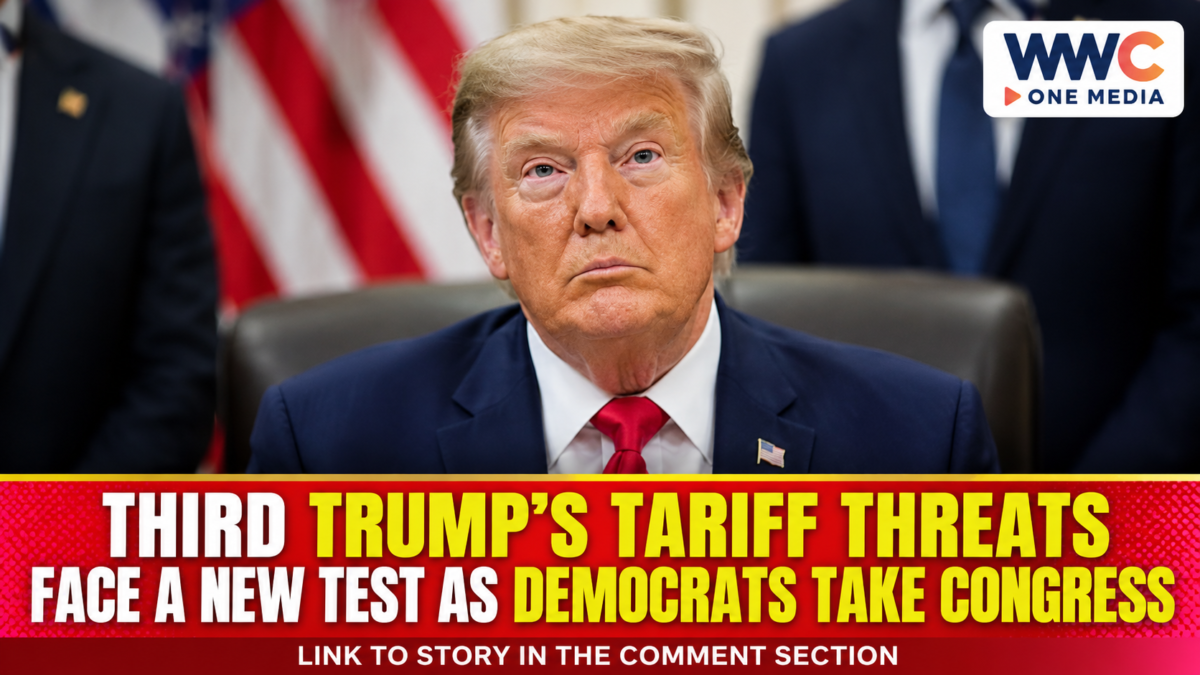
WASHINGTON, United States — US President Donald Trump is facing a more difficult political landscape after Republicans lost control of Congress in the November 2026 midterm elections. But foreign governments and businesses should not assume that the change will immediately weaken Washington’s ability to impose tariffs.
The Trump administration has moved ahead with a new trade offensive, proposing additional import duties on products from 14 major economies after concluding investigations into manufacturing policies and alleged industrial overcapacity.
The proposals, announced by the Office of the United States Trade Representative (USTR) on November 25, include China, the European Union, India, Japan, South Korea, Indonesia, Vietnam and several other trading partners.
The development exposes the central tension in US trade policy: Trump may have less political room to manoeuvre at home, but existing trade laws still give his administration significant authority to pursue tariffs without obtaining a new vote from Congress for every action.
For exporters, manufacturers and governments across the Asia-Pacific, the question is no longer simply whether Trump can threaten higher duties. It is whether those threats can survive legal challenges, economic pressure and a Congress increasingly controlled by his political opponents.
Democrats can challenge Trump, but cannot simply switch tariffs off
Democrats are set to take control of both chambers of Congress on January 3, 2027, following their midterm victory.
That shift gives the opposition greater influence over congressional investigations, hearings, legislation and federal spending. Lawmakers can also scrutinise the administration’s trade decisions and attempt to narrow the authority delegated to the president.
However, passing legislation to restrict presidential tariff powers is not straightforward.
Trump could veto a bill intended to limit his trade authority. Overriding that veto would require a two-thirds majority in both the House of Representatives and the Senate.
The incoming Congress therefore has political and oversight tools, but it does not automatically gain the power to cancel every tariff imposed through existing statutory authority.
This distinction is central to the debate over whether Trump has become a politically weakened president whose trade threats are losing their force.
His administration can still pursue measures authorised under laws such as Section 301 of the Trade Act of 1974 and Section 232 of the Trade Expansion Act of 1962, provided it follows the applicable legal requirements.
Supreme Court ruling closed one major tariff route
Trump’s tariff strategy has already suffered a major legal setback.
On February 20, 2026, the US Supreme Court ruled 6–3 in Learning Resources, Inc. v. Trump and Trump v. V.O.S. Selections, Inc. that the International Emergency Economic Powers Act (IEEPA) does not authorise the president to impose tariffs.
The ruling rejected the administration’s attempt to use emergency economic powers as the legal basis for sweeping import duties.
But the decision did not eliminate every tariff authority delegated to the executive branch by Congress.
The White House subsequently issued an order ending the additional import duties imposed under the specified IEEPA executive orders. It expressly stated that the action did not affect other duties imposed under Section 232 or Section 301.
That distinction explains why the administration has turned to a different legal framework rather than abandoning its tariff agenda.
The Supreme Court’s decision limits the use of one statute. It does not prevent the administration from using other laws when their requirements are met.
Fourteen economies face proposed new duties
The latest USTR action follows investigations launched on March 11, 2026, covering 16 economies.
On November 25, USTR determined that policies and practices relating to structural excess capacity and manufacturing production in 14 of those economies were unreasonable and burdened or restricted US commerce.
The 14 economies are China, the European Union, Singapore, Switzerland, Indonesia, Malaysia, Cambodia, Thailand, South Korea, Vietnam, Taiwan, Bangladesh, Japan and India.
The agency did not make determinations on Mexico or Norway at that time, although both had been included in the original investigations.
The proposed tariff levels vary by economy and include exemptions and adjustments for existing duties and trade commitments.
Among the examples are proposed duties of up to 25% on Indian goods, up to 35% on Vietnamese goods, up to 18% on Indonesian and Malaysian goods, and up to 15% on Japanese and South Korean goods. The proposals for China include rates of up to 20% on certain goods and up to 10% on specified products, subject to the terms and exemptions in the relevant notices.
These are proposed measures, not a single new tariff rate already being collected across all imports from the named economies.
USTR has opened a public consultation process. Written comments and requests to appear at the hearings are due by January 5, 2027. Hearings are scheduled to begin on January 25.
The distinction between an investigation, a formal determination, a proposed duty and an implemented tariff is essential. Businesses should not treat the proposed rates as final customs charges before the process is completed and implementing measures are issued.
Why the tariff strategy still matters to global trade
Tariffs are taxes on imported goods. Depending on the product, supply chain and market conditions, their costs may be absorbed by exporters, importers, manufacturers or consumers.
The administration argues that duties can pressure foreign governments to change trade practices, encourage companies to manufacture in the United States and protect domestic industries from what it considers unfair competition.
But tariffs can also raise input costs for American manufacturers that depend on imported components and materials. Businesses may respond by changing suppliers, increasing prices, delaying investment or moving production.
The November 25 proposals are particularly important because they cover major manufacturing and trading economies across Asia and Europe.
China, Japan, South Korea, India and Southeast Asian economies play significant roles in global production networks. Additional duties could influence sourcing decisions and the competitiveness of goods sold in the United States.
WWC ONE MEDIA has examined the latest US tariff investigation involving China, the European Union and other major manufacturing economies. The separate US-South Korea tariff dispute also illustrates why existing trade agreements do not necessarily remove exposure to every new investigation.
The fragile relationship between Washington and Beijing remains another major variable. The two governments have previously negotiated tariff pauses and trade arrangements, but the US-China trade truce has not eliminated the underlying disputes over manufacturing, technology and market access.
For the Philippines, the broader US trade environment also matters. Philippine exporters compete in markets where tariff changes affecting neighbouring economies can influence sourcing, pricing and investment decisions. WWC ONE MEDIA’s examination of the renewed push for lower US tariffs on Philippine exports explains why bilateral negotiations and separate US trade measures must be assessed individually.
The political cost may be rising, even if the legal power remains
Trump’s tariff policy has become a political liability for some Republicans, particularly as voters continue to focus on inflation and household affordability.
Reuters reported that two-thirds of voters in exit polling said the president’s tariff policies had hurt the national economy. It also reported a Yale Budget Lab estimate that tariffs had increased annual household costs by about US$900.
Those estimates are not proof that tariffs alone caused the midterm result. Inflation, energy costs and other economic and political issues also shaped the election.
Nevertheless, the political pressure is real. A president can retain legal authority while facing greater resistance from voters, businesses, legislators and trading partners.
That is the challenge now confronting Trump. His administration can continue using delegated trade powers, but each new measure may invite closer congressional scrutiny, legal challenges and diplomatic retaliation.
What happens next
The immediate test is the USTR consultation process, followed by the January hearings and any subsequent decisions on implementing additional duties.
Congressional Democrats will also have to decide whether to pursue hearings, legislation or other oversight measures once they take control in January.
For global businesses, the practical priority is to distinguish proposed tariffs from duties that have actually taken effect. Product classifications, exemptions, existing trade agreements and effective dates will determine the real cost of any final measure.
Trump’s political position has weakened, but his tariff authority has not disappeared. The next phase of the trade conflict will test how far the administration can go under existing law—and how effectively Congress, the courts and America’s trading partners can push back.