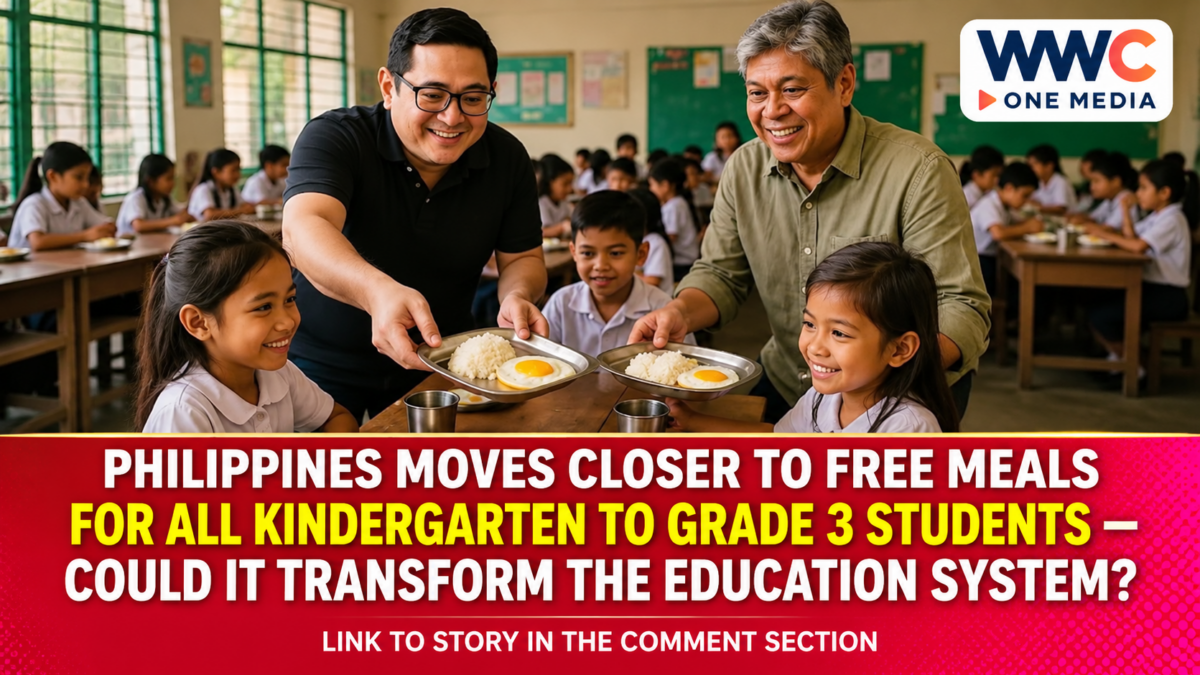
MANILA, Philippines — The proposed National Children’s Nutrition Act has cleared a significant legislative hurdle, bringing the Philippines closer to providing universal school meals for public school students from Kindergarten to Grade 3 while expanding nutritional assistance for vulnerable children.
The bicameral conference committee has reconciled Senate Bill No. 2272 and House Bill No. 9466, establishing the foundation for a broader national nutrition programme that would replace the existing feeding law enacted in 2018.
Senator Francis “Kiko” Pangilinan welcomed the development on November 18, highlighting the importance of addressing childhood hunger alongside the country’s educational and agricultural challenges.
Unlike the existing statutory framework, which concentrates school feeding assistance on undernourished children, the proposed legislation would extend coverage to younger public school students regardless of their nutritional status.
The measure could represent a significant shift in how the government approaches child welfare, public education and food security.
However, its greatest test will be whether legislative commitments translate into nutritious meals consistently reaching children who need them.
National Children’s Nutrition Act: Who Would Receive Free School Meals?
One of the most consequential provisions of the reconciled legislation is the introduction of universal school feeding for public school learners from Kindergarten to Grade 3.
Children within these grade levels would no longer need to be classified as undernourished to qualify under the proposed universal feeding framework.
Meanwhile, undernourished students in Grades 4 to 6 would continue receiving targeted nutritional assistance.
The proposal also expands interventions for younger children, pregnant adolescent learners and other vulnerable groups.
| Beneficiary group | Proposed coverage |
|---|---|
| Public school Kindergarten learners | Universal feeding |
| Public school Grades 1–3 learners | Universal feeding |
| Undernourished Grades 4–6 learners | Targeted feeding |
| Younger children | Expanded nutrition interventions |
| Pregnant adolescent learners | Expanded nutritional support |
| Other vulnerable groups | Subject to applicable programme provisions |
The distinction between universal and targeted assistance is important.
Universal coverage could help reduce barriers associated with identifying individual beneficiaries, while targeted interventions could direct additional resources towards children with greater nutritional needs.
Nevertheless, the proposal should not be interpreted as an immediate guarantee of free meals for every student from Kindergarten through Grade 12.
Why Childhood Malnutrition Remains a National Concern
The legislative initiative comes amid continuing concerns about the nutritional condition of Filipino children.
The Department of Science and Technology–Food and Nutrition Research Institute’s 2023 National Nutrition Survey recorded stunting among 23.6% of children below five years old.
Wasting affected 5.6% of children in the same age group.
Subsequent findings from the 2025 Updating Survey, discussed in Pangilinan’s September 15, 2026, legislative statement, placed the national under-five stunting prevalence at 25.3%.
The increase underscores the importance of addressing nutritional difficulties before children enter formal education.
WWC ONE MEDIA previously examined related challenges in its coverage of infant breastfeeding and persistent childhood nutrition gaps.
A school feeding programme alone cannot resolve every cause of childhood malnutrition.
Household food security, maternal health, sanitation and access to healthcare also deserve attention.
The proposed legislation’s broader approach recognises that nutritional support must extend beyond the classroom.
How the Proposed Law Differs From the Existing Feeding Programme
Republic Act No. 11037, signed into law on June 20, 2018, institutionalised the government’s national feeding programme for undernourished children.
Under Section 4, the Department of Education (DepEd) is responsible for school-based feeding assistance for undernourished public school learners from Kindergarten to Grade 6.
The statute requires at least one fortified meal for eligible children over a minimum of 120 days annually.
It also establishes complementary initiatives involving milk, micronutrient supplementation, health examinations, school gardening and nutrition education.
The proposed National Children’s Nutrition Act would replace this statutory framework with a more extensive programme.
| Policy area | Republic Act No. 11037 | Reconciled proposed legislation |
|---|---|---|
| Kindergarten to Grade 3 | Targeted towards undernourished learners | Universal coverage |
| Grades 4–6 | Targeted feeding | Targeted feeding retained |
| Nutrition strategy | Feeding and complementary health interventions | Expanded support across developmental stages |
| Agricultural sourcing | Local sourcing and community-based procurement provisions | Stronger direct purchasing from qualified agricultural producers |
The proposed changes could make school nutrition a more broadly accessible public service rather than an intervention available only after nutritional difficulties have been identified.
Farmers and Fisherfolk Could Gain New Commercial Opportunities
The proposed legislation also connects childhood nutrition with agricultural development.
Pangilinan’s original Libreng Almusal proposal included direct procurement arrangements involving local farmers and fisherfolk under Republic Act No. 11321, otherwise known as the Sagip Saka Act.
Those agricultural procurement objectives have been incorporated into the reconciled nutrition measure.
Section 11 of the Sagip Saka Act establishes a mechanism for government agencies to purchase agricultural and fisheries products directly from accredited cooperatives and enterprises.
Such transactions are exempt from conventional public bidding but remain subject to applicable negotiated procurement requirements.
For agricultural producers, regular institutional purchasing could potentially provide more predictable demand for vegetables, fish and other food products.
However, commercial benefits will depend on actual procurement volumes, supplier accreditation, payment arrangements and the ability of producers to satisfy quality requirements.
Direct procurement should not be interpreted as permission to disregard financial accountability or food safety standards.
Why Nutritious Meals Must Be Supported by Safe School Facilities
Expanding feeding programmes involves considerably more than purchasing food.
Schools require appropriate preparation areas, safe drinking water, sanitation facilities and reliable food-handling procedures.
The existing Republic Act No. 11037 already recognises these responsibilities through its water, sanitation and hygiene provisions.
These issues have also been examined in DepEd’s emphasis on clean water and sanitation as essential components of school feeding.
Regional experiences demonstrate why these operational safeguards deserve attention.
WWC ONE MEDIA’s previous coverage of food safety investigations involving Indonesia’s free school meals programme highlights the importance of maintaining quality controls as public nutrition initiatives expand.
The proposed Philippine programme should therefore be assessed not only by the number of meals distributed but also by the nutritional quality and safety of those meals.
Funding and Implementation Could Determine the Programme’s Success
Universal feeding for younger public school learners could substantially expand operational responsibilities.
Government agencies would need to coordinate food procurement, distribution schedules, beneficiary records and financial monitoring.
Local governments could also play an important role in supporting implementation.
Existing statutory arrangements already allow local government units to supplement national feeding initiatives using authorised funding sources.
Local nutrition assistance programmes, including Makati’s school meal and student welfare initiatives, provide relevant context for understanding the relationship between national and local support.
However, local assistance packages should not be confused with nationwide benefits.
The effectiveness of the proposed national programme will depend on sustainable funding, appropriate nutritional standards and transparent implementation.
What Happens Next for the National Children’s Nutrition Act?
Bicameral reconciliation represents an important legislative milestone, but it does not independently establish that the proposed measure has already become law.
Its enactment, effectivity and implementation must follow the applicable legislative and administrative procedures.
Parents and schools should therefore await official implementation announcements before assuming that expanded universal feeding benefits are already available.
The proposed legislation presents an opportunity to address childhood hunger alongside educational participation and agricultural development.
Its long-term significance, however, will depend on whether children receive consistent nutritional support and whether measurable improvements in their health and development follow.
The real achievement will not simply be passing another nutrition measure.
It will be ensuring that children have the nourishment they need to participate meaningfully in education.
Frequently Asked Questions
What is the proposed National Children’s Nutrition Act?
It is a reconciled legislative measure intended to replace Republic Act No. 11037 and expand the Philippines’ national nutrition and school feeding programme.
Who would qualify for universal free school meals?
Public school learners from Kindergarten to Grade 3 would qualify regardless of their nutritional status under the proposed framework.
Would Grade 4 to Grade 6 students receive free meals?
The reconciled measure retains targeted feeding assistance for undernourished learners in Grades 4 to 6.
How could the legislation benefit farmers and fisherfolk?
It strengthens direct procurement arrangements involving accredited agricultural producers and enterprises, potentially creating additional institutional demand for locally produced food.
Is the National Children’s Nutrition Act already law?
Bicameral reconciliation has been confirmed. Presidential approval and the measure’s effectivity have not been independently established as of November 25, 2026.