ISLAMABAD, Pakistan — November 25, 2026 — Pakistan’s cultural sector is facing a familiar but increasingly important challenge: protecting the country’s artistic heritage while creating meaningful opportunities for established and emerging artists.
The federal government has repeatedly pledged to preserve cultural institutions, modernise their operations and expand their reach. But the larger test is whether those commitments will translate into consistent institutional support, accessible creative platforms and stronger opportunities for artists across the country.
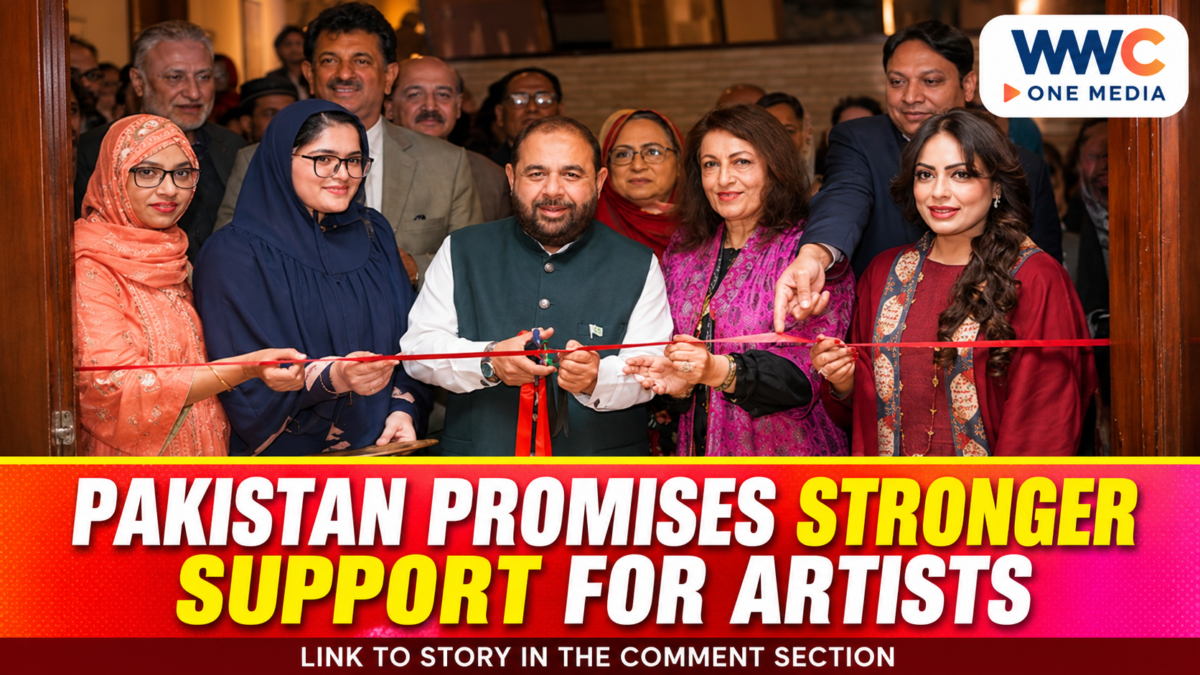
Federal Minister for National Heritage and Culture Aurangzeb Khan Khichi has previously backed efforts to preserve Pakistan’s literary, historical and cultural institutions, while calling for improvements in their performance and public visibility.
The government’s stated direction places cultural organisations at the centre of a wider effort to protect national identity, encourage artistic development and make Pakistan’s creative heritage more visible internationally.
Yet preserving heritage requires more than official recognition. It depends on functioning institutions, trained professionals, adequate resources, public engagement and opportunities for artists to develop sustainable careers.
Pakistan’s cultural institutions have a broader role than preserving the past
The Pakistan National Council of the Arts (PNCA) is one of the country’s principal public institutions for promoting visual and performing arts.
Its Visual Arts Division oversees the National Art Gallery in Islamabad, which has 14 exhibition halls, an auditorium, lecture rooms, studios and archives.
The institution’s work extends beyond displaying paintings. Its activities include promoting artists and art groups, preserving creative collections, supporting publications and making artistic education more accessible.
PNCA also offers instruction in disciplines including painting, calligraphy, photography, music and performance.
Its permanent art collection covers modern, contemporary, miniature, calligraphic and abstract works, giving the institution a role in preserving different periods and forms of Pakistan’s artistic development.
This combination of heritage preservation and contemporary programming is important. A cultural institution must protect historic work while also creating room for new artistic voices.
Government commitments now face an implementation test
Pakistan’s government has previously stated that cultural and literary institutions should be preserved and strengthened rather than dissolved or merged.
In July 2025, the Press Information Department recorded Khichi’s support for preserving national literary, cultural and academic institutions, alongside the government’s stated intention to reform and expand their reach.
A separate government-reported meeting on July 2, 2025, focused on improving the performance of institutions under the National Heritage and Culture Division.
The discussions covered modernisation, institutional visibility, staffing, public engagement and the need to make cultural organisations more effective.
The meeting also addressed the work of institutions including the Iqbal Academy, Pakistan Academy of Letters, National Language Promotion Department and Quaid-e-Azam Academy.
These are significant policy priorities, but announcements and administrative instructions should not be confused with completed reforms.
The next measure of progress is whether institutions receive the resources, staffing and operational support needed to carry out their responsibilities.
Traditional art and contemporary creativity can work together
Pakistan’s cultural identity is expressed through a wide range of artistic traditions, including miniature painting, calligraphy, architecture, music, poetry, textiles and indigenous craftsmanship.
These traditions are not necessarily separate from contemporary art. Artists can reinterpret historic patterns, techniques and cultural references through modern materials and visual approaches.
That relationship between preservation and experimentation is important for keeping traditional practices relevant to younger generations.
It also creates opportunities for cultural exchange, education and international exhibitions.
Across Asia, museums and galleries increasingly provide platforms where traditional artistic practices meet contemporary interpretation. WWC ONE MEDIA has explored this relationship through its coverage of Asian fantasy art and the meeting of traditional mythology with contemporary visual culture.
Pakistan’s cultural institutions can play a similar role by supporting both established practitioners and artists developing new approaches to inherited artistic traditions.
The challenge is supporting artists beyond the exhibition hall
Exhibitions can introduce artists to new audiences, create opportunities for cultural discussion and give emerging practitioners a platform to present their work.
But the long-term health of an artistic community depends on more than occasional public events.
Artists also need access to professional development, institutional networks, opportunities to exhibit, documentation of their work and pathways to reach audiences beyond their immediate communities.
Public institutions can contribute by maintaining accessible exhibition spaces, developing educational programmes, preserving collections and creating opportunities for collaboration.
The issue is especially important for younger artists, graduates and practitioners working in traditional disciplines that may require years of specialised training.
A cultural policy that recognises only established names risks overlooking the next generation. A sustainable system must provide room for both.
WWC has also examined how Pope Bacay uses familiar architectural forms to explore memory, identity and contemporary artistic expression, demonstrating how artists can transform everyday cultural references into new creative narratives.
Cultural diplomacy can expand Pakistan’s international presence
Cultural institutions also have a role beyond domestic preservation.
International exhibitions, artistic exchanges, museum partnerships and collaborations between cultural organisations can introduce audiences to a country’s history and creative communities.
Pakistan’s National Heritage and Culture Division has previously discussed cultural cooperation with international partners, including initiatives involving music, drama, visual art and dance.
These exchanges can help artists build professional connections while allowing audiences to encounter different artistic traditions.
The international value of cultural diplomacy, however, depends on meaningful participation. Artists need opportunities to present their work, engage with other creative communities and build relationships that continue beyond a single event.
The broader regional conversation is also visible in the way museums are reconsidering how national collections are presented to international audiences. WWC’s coverage of the major Juvenal Sansó retrospective at the National Museum of Fine Arts examines how an institution can use a major exhibition to connect an artist’s personal history with a wider national and cultural narrative.
Another example is the debate over Singapore’s interest in a rare Botong Francisco painting and the question of protecting cultural heritage across borders. It illustrates how artistic collections can become part of wider discussions about cultural ownership, international access and preservation.
What Pakistan’s cultural sector needs to demonstrate next
The government’s stated commitment to artists and cultural institutions provides a policy direction. The more difficult task is demonstrating that the commitment is producing measurable improvements.
Several areas will be important to watch:
- Institutional funding: Whether cultural organisations receive sustainable resources for programmes, collections and maintenance.
- Artist development: Whether emerging artists gain regular access to training, exhibitions and professional opportunities.
- Modernisation: Whether institutions improve their facilities, digital access, archives and public services.
- Heritage preservation: Whether traditional artistic knowledge and endangered practices are documented and passed to future generations.
- International collaboration: Whether cultural exchanges lead to lasting partnerships and greater opportunities for Pakistani artists.
Pakistan has a substantial cultural legacy and a network of public institutions designed to preserve and promote it.
The question is whether those institutions can become more accessible, better equipped and more responsive to the needs of the creative community.
Government commitments can establish the direction. Their real value will be measured by what artists, audiences and cultural organisations are able to achieve.
For Pakistan’s cultural sector, the challenge is not simply keeping its heritage alive. It is ensuring that the people who create, interpret and preserve that heritage have the support to carry it forward.