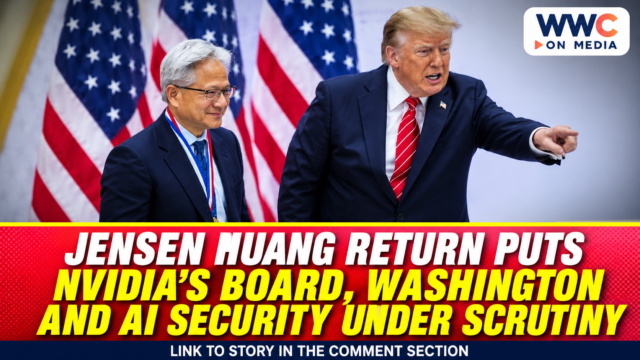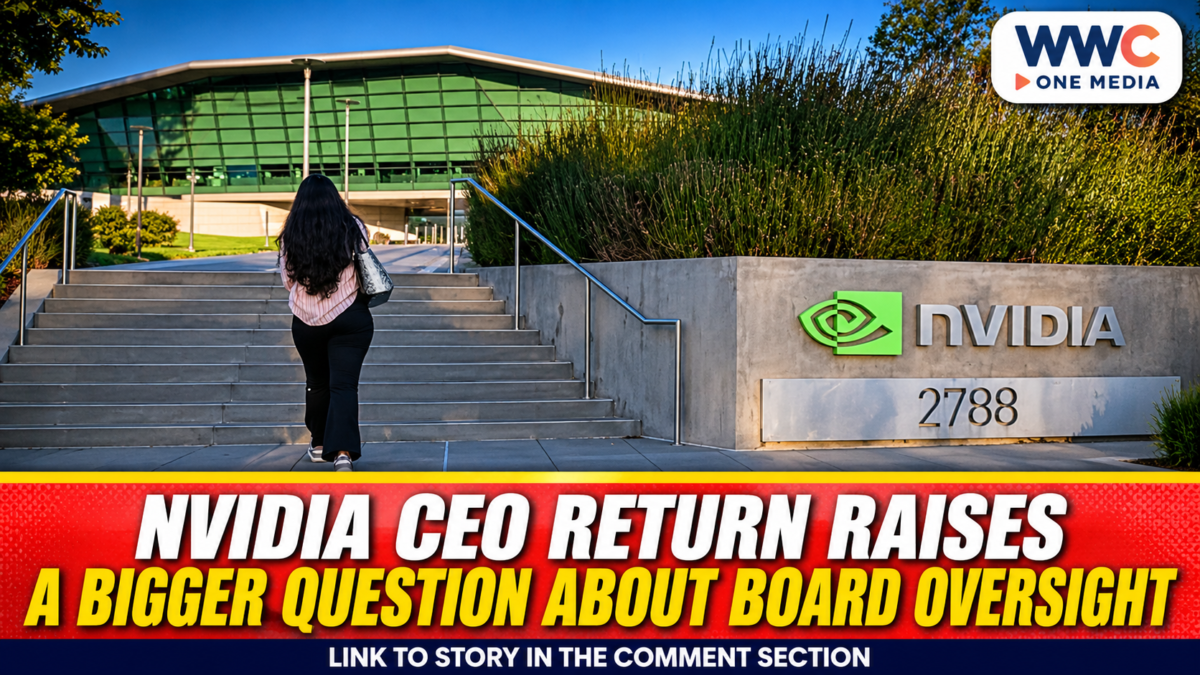
SANTA CLARA, California — November 24, 2026. NVIDIA has reinstated founder Jensen Huang as president and chief executive officer less than two weeks after announcing his resignation, ending a short leadership transition that placed Chief Financial Officer Colette Kress in the interim role. The board’s decision, effective November 22 and announced publicly the following day, restores Huang to the top position while leaving an independent investigation and new compliance measures in progress.
The reversal comes as the artificial intelligence chipmaker continues to report substantial revenue growth and return billions of dollars to shareholders through stock repurchases and dividends. The timing makes the board’s decision important beyond the identity of its chief executive: investors must also assess how NVIDIA intends to manage leadership accountability, national-security scrutiny and its expanding AI business.
The company’s public filings establish the sequence of executive changes, the board’s stated reasons for reinstating Huang and the financial position disclosed in its latest quarterly results. They do not establish the specific allegations circulating in other coverage or confirm the claimed US$12.2 billion in losses among short sellers.
Nvidia CEO return follows a brief leadership transition
NVIDIA announced on November 12 that Huang had resigned as president, chief executive and a member of the board, effective immediately. The company appointed Kress, its executive vice president and chief financial officer, as interim CEO while the board began looking for a permanent successor.
Harvey C. Jones was appointed the board’s first chair under the new arrangement. Kress retained her finance responsibilities while taking on the interim leadership role. sec.gov
The next major change came on November 22. NVIDIA’s Form 8-K, filed with the US Securities and Exchange Commission, records that the board reinstated Huang as president, CEO and a director, effective immediately. The company announced the decision publicly on November 23.
The board said it voted unanimously after discussions and meetings with Huang. It also stated that it had received input from senior levels of the US government and was confident that his reinstatement posed no national-security risk. Jones remained board chair, while Kress continued as executive vice president and CFO. sec.gov+1
The sequence matters because the change was not simply a temporary adjustment to the executive title. It involved the board reversing its earlier decision to begin a search for a permanent chief executive.
The board’s investigation remains unfinished
The reinstatement announcement did not close every issue surrounding the leadership transition.
NVIDIA disclosed that its board had formed a committee composed solely of independent directors to investigate reports that Huang had been the target of a foreign intelligence effort. The committee retained independent counsel, and the company said the investigation would continue after his return.
The board also established a separate National Security and Export Control Committee to oversee trade-compliance and national-security risks. NVIDIA said that committee was engaging legal counsel with relevant experience and that the company was beginning a search for a chief compliance officer. The planned officer would oversee compliance across the company and report to the Nominating and Corporate Governance Committee. sec.gov
These are corporate governance measures, not findings that Huang or NVIDIA committed wrongdoing. The company’s public announcement does not disclose the investigation’s full evidence, its scope beyond the stated subject, or a timetable for its conclusion.
Analysis: The board’s challenge is now twofold. It has restored a founder who remains central to the company’s public identity, but it must also demonstrate that independent oversight can continue without being weakened by that executive’s return. The effectiveness of the investigation and the new compliance structure will matter more than the announcement alone.
NVIDIA’s financial strength provides important context
The leadership reversal occurred against a strong financial backdrop.
NVIDIA reported third-quarter fiscal 2027 revenue of US$115.8 billion for the period ended October 25, 2026, an increase of 103% from the same quarter a year earlier. Data Center revenue reached US$107.6 billion, up 110% year over year. The company reported GAAP net income of US$65.3 billion and diluted earnings per share of US$2.70. investor.nvidia.com
The figures illustrate the scale of the business Huang is returning to lead. Data Center revenue, which includes the infrastructure supporting demanding AI and accelerated-computing workloads, accounted for the overwhelming majority of quarterly sales.
The company’s financial performance also provides context for its capital-return strategy. NVIDIA said it returned US$28.1 billion to shareholders during the third quarter through repurchased shares and cash dividends. At the end of the period, approximately US$227.3 billion remained under its share-repurchase authorization. investor.nvidia.com
The business environment is not without regulatory complications. NVIDIA’s operations remain exposed to restrictions involving advanced semiconductor exports and access to computing infrastructure. WWC has previously examined the company’s China chip-sales outlook and the distinction between licensed products and completed shipments.
The US$235 billion buyback authorization needs context
NVIDIA’s share-repurchase programme is another significant part of its shareholder strategy.
On September 28, the company announced that its board had approved an additional US$150 billion in repurchase authorization. That increased the remaining authorized amount to US$235 billion at the time, with the company expecting to execute the programme through fiscal 2028. investor.nvidia.com
The later third-quarter results showed approximately US$227.3 billion still available under the authorization. These figures refer to the amount the company is permitted to use for repurchases, not cash already spent or a promise to purchase that entire amount immediately.
NVIDIA’s earlier quarterly filing explains that repurchases may take place over time, subject to market conditions, operating requirements and other investment opportunities. The company also retains discretion to suspend the programme. sec.gov
That distinction is important when interpreting large buyback headlines. An authorization gives a company flexibility to return capital by purchasing its own shares. Actual purchases depend on execution decisions and market circumstances.
For investors, the programme sits alongside the company’s continuing need to finance product development, computing infrastructure, supply-chain commitments and other strategic investments.
The broader semiconductor market also involves companies beyond the chip designers themselves. WWC’s coverage of Ayala’s Integrated Micro-Electronics and its exposure to AI data-centre demand examines how the infrastructure expansion creates opportunities for electronics manufacturers and component suppliers.
Why the leadership decision matters to AI investors
Huang’s return restores a familiar leadership structure at a company whose products and business strategy have become central to the global AI infrastructure market. But the board’s actions also show that executive continuity and corporate oversight are separate questions.
The board has publicly expressed confidence in Huang, while also retaining an independent investigation and establishing additional committees focused on national security and export controls. The company has not announced that those processes are complete.
The distinction is especially relevant because NVIDIA operates in a sector where commercial decisions intersect with national-security rules. Its chips are used in data centres and other computing systems, while export restrictions can affect which customers and markets the company can serve. WWC has also reported on the US licensing process for advanced AI chips and why approvals do not necessarily mean products were delivered.
Analysis: A strong earnings report can demonstrate demand for a company’s products, but it cannot answer every question about governance or regulatory exposure. NVIDIA’s ability to sustain its position will depend not only on technology and revenue growth but also on how effectively it manages compliance, oversight and leadership responsibilities.
What happens next
The next important developments will come from the board’s investigation, the formation of the National Security and Export Control Committee and the appointment of a chief compliance officer.
NVIDIA has said it will continue cooperating with government investigations and inquiries. It has not published a final outcome from the independent committee’s work.
For shareholders, the company’s next financial disclosures will also show how much of its repurchase authorization is actually used and whether its strong Data Center performance continues.
Huang is back as CEO. The larger test for NVIDIA is whether its governance and compliance arrangements can keep pace with the strategic importance and scale of its AI business.
Frequently asked questions
When was Jensen Huang reinstated as NVIDIA CEO?
NVIDIA’s SEC filing states that the board reinstated Huang effective November 22, 2026. The company announced the decision publicly on November 23.
Who served as NVIDIA’s interim CEO?
Colette Kress, NVIDIA’s executive vice president and chief financial officer, served as interim CEO during the leadership transition.
Why did NVIDIA reinstate Jensen Huang?
The board said it voted unanimously after discussions and meetings with Huang. It stated that it was satisfied with his candor and ability to lead the company and had received input from senior levels of the US government.
Is NVIDIA’s investigation over?
No. The company said its independent-director committee investigation would continue. It also announced a separate National Security and Export Control Committee.
How much does NVIDIA still have available for share buybacks?
NVIDIA reported approximately US$227.3 billion remaining under its share-repurchase authorization at the end of its third quarter of fiscal 2027. This is authorization, not an amount already spent.