Malaysia has identified 8,180 temporary evacuation centres with the capacity to accommodate up to 1.86 million people as the country prepares for the 2026–2027 Northeast Monsoon. But the government’s preparations extend beyond opening buildings: parliamentary disclosures show a wider plan involving emergency funding, supply warehouses, contracted suppliers, welfare personnel and a digital registration system.
The details matter because an evacuation centre is only one part of a disaster response. Families also need food, essential supplies, reliable registration, assistance for vulnerable residents and enough staff to keep facilities operating when emergencies continue for several days.
Flood shelters are only the first layer of Malaysia’s plan
The 8,180-centre figure was presented by Women, Family and Community Development Minister Dato’ Sri Hajah Nancy Shukri in the Dewan Rakyat on Nov. 17.
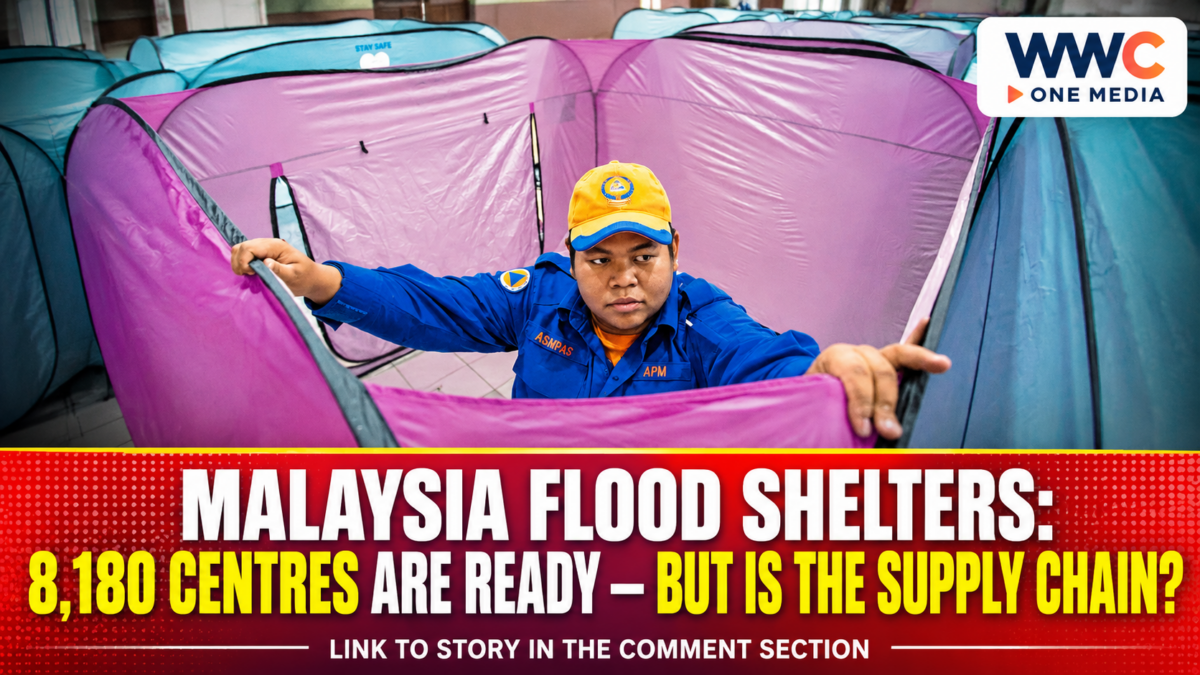
The centres include schools, halls, community halls and community centres. Together, they are designed to accommodate up to 1.86 million disaster victims.
The minister explained that the Department of Social Welfare, known as JKM, is responsible for registering evacuees and distributing basic assistance during and after disasters. Its responsibilities also include welfare support, counselling and logistics.
The parliamentary record identifies RM77.8 million in funding from federal and state governments for 2026 disaster management. The allocation includes purchasing essential supplies for affected residents and improving facilities used to store disaster-relief goods.
The figure is significant because shelter capacity alone does not measure how effectively an evacuation centre can serve families. The availability of food, supplies, staff and support services also determines whether a centre can operate effectively.
Why the 8,180 and 8,321 shelter figures are different
There are two official preparedness figures that readers should not confuse.
The Nov. 17 parliamentary statement cited 8,180 temporary evacuation centres under the JKM preparedness arrangements, with capacity for 1.86 million people.
Separately, the National Disaster Management Agency, or NADMA, announced preparations involving 8,321 temporary relief centres nationwide, with capacity for up to 1.9 million people. That announcement also described a broader multi-agency mobilisation involving nearly 102,000 personnel and approximately 40,000 operational assets.
These figures come from different official updates and should not be presented as if they were one revised count. The public records reviewed do not provide a detailed reconciliation of the two totals.
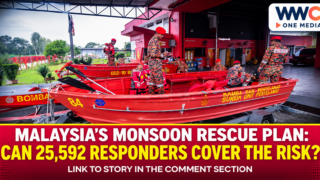
The broader NADMA announcement included around 2,450 boats and more than 3,000 four-wheel-drive vehicles and lorries. It also identified preparations involving 170,000 ready-to-eat meals and 60,000 food kits.
The distinction is important: JKM’s figures describe its welfare and evacuation-centre responsibilities, while NADMA’s announcement describes wider national disaster readiness.
824 storage facilities are part of the supply chain
The government’s preparations also address where relief goods will be stored before they are needed.
The minister told Parliament that 824 storage facilities had been prepared nationwide. The network comprises eight central disaster-supply depots, eight state stores, 144 district stores, 114 mini container depots and 550 forward bases.
JKM also identified 211 small-scale suppliers and 627 large-scale suppliers to help provide essential goods during critical periods.
This arrangement is intended to support the movement of supplies when a disaster affects communities. A network of storage locations and suppliers can help distribute goods across different areas, although the existence of those facilities does not by itself prove that every location will receive supplies at the same speed.
The practical test will be whether essential items can reach the right centres when roads are disrupted, several districts need assistance at the same time, or demand rises quickly.
The issue is relevant to recent Malaysian flood reporting. WWC’s Kapit river-level report showed why local conditions need to be monitored separately from national preparedness totals.
Staff rotation and welfare support are part of the response
Operating evacuation centres requires more than opening doors and distributing food.
The parliamentary statement outlined plans to mobilise more than 4,800 JKM officers and employees. The department is also preparing 175 psychology officers, nearly 800 members of psychological support teams, 474 psychological support team companions and more than 2,200 disaster volunteers.
The government also plans to conduct 40 exercises and simulations involving 6,000 participants from government agencies, local leaders and communities.
One notable measure concerns staff fatigue. JKM said personnel from affected districts would serve as the initial response team, particularly when opening and managing evacuation centres. Staff from nearby districts would then be mobilised within 24 to 48 hours to take over some duties and allow the initial team to rest.
If several districts experience disasters simultaneously and nearby staff cannot be moved, personnel from neighbouring states may be deployed temporarily.
This approach recognises that a prolonged emergency can place pressure on the people operating the response system. Staff rotation is therefore an operational requirement, not simply an administrative arrangement.
Digital registration could help families find assistance
JKM has also introduced full use of its InfoBencana JKM 4.0 system, known as MyIBJKM.
The minister said the application allows household heads and family members to register themselves, update personal and family information, locate the nearest temporary evacuation centre, and check in or out using QR codes.
Users can also apply for and check the status of disaster cash assistance.
The system could help improve the organisation of evacuee information and make it easier for families to identify nearby centres. Its usefulness, however, depends on people being able to access the application and on the information remaining accurate during an emergency.
For residents without reliable internet access, digital registration should not be assumed to replace assistance from personnel at evacuation centres.
The wider challenge is to make sure that digital tools support, rather than obstruct, people who need help during a crisis.
Why local flood risks still matter
National shelter capacity does not mean every community faces the same level of risk or will use the same facilities.
Johor, for example, has identified flood-prone locations and roads that could become difficult to access during severe rainfall. WWC’s report on Johor’s flood hotspots and high-risk roads illustrates why local exposure and transport access matter alongside national shelter planning.
In Pahang, WWC has also examined the changing evacuation-centre picture during the Bentong flood situation. That case highlights why shelter counts must be read with their reporting dates and operational status.
Transport access is another concern. Flooding that interrupts a major road can complicate the movement of residents, emergency personnel and supplies. WWC’s Bukit Raja highway flood-risk report examines how water-related disruptions can affect important road connections.
These examples do not establish that the same conditions will occur everywhere during the current monsoon. They show why national readiness must be supported by local warnings, accessible evacuation routes and updated information.
What happens next
The next test is operational: whether the planned centres, storage facilities, suppliers, staff and digital services can work together when communities need them.
The figures announced in Parliament describe preparation, not a guarantee that every centre is already operating or that all supplies have been delivered to every location.
Residents should follow current instructions from local disaster-management authorities and check official weather and flood information rather than rely on old warnings or general national totals.
Malaysia has outlined a substantial support network for the 2026–2027 monsoon. Its effectiveness will ultimately be measured not by the number of facilities listed, but by whether people can reach safe accommodation and receive the assistance they need when flooding occurs.
Frequently asked questions
How many flood evacuation centres has Malaysia prepared?
A Nov. 17 parliamentary statement cited 8,180 temporary evacuation centres under JKM’s preparedness arrangements. NADMA separately announced 8,321 centres in its broader national preparedness update.
How many people can the 8,180 centres accommodate?
The capacity stated in Parliament was up to 1.86 million people.
How much funding has been identified for disaster management?
The minister cited RM77.8 million in federal and state funding for 2026 disaster management, including essential supplies and improvements to storage facilities.
What is MyIBJKM used for?
The application allows households to register, update family information, locate nearby evacuation centres, use QR codes for check-in and check-out, and apply for or check disaster cash assistance.
Does the number of prepared centres mean all are already open?
No. The parliamentary statement describes preparations to activate the centres when required. It does not establish that all 8,180 centres are currently operating.