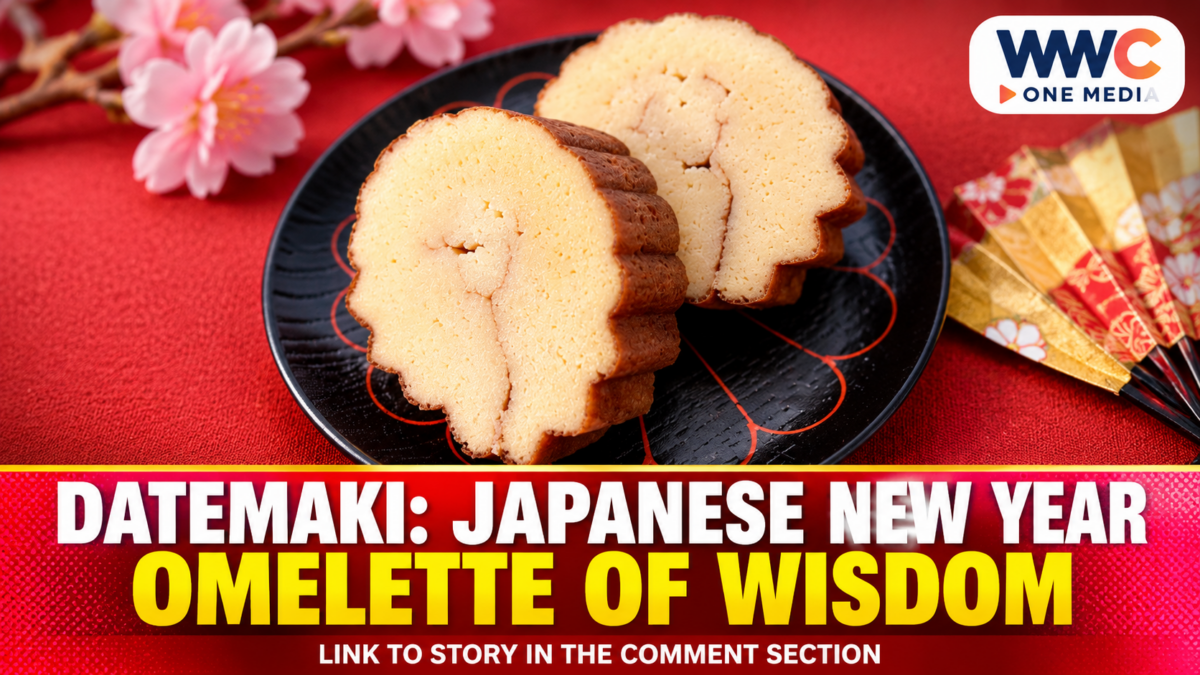
As Japan prepares to welcome 2027, datemaki remains one of the recognisable dishes associated with its traditional New Year celebration, osechi ryori. The golden, rolled Japanese omelette is more than a festive food: its shape carries a cultural wish for learning, knowledge and education in the year ahead.
The symbolism is documented in materials published by Japan’s Ministry of Agriculture, Forestry and Fisheries (MAFF), which explains that datemaki resembles a traditional scroll or rolled book. The association reflects an old wish for people to gain culture, scholarship and knowledge. Ministry of Agriculture+1
That meaning gives the dish a distinctive place on the New Year table. While other osechi ingredients represent health, prosperity, longevity or a good harvest, datemaki connects the celebration to intellectual growth.
For Filipino readers discovering Japanese food traditions, it is an example of how a dish can communicate a cultural idea through its appearance, name and place in a seasonal meal.
Why Datemaki Is More Than an Ordinary Japanese Omelette
Datemaki is commonly recognised by its bright yellow colour, soft texture and rolled appearance. Its resemblance to a scroll is central to its traditional symbolism.
MAFF explains that the word date in datemaki conveys elegance, flamboyance or an impressive appearance, while maki refers to the rolled form. Because books and other written materials were traditionally presented as scrolls, the dish became associated with the wish to acquire knowledge and education. Ministry of Agriculture+1
The symbolism is particularly fitting for the start of a new year. Families welcoming the coming year are not simply serving food; they are also expressing hopes for the future.
The meaning should not be mistaken for a formal religious requirement. Osechi dishes carry traditional wishes and cultural associations, but households can interpret and prepare them differently.
How Datemaki Fits Into Japan’s Osechi Tradition
Osechi ryori refers to the special collection of dishes prepared for the Japanese New Year. Traditionally, the food is arranged in stacked boxes called jubako, with different ingredients representing wishes for the household.
The origins of osechi are connected to seasonal observances and offerings. Japan’s government explains that the tradition developed from food associated with important seasonal festivals, with New Year eventually becoming the most significant occasion. HIGHLIGHTING Japan+1
The dishes are arranged to represent hopes for a favourable year. Black soybeans, known as kuromame, are associated with health and diligence. Herring roe, or kazunoko, represents the wish for descendants and family prosperity, while tazukuri, made from dried sardines, symbolises a good harvest. HIGHLIGHTING Japan+1
Datemaki adds another dimension to the meal by representing education and cultural development.
The stacked boxes also have meaning. MAFF explains that placing dishes in layers expresses the wish that happiness and good fortune will accumulate. Osechi is therefore a combination of food, presentation and shared family hopes rather than simply a large collection of festive recipes. Ministry of Agriculture
What Gives Datemaki Its Golden Colour and Rolled Shape?
Datemaki is generally prepared as a sweet rolled egg dish. Some traditional preparations combine eggs with fish paste, creating a soft texture and a consistency that can be shaped into a roll.
A regional food-education publication from MAFF’s Tokai Regional Agricultural Administration Office identifies eggs and hanpen as ingredients for datemaki. Hanpen is a Japanese fish-paste product, and the combination helps distinguish the dish from an ordinary rolled omelette. Ministry of Agriculture
The finished mixture is cooked and rolled before being sliced into portions. The result is a series of round pieces with a visible spiral pattern.
Recipes and sweetness levels can vary between households and commercial preparations. It is therefore better to understand datemaki as a traditional dish with variations rather than assume that every version follows exactly the same formula.
Its appearance is also part of its appeal. The yellow colour stands out among the different foods arranged in a jubako, while the repeated spiral pattern reinforces the association with scrolls.
The Other Wishes Hidden in an Osechi Box
Datemaki is only one part of a larger culinary tradition in which the appearance and ingredients of food carry symbolic meaning.
MAFF’s explanations of osechi traditions identify several other dishes and their associations. These include:
- Kuromame: Black soybeans represent the wish to live healthily and work diligently.
- Kazunoko: Herring roe represents family growth and prosperity.
- Tazukuri: Dried sardines represent hopes for an abundant harvest.
- Ebi: Shrimp symbolise longevity because of their long antennae and curved appearance.
- Kombumaki: Rolled kelp uses a word association with yorokobu, meaning to rejoice, and also represents longevity and family prosperity.
- Kuri kinton: The golden chestnut and sweet-potato preparation represents wealth and good fortune. Ministry of Agriculture
These meanings help explain why osechi is carefully arranged instead of served as an ordinary collection of side dishes.
They also show how Japanese food traditions use language, colour, shape and ingredients to communicate hopes that might otherwise be expressed through greetings or family wishes.
For Filipino diners interested in this approach to Japanese cuisine, WWC previously explored the role of seasonal ingredients and presentation in Yamazato’s Japanese kaiseki dining experience in Manila. Kaiseki and osechi are different dining traditions, but both demonstrate the importance of seasonality, preparation and presentation in Japanese food culture.
Why New Year Food Remains Important to Japanese Culture
Osechi is closely connected to the idea of welcoming the new year with family and expressing gratitude for the opportunity to begin another year.
Japan’s official cultural explanations describe New Year food as part of a wider tradition of welcoming the deity of the year, gathering family members and wishing for health and happiness. The dishes also reflect regional ingredients and differences in local food culture. Highlighting Japan+1
The practice has evolved over time. Osechi was traditionally prepared at home, but prepared sets are now also sold through department stores, restaurants and other retailers. Families can still observe the custom while choosing how much of the meal they prepare themselves. Japan Travel
The continued presence of Japanese cuisine in the Philippines also gives local diners opportunities to encounter these traditions beyond the holiday season. WWC’s coverage of Japanese food businesses and restaurant concepts expanding across Asian markets shows how Japanese culinary culture continues to reach audiences outside Japan.
Another example is the growing interest in regional Japanese products, including Hiroshima’s effort to introduce its oysters and sake to international consumers. These stories reflect different aspects of Japanese food culture, from seasonal dining to regional ingredients and international promotion.
What Happens Next
As the year-end approaches, datemaki will once again feature in the preparation of osechi meals for the 2027 New Year celebration.
There is no single preparation or presentation that every Japanese household must follow. Recipes differ, and families may choose traditional homemade dishes, commercially prepared osechi sets or a combination of both.
What remains consistent is the cultural idea behind the food. Datemaki’s scroll-like appearance represents a wish for knowledge and education, making it a meaningful addition to a meal prepared to welcome another year.
For anyone encountering the dish for the first time, its golden colour and soft texture may be what attracts attention. Its symbolism, however, explains why it has a place beyond its appearance on the plate.
Frequently Asked Questions
What is datemaki in Japanese cuisine?
Datemaki is a sweet, rolled Japanese egg dish traditionally served as part of osechi ryori, the special food prepared for the New Year.
What does datemaki symbolise?
Its rolled shape resembles a traditional book scroll. It represents wishes for knowledge, education, scholarship and cultural development.
What ingredients are used to make datemaki?
A traditional preparation can use eggs and fish paste, including hanpen. Recipes and proportions vary between households and producers.
When do Japanese families eat datemaki?
Datemaki is traditionally included in osechi ryori, which is prepared for the Japanese New Year and commonly enjoyed during the opening days of January.
What other foods are included in osechi?
Common dishes include black soybeans, herring roe, dried sardines, shrimp, kelp rolls and chestnut preparations. Each carries a symbolic wish, such as health, family prosperity, longevity or good fortune.