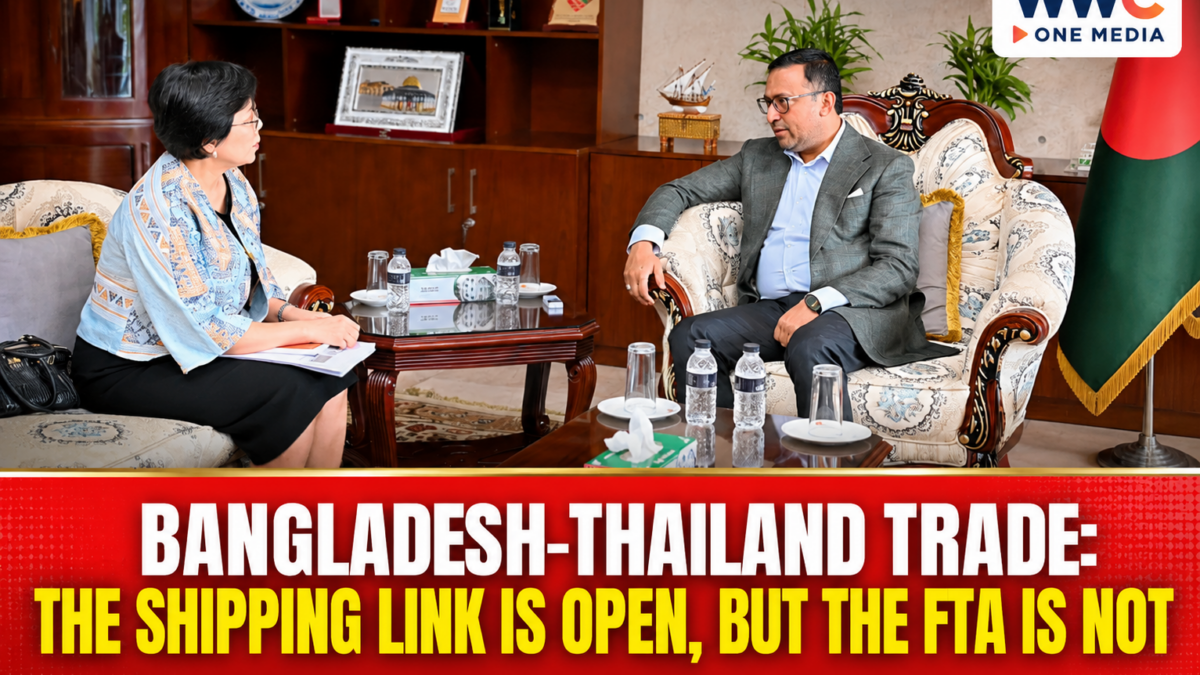
Bangladesh and Thailand are pursuing closer economic ties, with a direct shipping connection between Chattogram and Ranong already operating since September 2026 and further trade measures still being discussed. Their fourth Foreign Office Consultations, held in Bangkok on Oct. 30, placed tariff barriers, investment, agricultural processing and energy cooperation on the bilateral agenda.
The distinction between an operating transport link and proposals still awaiting consideration is important. The two governments have identified areas where cooperation could expand, but their published record does not establish that a bilateral free trade agreement has been concluded or that proposed tariff reductions have taken effect.
For businesses, the immediate opportunity lies in testing whether the new maritime route can make trade more efficient. The longer-term question is whether diplomatic discussions will produce enforceable trade rules, investment and projects.
Bangladesh-Thailand trade: A shipping route has moved into operation
The Chattogram–Ranong connection is the clearest practical development recorded in the October consultations. Both governments welcomed the start of the first direct shipping service between the Bangladeshi and Thai ports in September 2026.
Bangladesh’s Foreign Ministry said the service could reduce transportation time from approximately 15 days to four days. It described lower logistics costs and stronger bilateral trade as expected benefits.
A shorter shipping journey can matter to exporters and importers because transport time affects inventory planning, delivery schedules and the handling of goods. However, the published statement does not provide freight rates, cargo volumes, sailing frequency or actual savings achieved since the service began.
Those details will matter when companies decide whether the route offers a commercially useful alternative to existing shipping arrangements.
The development also fits into a wider regional focus on maritime logistics. WWC has examined the broader policy discussion in its report on ASEAN Plus Three’s maritime trade and logistics agenda. Regional declarations can establish priorities, but businesses ultimately need reliable services and measurable improvements.
Tariff proposals show where the trade gap remains
Bangladesh used the October consultations to present two proposals intended to reduce its trade gap with Thailand.
It asked Thailand to import more Bangladeshi pharmaceuticals, jute and jute products. Dhaka also proposed reducing duties on Bangladeshi products to improve their competitiveness in the Thai market.
Thailand expressed willingness to consider the proposals and expand trade and investment cooperation. That response is not the same as an approved tariff change: the published record does not specify a duty-reduction schedule, product list or implementation date.
The distinction is important for exporters. A request for lower duties does not change the tariff applied at customs, and an expression of willingness to consider a proposal does not guarantee market access.
For Bangladeshi producers, the commercial question is whether the proposals eventually translate into clearer conditions for selling goods in Thailand. For Thai buyers, greater imports could widen sourcing options, but actual purchases would depend on prices, product standards, supply capacity and commercial demand.
The negotiations also need to be viewed alongside other regional trade developments. WWC’s coverage of the Thailand–US trade agreement process explains why progress in negotiations should not be confused with a trade agreement already in force.
A bilateral FTA remains a proposed next step
The Thai delegation requested an early start to discussions on a bilateral free trade agreement. The October record identifies this as a request, not a completed negotiation or signed treaty.
A free trade agreement can establish rules for reducing or removing tariffs on specified products. Depending on its scope, it may also address customs procedures, services, investment and other conditions affecting cross-border commerce.
But the practical value of an FTA depends on the final text. Businesses need to know which products qualify, what rules of origin apply, how quickly tariff changes take effect and whether other regulatory requirements remain.
The governments have not published a completed Bangladesh–Thailand FTA text or a timetable for negotiations in the records reviewed for this report.
This leaves a clear distinction between the two countries’ immediate and longer-term trade agendas. The shipping route is already operating; the FTA remains a subject for diplomatic follow-through.
Energy and food processing offer another cooperation track
Trade discussions were not limited to port services and tariffs. Bangladesh also sought Thai technical cooperation and investment in processing Bangladeshi fruits and vegetables, along with technology transfer aimed at the global halal food market.
These requests point towards cooperation that could connect agriculture with manufacturing and export development. Processing can help turn agricultural output into products that are easier to store, transport and sell, although the consultations did not announce a specific factory, investment amount or project schedule.
Energy was another area of interest. Bangladesh referred to its national objective of generating at least 20% of electricity from renewable sources by 2030 and sought Thai expertise in converting agricultural residues and agro-industrial waste into electricity.
The idea links two economic concerns: managing agricultural by-products and expanding renewable power options. The official record, however, describes a request for technical expertise and experience. It does not confirm a funded power project, a construction decision or a specific generation target for Thai-supported facilities.
The next stage would require project details, financing arrangements, technical assessments and decisions by the relevant authorities.
Memoranda and regional diplomacy remain on the agenda
The two governments also agreed to consider memoranda of understanding that were already under discussion, including arrangements involving rice imports and workers’ migration.
The wording matters. The memoranda were to be considered; the consultation record does not say they were signed or had entered into force.
The governments also discussed professional training under Thailand’s International Cooperation Agency programme. Bangladesh sought training for professionals in areas including hospitality, nursing, germplasm and food processing. Thailand offered to share experience from its “One Village One Product” programme.
The consultations also covered cooperation on cultural and sporting exchanges, including Bangladesh’s offer to share cricket expertise and Thailand’s offer of Taekwondo training.
On regional issues, Bangladesh welcomed Thailand’s support for its aspiration to become an ASEAN Sectoral Dialogue Partner and join the Regional Comprehensive Economic Partnership. Dhaka also sought Thai support on the repatriation of displaced Rohingya people to Rakhine State in Myanmar.
The Rohingya issue has a wider legal and humanitarian context. WWC’s report on the International Court of Justice ruling involving Myanmar and the Rohingya examines why a legal decision does not by itself resolve the practical conditions for safe return.
What happens next
The two governments have identified several possible areas for deeper cooperation, but implementation will require more than another round of diplomatic discussions.
For trade, the indicators to watch are any formal start to FTA negotiations, a published tariff proposal, product-level market-access decisions and measurable use of the Chattogram–Ranong shipping service.
For energy and agriculture, the next meaningful developments would be project agreements, technical plans, investment commitments or signed cooperation documents. The same applies to the proposed rice-import and labour-migration memoranda.
The governments also looked ahead to the 55th anniversary of diplomatic relations in 2027. Their October statement said they hoped high-level visits could mark the anniversary and identified Thailand as the venue for the eighth Joint Commission meeting in 2027.
For now, Bangladesh and Thailand have a working maritime link and a broad cooperation agenda. Whether that agenda becomes a deeper commercial partnership will depend on the agreements, operating data and investment decisions that follow.
Frequently asked questions
Is there a direct shipping route between Bangladesh and Thailand?
Yes. The two governments said the first direct shipping service between Chattogram and Ranong ports began in September 2026.
How much time could the shipping route save?
Bangladesh’s Foreign Ministry said the route could reduce transportation time from approximately 15 days to four days. The published record does not provide actual performance data since launch.
Have Bangladesh and Thailand signed a free trade agreement?
The October 2026 consultations did not announce a signed FTA. Thailand requested an early start to bilateral FTA discussions.
What products does Bangladesh want to export more to Thailand?
Bangladesh proposed that Thailand import more pharmaceuticals, jute and jute products, and asked for lower duties on Bangladeshi goods.
Are Bangladesh and Thailand planning energy cooperation?
Bangladesh sought Thai technical expertise in converting agricultural residues and agro-industrial waste into electricity. The consultation record does not announce a funded project or construction schedule.