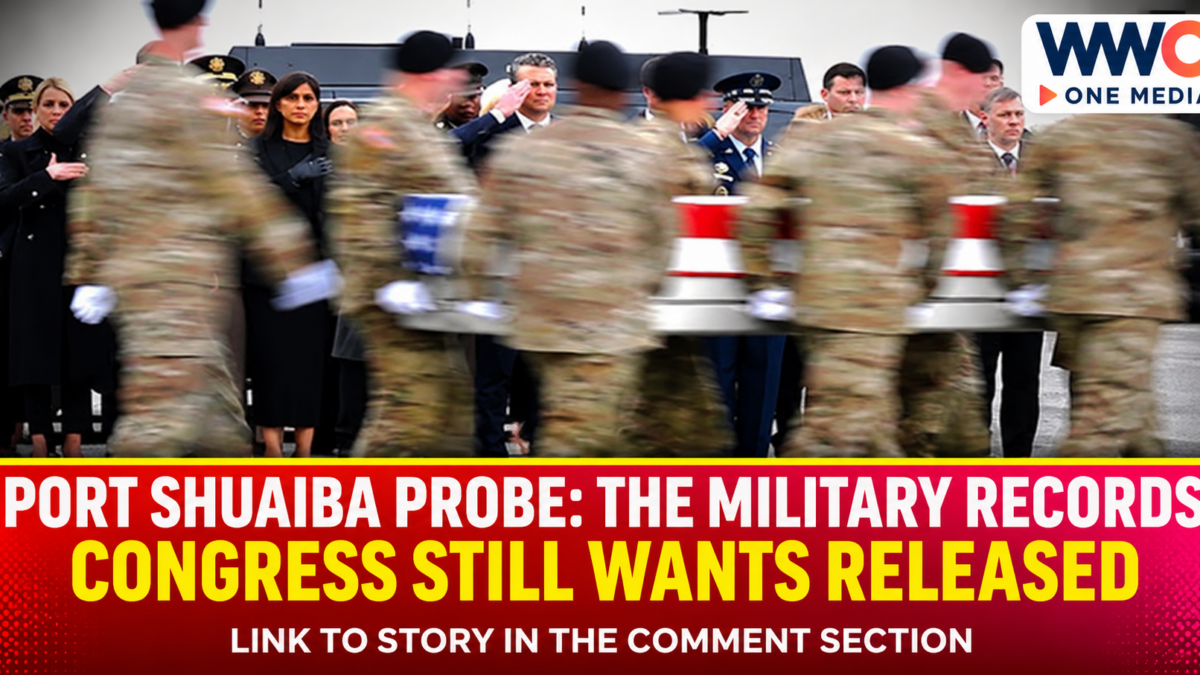
Eight months after a drone attack killed six U.S. Army Reserve soldiers at Port Shuaiba in Kuwait, questions about the military’s decisions before and during the attack remain the subject of congressional scrutiny. A Nov. 15 letter to Defense Secretary Pete Hegseth requests the Army’s investigative records, force-protection assessments and additional information about the circumstances surrounding the March 1 strike.
The request puts the spotlight on a critical issue beyond the casualty count: whether the military’s investigation will provide a sufficiently detailed account of how troops were protected at the site and what lessons can be drawn from the attack.
The Port Shuaiba probe is now a question of transparency
The attack occurred on March 1, 2026, at a U.S. military command post in Kuwait’s Port Shuaiba. Six Army Reserve soldiers assigned to the 103rd Sustainment Command died during the unmanned aircraft attack.
The U.S. Army Reserve’s casualty release identified the six fallen soldiers as Maj. Jeffrey O’Brien, Capt. Cody Khork, Chief Warrant Officer 3 Robert Marzan, Master Sgt. Nicole Amor, Sgt. 1st Class Noah Tietjens and Sgt. Declan Coady. The military said the incident was under investigation. U.S. Army Reserve+1
The attack took place during Operation Epic Fury, the military campaign connected to the wider conflict with Iran.
The deaths have become part of the broader debate over military preparedness, protection against unmanned aircraft and the vulnerability of personnel working in forward locations during an active conflict.
For the families, survivors and lawmakers seeking answers, the investigation is important because it may establish what decisions were made, what risks were understood and what protective measures were available.
A Senate letter asks for more than a summary
In a letter dated Nov. 15, Sen. Richard Blumenthal asked Hegseth for information about the Army’s investigation and the military’s force-protection arrangements at Port Shuaiba.
The letter raised questions about counter-drone systems, overhead protection, hardened shelters, early-warning capabilities and whether additional defensive equipment had been requested before the attack.
It also sought details about whether personnel relocation proposals were considered, who evaluated them and whether risks were formally documented.
The request is significant because it seeks underlying records rather than relying solely on a summary of the Army’s conclusions.
Military investigations can involve operational details that are classified or withheld for security reasons. But lawmakers’ requests for records can help determine whether an investigation examined the relevant decisions comprehensively and whether its findings can support changes in military procedures. blumenthal.senate.gov+1
Whistleblower claims remain allegations, not established findings
The Senate letter included information provided by a wounded Army Reserve officer through legal counsel.
The protected disclosure alleges that concerns about the site’s vulnerability to drone attacks were raised before the strike. It also raises questions about the location of the command post, available defensive capabilities and the response to possible warning signs.
The disclosure further alleges shortcomings in medical preparedness and casualty evacuation arrangements at the facility.
These allegations are serious, but they are not equivalent to findings from a completed public investigation. The disclosed material represents the whistleblower’s account and the concerns being presented to lawmakers.
The distinction matters. A proper examination of military responsibility requires reviewing operational records, communications, orders, threat assessments and testimony from personnel who were involved.
Until those materials are assessed and the findings are made available, assigning responsibility to specific commanders or treating disputed details as established facts would go beyond the public evidence. blumenthal.senate.gov+1
Why the Army’s records matter
The requested records could help establish what protective equipment and procedures were available at Port Shuaiba before March 1.
Among the questions lawmakers want answered are whether the facility had adequate protection against unmanned aircraft, what warnings were received, whether requests for additional resources were made and what medical evacuation capabilities were in place.
The Senate letter also asks for the Army’s Regulation 15-6 investigation, supporting documents, relevant operational orders and additional military records.
These materials could provide a clearer timeline of the decisions made before the attack and how responsibilities were distributed among military commands.
The value of an investigation is not limited to determining whether an individual made an error. It can also identify institutional weaknesses, communication failures, gaps in equipment or procedures and unclear responsibilities that may affect other units.
The issue is particularly relevant as military forces increasingly face drone threats that can challenge conventional protection systems and expose personnel at logistics, command and support locations.
Military accountability is also about lessons learned
The Port Shuaiba attack highlights the importance of force protection in locations that may not appear to be frontline combat positions.
Logistics and sustainment units provide essential support to military operations. Their work can involve coordinating supplies, equipment, personnel movement and operational resources.
Yet those functions can make support facilities strategically important—and potentially vulnerable—during conflict.
The broader question is whether military planning can adapt quickly enough to evolving threats, especially when unmanned aircraft can reach locations previously considered relatively secure.
WWC ONE MEDIA has previously examined the wider conflict’s military and economic consequences, including the changing U.S. troop casualty picture and the continued uncertainty surrounding U.S.-Iran negotiations.
The Port Shuaiba investigation is a more specific test of whether lessons from a deadly attack can be translated into concrete changes in military operations.
What happens next?
The next step depends on the military’s response to requests for investigative records and the extent to which lawmakers can review the available evidence.
The requested materials include the Army’s investigation and operational documents related to the site. Some information may remain classified, particularly details involving military capabilities, threat assessments or operational planning.
However, the central questions remain understandable even without access to classified information: What risks were identified? What protection was available? Were concerns communicated? Were decisions documented? And what changes will be made to prevent similar incidents?
The investigation’s findings could also shape future discussions about drone defence, the positioning of support units and the medical response to attacks on military facilities.
The bottom line
The deaths at Port Shuaiba are confirmed. The questions surrounding the decisions before the attack, however, remain subject to further examination.
The Senate letter shows that lawmakers are seeking a deeper review of the military’s records and protective arrangements—not merely an account of what happened after the drone struck.
Whether those records lead to clearer findings, additional oversight or changes to military procedures will determine how much the investigation contributes to preventing another deadly attack.
The public record remains incomplete. Until the full investigative findings become available, the most important distinction is between what is confirmed, what is alleged and what military investigators can ultimately establish.
FAQ
What happened at Port Shuaiba, Kuwait?
A drone attack struck a U.S. Army Reserve command post at Port Shuaiba on March 1, 2026, killing six soldiers assigned to the 103rd Sustainment Command.
What is the Port Shuaiba investigation about?
The investigation examines the circumstances surrounding the attack. Congressional questions include force protection, warning systems, defensive capabilities, personnel positioning and medical preparedness.
Has the Army released its complete investigation?
The complete investigation was not located in the publicly accessible primary records reviewed for this article.
What are lawmakers asking the Pentagon to provide?
The Senate letter requests investigative documents, operational records, force-protection assessments and information about the military’s decisions before the attack.