BANGKOK, Thailand — Thailand’s Criminal Court on Nov. 18, 2026, imposed prison sentences on four individuals and fined China Railway Number 10 (Thailand) Co., Ltd. in a foreign-business case linked to the State Audit Office building project. The Department of Special Investigation (DSI) released details of the judgment on Nov. 19, distinguishing the ownership offences from the separate criminal case concerning the building’s collapse.
That distinction matters for contractors, public procurement officials and families affected by the disaster. A judgment about unlawful company ownership identifies one form of misconduct, but it does not establish what physically caused a structure to fail or determine criminal liability for the collapse.
Thailand SAO Ruling: What the Court Decided
The DSI identified the proceeding as Criminal Court case อ.1558/2568, arising from special investigation 32/2568. The company and four individuals faced charges under Thailand’s Foreign Business Act B.E. 2542 (1999) concerning the use of Thai shareholders on behalf of foreign interests.
The court fined China Railway Number 10 (Thailand) 1 million baht and ordered the company to cease business under conditions specified by the court. Its Chinese authorised director received a three-year prison sentence and a fine of 1 million baht.
Two Thai defendants each received prison sentences of four years, nine months and 18 days, together with fines of 1.6 million baht. Another Thai defendant received two years, four months and 24 days and an 800,000-baht fine. The DSI described sentence reductions following guilty pleas.
These were trial-level penalties. The official notice did not establish whether appeals had been filed, whether the judgments were final or whether the individuals remained in custody after sentencing.
Why the Ownership Structure Came Under Scrutiny
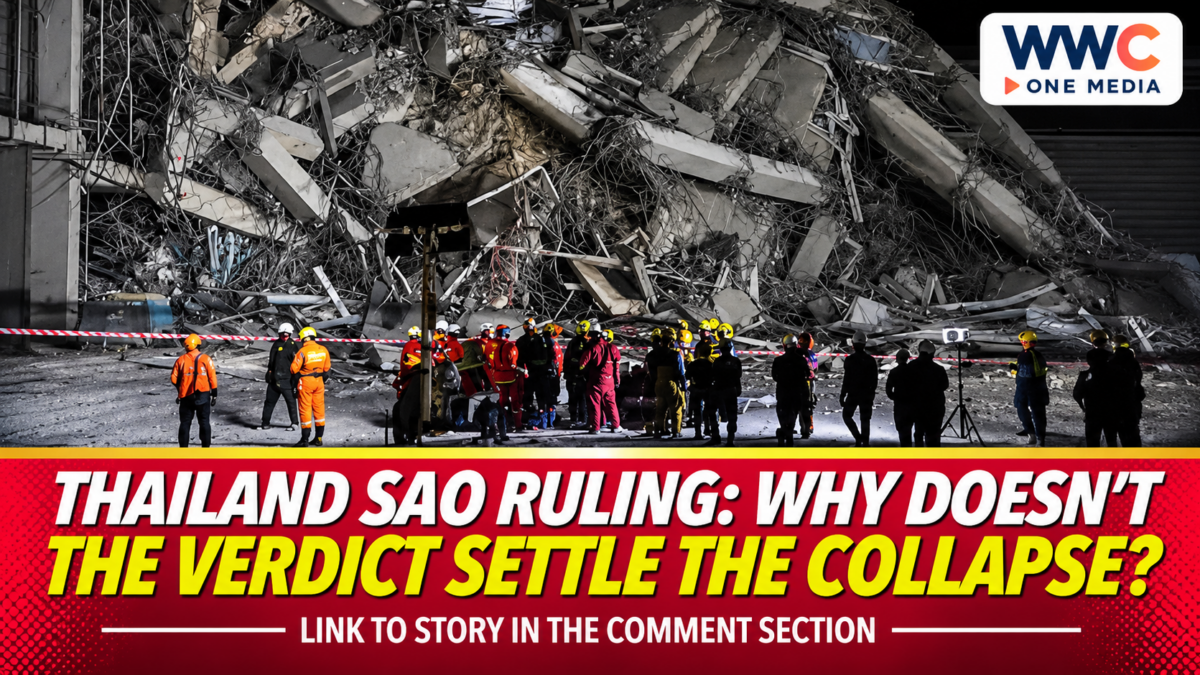
The construction company was involved in the project for the State Audit Office’s new headquarters, which collapsed on March 28, 2025. Investigators subsequently examined whether its apparent Thai shareholders were genuine owners or were holding interests for foreigners.
The DSI described a wider review of shareholder structure, investment funding, the financial capacity of Thai shareholders and who actually directed the business. Its investigation involved documentary, financial and witness evidence, as well as inspections and coordination with other authorities.
The regulatory issue is not that a construction company has international connections. It is whether a company operating in a restricted business category complies with the applicable rules concerning foreign participation and whether the registered shareholding reflects the underlying arrangement.
For related context, WWC has previously covered Thai companies investigated over suspected nominee landholding. Those investigations are separate and do not establish wrongdoing by any entity in this case.
What the Verdict Does Not Establish
The DSI was explicit that this ruling covered nominee shareholding and foreign-business offences only. It was not a judgment in the main criminal proceedings about the cause of the State Audit Office building collapse.
That means the November ownership judgment cannot be used to conclude that a particular person or firm caused the structural failure. Questions about design, materials, construction procedures, supervision and compliance with engineering requirements belong to the separate inquiry and must be resolved on their own evidence.
This is a significant boundary for public understanding. A company might violate ownership rules without that violation being the technical cause of a structural failure. Conversely, evidence relevant to construction responsibility cannot be replaced by the findings of a corporate-ownership case.
Any claim about deaths, compensation, engineering defects or individual responsibility must therefore be tied to records addressing those specific issues, not merely to the nominee verdict.
What This Could Mean for Public Procurement
Analysis: The case demonstrates why verifying the real ownership and control of contractors can matter before government construction work begins. A shareholder register by itself may be insufficient if investment funding and effective management point in another direction.
Procurement systems need clear responsibilities for checking legal eligibility, reviewing financing records and responding when a contractor’s declared ownership appears inconsistent with its actual control.
The principle of distinguishing administrative compliance from physical safety also appears in WWC’s coverage of Quezon City’s construction-site restoration requirements. That Philippine measure is unrelated to the Thai judgment but illustrates a different way public authorities can make contractors answerable for compliance obligations.
Stronger checks do not guarantee that every construction problem will be prevented. They can, however, make it easier for public agencies to identify which entities are genuinely responsible for contractual and regulatory obligations.
Why Construction Accountability Has Several Layers
A major public building can raise different questions at once: whether a bidder was legally qualified, whether project delivery complied with its contract, whether workers were protected and whether engineering requirements were met. Each requires a different factual record.
Analysis: Treating every question as a single accusation can obscure the answer. Investigators and courts must distinguish company control from construction causation and distinguish alleged breaches from findings already established in court.
That wider distinction is relevant to regional workplace oversight. WWC’s report on Singapore’s construction safety enforcement measures concerns a different jurisdiction and incident, but underscores that safety regulation has its own standards and enforcement mechanisms.
For affected communities, accurate distinctions do not diminish the seriousness of a disaster. They help ensure that accountability follows the evidence rather than assumptions based on a separate conviction.
What Happens Next
The immediate questions are whether any appeal is documented, how the company’s business-cessation order is implemented and what the separate collapse-related criminal proceedings establish. The DSI release supplies no final answer to those subsequent issues.
Authorities would help public understanding by publishing dated procedural updates and clearly identifying which court case each development concerns. A new ruling about the building’s structural failure would be a distinct and consequential development, not merely an extension of the nominee conviction.
The Nov. 18 decision supplies a defined legal outcome about company ownership and foreign-business compliance. It does not close every question surrounding the collapse, and future reporting should preserve that difference.
Frequently Asked Questions
What did the court decide in the Thailand SAO case?
On Nov. 18, 2026, the Criminal Court imposed penalties on China Railway Number 10 (Thailand) and four individuals for offences under the Foreign Business Act involving nominee ownership and business operations.
Did the court decide who caused the building collapse?
No. Thailand’s DSI expressly distinguished the ownership verdict from the separate criminal proceedings concerning the collapse.
What fine did China Railway Number 10 (Thailand) receive?
The company was fined 1 million Thai baht and ordered to cease business under conditions specified by the court.
What is a nominee shareholding arrangement?
In this context it involves Thai individuals holding shares on behalf of foreign interests. The investigated question was whether such an arrangement was used to evade the applicable foreign-business restrictions.
Is the case completely finished?
The official notice confirms a trial-level judgment in the foreign-business case. It does not confirm a final appellate outcome or resolve the separate case concerning the building’s collapse.