Singapore’s Ministry of Manpower (MOM) has called on companies in the construction and transportation and storage sectors to conduct a voluntary safety time-out after seven workplace fatalities were recorded since September.
The two-week Safety Time-Out (STO) runs from Oct. 5 to Oct. 18, giving employers an opportunity to review workplace safety procedures, identify gaps and strengthen controls before work resumes as normal.
At the same time, MOM has introduced tougher enforcement measures in the two sectors for one month, including higher fines, longer stop-work orders and possible restrictions on hiring new migrant workers in serious cases.
Seven Deaths Since September
The latest measures follow a series of fatal workplace incidents concentrated in construction and transportation and storage.
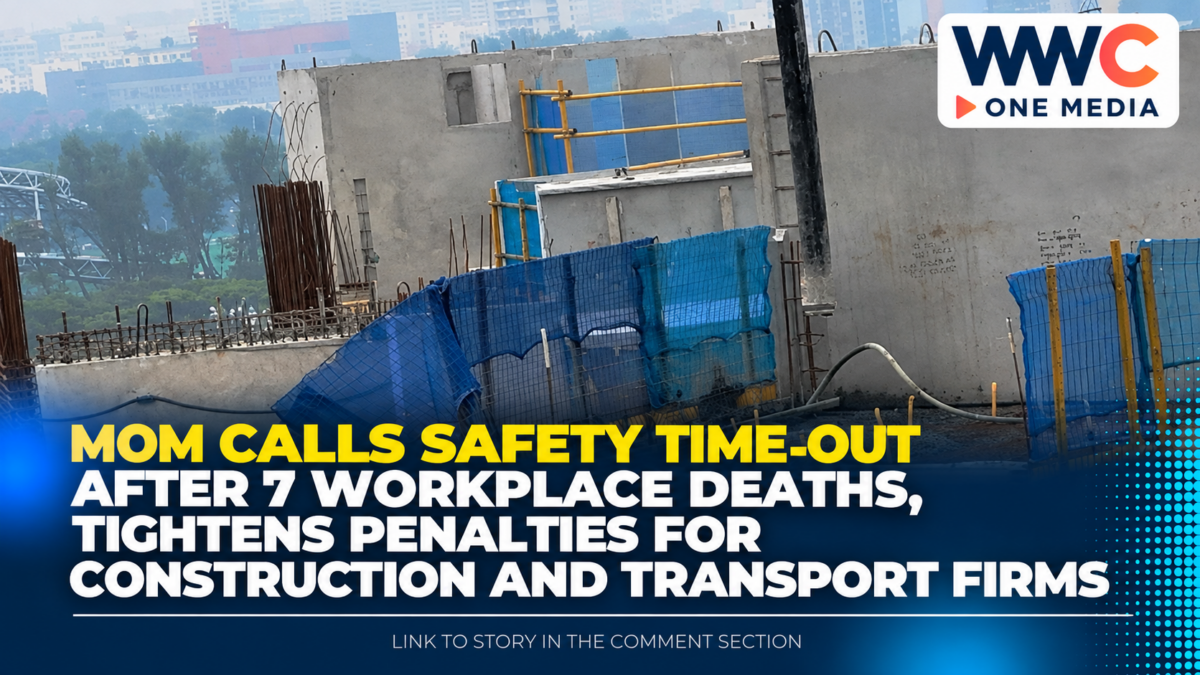
Among them was the death of a 22-year-old worker at a Tanjong Rhu HDB construction site on Sept. 28. The worker fell from the 12th floor after being struck by the discharge hose of a concrete pump truck while concreting works were being carried out.
Another fatal incident occurred at Tuas Port on Sept. 22, where two workers fell into the sea while carrying out stevedoring work.
Minister of State for Manpower Dinesh Vasu Dash said the seven workplace deaths since September were “deeply concerning” and that decisive action was needed to prevent further loss of life.
MOM described the fatalities as a grave reminder that workplace safety and health cannot be taken for granted.
The latest deaths come after Singapore recorded 21 workplace fatalities in the first half of 2026, up from 18 during the same period in 2025. Vehicular incidents were the leading cause, accounting for nine deaths.
Companies Urged to Stop and Review Safety Procedures
During the voluntary Safety Time-Out, companies have been asked to conduct a thorough review of their work processes and risk controls.
MOM said employers should pay particular attention to the safe use of concrete pumps and measures designed to prevent vehicles from rolling away.
These measures include ensuring that drivers engage their handbrakes before leaving vehicles and using wheel chocks where appropriate.
The ministry also urged employers to engage workers and supervisors directly so that safety procedures are understood and followed at every level of the workplace.
Dash said employers should use the time-out to examine their work processes, address safety gaps and discuss with workers and supervisors how tasks can be performed more safely.
The initiative is voluntary, but MOM’s separate enforcement measures will apply during the same period.
Fines to Rise From S$2,000 to S$3,000
From Oct. 5 to Nov. 4, MOM will enhance enforcement in the construction and transportation and storage sectors.
For first-time offences that are eligible for composition, the fine quantum will rise from S$2,000 to S$3,000.
Higher composition fines will apply to repeat offences and more serious breaches.
The move is intended to strengthen deterrence and make companies more accountable for workplace safety lapses.
MOM had previously introduced similar enhanced measures nationwide following a series of workplace deaths in June.
Those measures included higher composition fines and longer minimum stop-work periods as part of a broader effort to strengthen workplace safety.
Stop-Work Orders to Last at Least Eight Weeks
MOM will also increase the minimum duration of stop-work orders from five weeks to eight weeks during the enhanced enforcement period.
Stop-work orders can have significant consequences for companies because affected operations must cease until the required safety issues have been addressed and the necessary conditions for restarting work are met.
The longer minimum duration signals a tougher approach toward companies where serious safety failures are identified.
Under Singapore’s Workplace Safety and Health framework, companies that fail to comply with a stop-work order can face severe penalties, including a maximum fine of S$500,000, an additional fine of up to S$20,000 for every day the offence continues, imprisonment of up to 12 months, or both, depending on the circumstances.
Serious Cases Could Affect Migrant Worker Hiring
MOM has also introduced another measure aimed at companies responsible for particularly serious safety lapses.
Companies found to have committed egregious workplace safety breaches that result in fatal or serious accidents may be debarred from hiring new migrant workers for three months.
The restriction adds another layer of accountability, potentially affecting a company’s ability to expand or replenish its workforce.
The ministry said the enhanced measures are designed to strengthen both deterrence and accountability within the two sectors.
Construction Safety Has Improved, But Risks Remain
The latest intervention comes even as Singapore’s construction sector has recorded some improvement in its workplace safety statistics.
MOM’s first-half 2026 data showed that construction’s annualised fatal and major injury rate fell from 27.6 per 100,000 workers in the first half of 2025 to 24.1 per 100,000 workers in the first half of 2026.
The sector’s 69 fatal and major injuries were also down from 75 during the corresponding period in 2025.
However, MOM highlighted continued concerns over smaller-scale construction activities, including additions and alterations and renovation works. These accounted for 70 per cent of construction’s fatal and major injuries during the first half of 2026.
The ministry has been reviewing measures to strengthen safety accountability among contractors involved in such works.
Vehicular Incidents Remain a Major Concern
Work-related vehicle incidents are another major area of concern.
Of the 21 workplace fatalities recorded in the first half of 2026, nine were caused by vehicular incidents — more than any other category.
MOM has previously identified traffic-related risks as an area requiring stronger controls, particularly as platform work and other road-based activities continue to grow.
In August, MOM said preliminary investigations into the workplace fatalities earlier in the year did not point to a single common underlying cause. However, vehicle-related activities, traffic accidents and individual worker lapses were among the areas of concern.
The government has also been taking separate steps to improve worker transportation safety. From Jan. 1, 2027, the Ministry of Transport and Land Transport Authority will ban the transportation of workers in caged lorry decks, although companies can continue using such lorries to carry goods and equipment.
Employers Told Not to Treat Time-Out as a ‘Paper Exercise’
The latest measures are intended to go beyond paperwork and formal compliance.
MOM has called on employers to use the safety time-out to review actual working conditions, engage supervisors and workers, and ensure that safety controls are practical and consistently followed.
The National Trades Union Congress has also backed the tougher enforcement measures.
Melvin Yong, MP for Radin Mas and assistant secretary-general of NTUC, said employers should not treat the safety time-out as a “paper exercise”, stressing that unsafe work should be stopped immediately and workers should be able to raise safety concerns without fear.
With seven workplace deaths recorded since September, MOM’s latest intervention places renewed emphasis on preventing avoidable accidents in two sectors where workers can face significant risks.
The voluntary Safety Time-Out will run until Oct. 18, while the enhanced enforcement measures will remain in place until Nov. 4.
The ministry is urging employers, workers, industry partners and unions to use the period to strengthen workplace safety practices and prevent further loss of life.