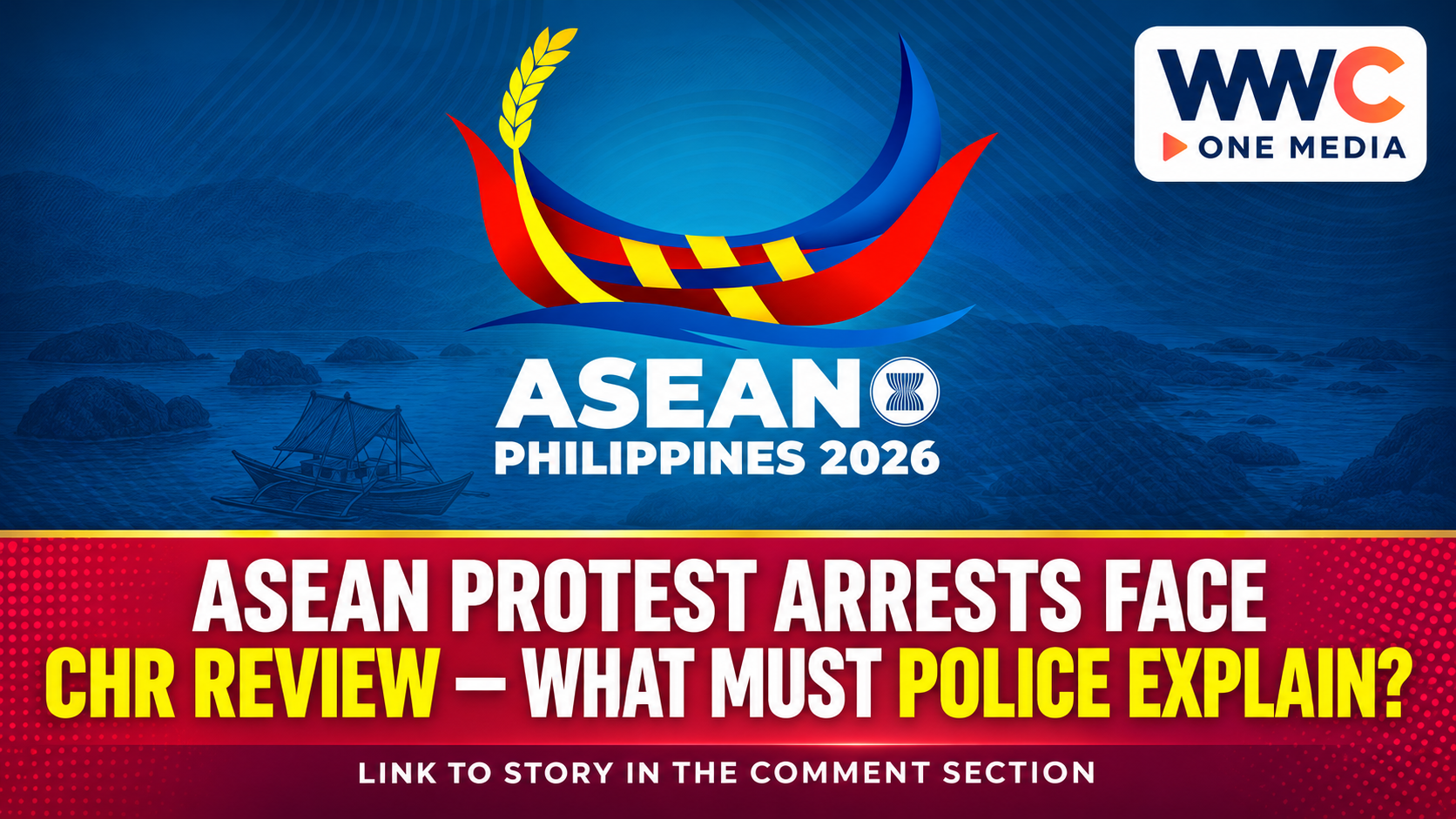
MANILA, Philippines — The Commission on Human Rights (CHR) said on Nov. 18, 2026, that it was examining reported violations arising from demonstrations held during the opening of the 49th ASEAN Summit on Nov. 15. Its review includes the grounds for arrests, the treatment of people taken into custody and a delay in access to detainees at Camp Bagong Diwa.
The inquiry raises a question that outlasts the summit: whether security decisions made during a high-profile diplomatic event can be explained through verifiable custody records and the safeguards required by Philippine law. The CHR has not announced a final finding that rights violations occurred.
ASEAN protest arrests: What the CHR confirmed
In its Nov. 18 public statement, the CHR identified protests in Manila, Muntinlupa City and other areas as the events prompting its response. The commission said it deployed personnel from its National Capital Region Office, Protection Office, Investigation Division and Regional Office IV-B beginning Nov. 15.
Its teams carried out quick-response operations at the Manila Police District and at the Philippine National Police National Capital Region Police Office in Camp Bagong Diwa. These are concrete steps in an inquiry, not a conclusion that any particular officer or protester broke the law.
The review comes after significant security preparations for the summit. WWC previously examined the scale and logistical challenges of ASEAN security preparations. The present issue is narrower: whether individual interventions against demonstrators met legal standards.
Why access to Camp Bagong Diwa matters
The CHR said its lawyers and investigators were initially denied access at Camp Bagong Diwa on Nov. 15 despite repeated requests. It reported that access was eventually granted late that evening, following several hours of delay.
Under Article XIII, Section 18 of the Constitution, the commission has investigative and visitorial functions relating to human rights. Access is therefore not merely a courtesy offered to an outside observer. It is a mechanism for independent examination of detention conditions and complaints.
A delayed inspection does not, on its own, settle whether each arrest was lawful. But it makes the sequence of decisions important: who controlled entry, why access was delayed, and whether those circumstances affected the ability to check detainees’ welfare promptly.
The CHR said it would seek police and medical records, gather accounts from individuals concerned and examine reported mistreatment and restrictions involving basic necessities. Until that work produces findings, allegations must remain allegations.
What the Constitution and assembly law require
Article III, Section 4 of the 1987 Constitution protects expression and peaceful assembly. These rights remain relevant even when police must secure visiting delegations or protect restricted venues.
Batas Pambansa Blg. 880, the Public Assembly Act of 1985, also sets the framework for demonstrations. It requires maximum tolerance from peacekeeping personnel and addresses permits, dispersal procedures and circumstances in which participants may be arrested.
The law distinguishes attending an otherwise peaceful assembly from conduct that independently violates applicable law. It does not give every public gathering unrestricted access to any location, and it does not make an arrest automatically legitimate simply because an event involves heightened security.
The practical test is individual: what action was attributed to the person, what legal provision was invoked, and were required procedures followed? WWC’s earlier examination of ASEAN protest arrests and police accountability outlined the same need for careful documentation. The CHR statement adds a specific account of difficulties encountered by its own monitors.
Why individual custody records are essential
The CHR is examining the circumstances and legal grounds of arrests, the status of people apprehended and the conditions under which they were held. It specifically mentioned minors among the people whose circumstances require verification, without publishing a final count or identifying individual cases.
Different categories must not be mixed together. Someone stopped at a police line is not necessarily a person formally arrested. Someone released after questioning is not necessarily facing charges. And an allegation of ill-treatment does not become a proven violation before the evidence has been assessed.
For the public, reliable documentation should clarify when custody began, the legal basis stated by authorities, access to counsel and whether necessities such as water, food and medical attention were provided. These questions protect individual rights while also permitting police decisions to be evaluated fairly.
Indigenous communities, like all communities, are entitled to constitutional safeguards. WWC has separately covered efforts to improve awareness of Indigenous Peoples’ legal rights. However, the CHR statement reviewed for this article does not confirm the reported identity or number of Mangyan people allegedly arrested at the summit protests. That claim cannot be presented as established fact here.
What this could mean for police accountability
Analysis: A major international summit can justify carefully planned security arrangements. It cannot eliminate ordinary legal checks on arrest, detention and access to independent monitors. Accountability therefore depends on evidence about specific decisions, rather than broad claims that the operation was either wholly proper or wholly abusive.
The CHR’s eventual findings could help distinguish legitimate enforcement from departures from required procedure. They could also identify whether changes to custody documentation or inspection access are warranted. Neither outcome should be assumed in advance.
A transparent process would benefit both people raising complaints and officers whose conduct is being questioned. Each deserves an assessment grounded in records rather than untested social-media claims.
What happens next
The CHR said it would continue coordinating with authorities, collect relevant documents and assess the complaints independently. It may recommend legal, administrative or policy action if its findings warrant such steps. As of Nov. 21, the official statement reviewed here does not provide a final case-by-case determination.
The Philippines handed the ASEAN chairship to Singapore on Nov. 17, according to the CHR’s statement. The summit has ended, but the questions about detention procedures and oversight remain open. The next meaningful development will be a documented account of what happened to those taken into custody and what legal conclusions, if any, follow.