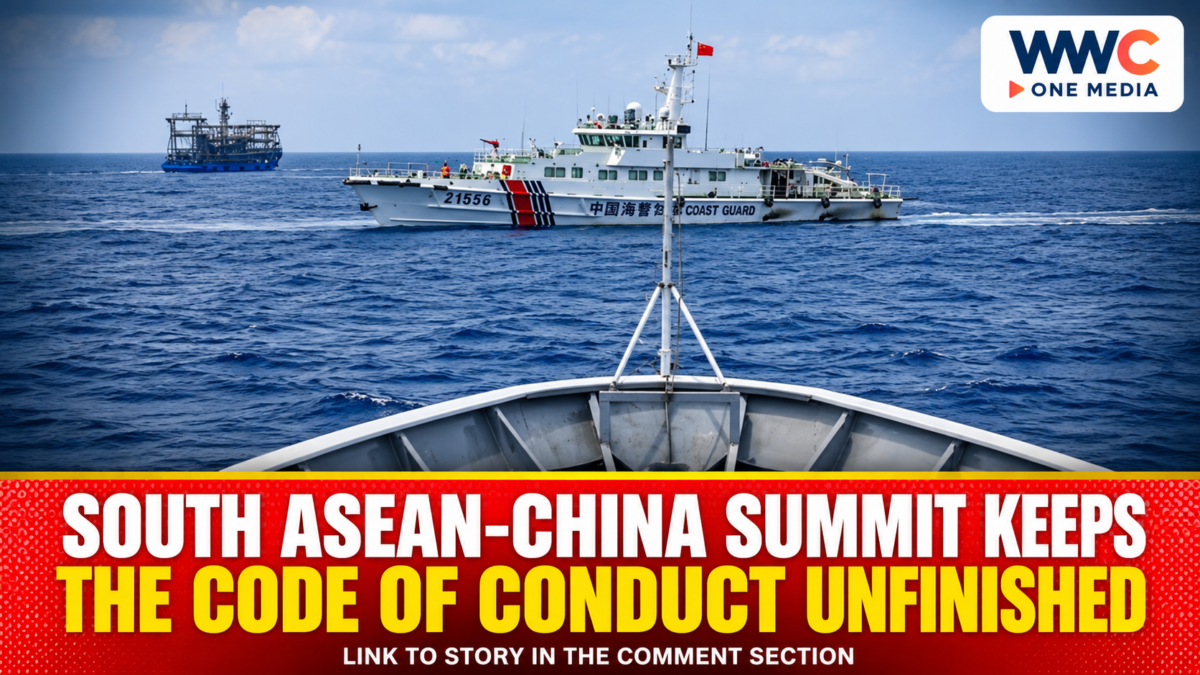
The ASEAN-China Summit in Manila on Nov. 16 produced a further diplomatic commitment on the South China Sea, but not a completed Code of Conduct.
In their joint statement marking the fifth anniversary of the ASEAN-China Comprehensive Strategic Partnership, ASEAN member states and China welcomed the progress achieved in negotiations and called for sustained, intensive efforts to conclude an effective and substantive agreement.
The statement placed particular emphasis on international law, including the 1982 United Nations Convention on the Law of the Sea (UNCLOS). It also reaffirmed the parties’ commitment to implementing the 2002 Declaration on the Conduct of Parties in the South China Sea.
The wording matters because the declaration and the proposed Code of Conduct are separate instruments. Reaffirming the existing declaration does not mean that the new code has been completed or adopted.
The joint statement described the negotiations as being in their final phase. However, it did not publish the negotiating text, identify a final signing date or confirm that all outstanding provisions had been settled.
That leaves the practical test ahead: whether negotiators can turn the progress acknowledged in Manila into a final document with clear commitments and support from all participating parties.
The January 29 ASEAN Foreign Ministers’ Retreat statement had set an objective of concluding negotiations within 2026. The November summit statement did not announce that this objective had been achieved.
For the Philippines, the outcome means the proposed code remains an important regional issue beyond the Manila meetings. Its eventual value will depend on the actual provisions, their consistency with UNCLOS and the willingness of participating governments to implement them.