The diplomatic effort to end Russia’s war against Ukraine is entering another important stage, with US President Donald Trump’s negotiating team now coordinating more closely with European governments ahead of a planned meeting in Berlin on Nov. 19.
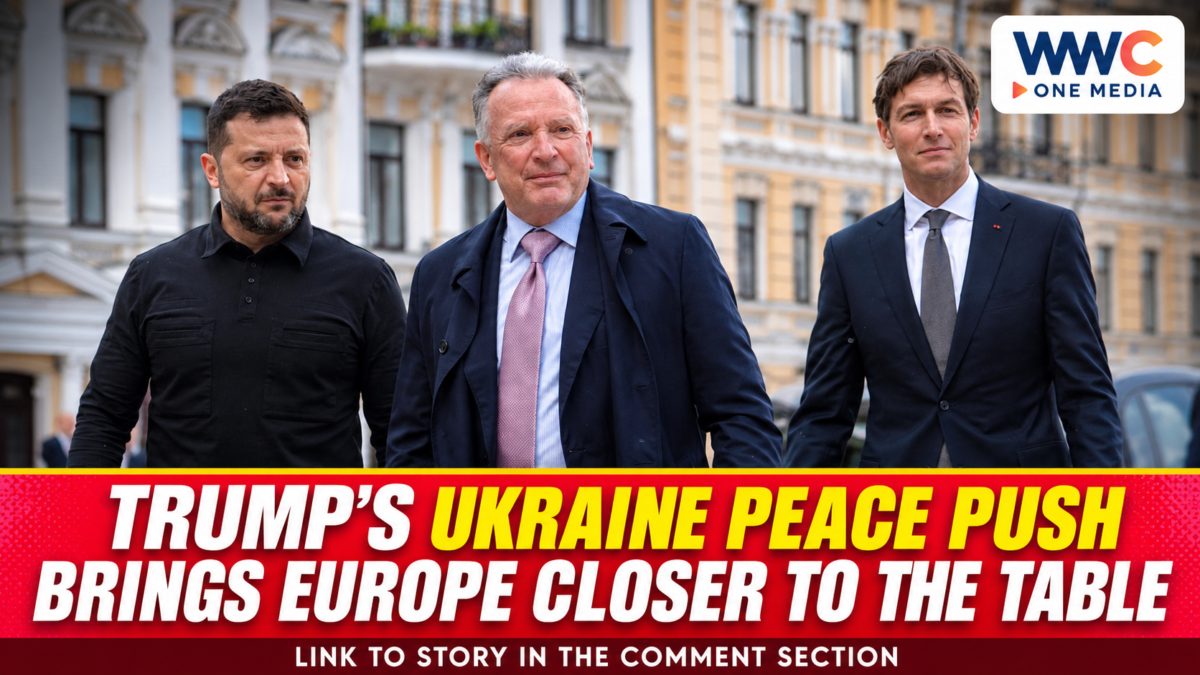
Ukrainian President Volodymyr Zelenskyy confirmed on Nov. 16 that American representatives Steve Witkoff and Jared Kushner had joined discussions with Ukrainian and European negotiating teams. France, Germany, the United Kingdom, Italy, Poland, the European Commission, the European Council and NATO were also represented.
The development gives European governments a more clearly defined role in discussions that could shape Ukraine’s future and the continent’s security arrangements. But it does not mean Russia has accepted Europe’s proposed negotiating format, or that the parties have reached an agreement to end the war.
Washington and Europe move towards closer coordination
The latest consultations reflect a diplomatic process that is gradually expanding beyond discussions involving only Washington, Kyiv and Moscow.
In his Nov. 16 address, Zelenskyy said the American representatives participated remotely in a discussion involving Ukrainian and European negotiating teams. He identified the European participants as representatives from five countries, two EU institutions and NATO.
The countries named were France, Germany, the United Kingdom, Italy and Poland.
Zelenskyy described the discussion as difficult but said it produced an agreement to meet in Berlin under the Coalition of the Willing and work on concrete joint steps in the negotiation process. president.gov.ua
This is an important distinction. European officials have been involved in consultations, but their participation in discussions with Ukraine and the United States does not automatically mean they have already negotiated directly with Russia.
The expanded format is nevertheless significant because any eventual settlement could affect European defence, military assistance, reconstruction and long-term security responsibilities.
WWC previously examined how Europe is seeking a formal place in Ukraine’s peace negotiations. The latest development moves that discussion from agreeing on representation towards coordinating the next steps.
Berlin meeting puts security guarantees at the centre
German Chancellor Friedrich Merz has invited leaders to Berlin on Nov. 19 for a meeting of the Coalition of the Willing.
The meeting is being organised with French President Emmanuel Macron and British Prime Minister Andy Burnham. Its stated theme is “United for Peace in Ukraine and European Security.”
The German government’s announcement identifies three main priorities: coordination of ongoing diplomatic efforts, security guarantees for Ukraine after the war, and continued support for Kyiv. Bundesregierung+1
The timing matters because European governments are being asked to consider what support they would be prepared to provide if a ceasefire or wider settlement becomes possible.
Security guarantees are not simply declarations of political support. They concern the arrangements intended to deter renewed aggression and establish what participating countries would do if Ukraine faced another attack.
The Berlin meeting could help clarify the commitments European governments are willing to discuss. However, no final security mechanism has been publicly confirmed in the records reviewed for this update.
The meeting should therefore be understood as a diplomatic coordination exercise, not a signing ceremony for a completed peace agreement.
Europe has already established its negotiating position
European Council President António Costa outlined the bloc’s approach after an informal meeting of EU leaders in Dublin on Nov. 13.
He said the European negotiating team would consist of EU institutions and the five European countries participating in the Coalition of the Willing: France, Germany, Italy, Poland and the United Kingdom.
Costa also stressed that the team would coordinate closely and that Ukraine alone has the legitimacy to decide matters concerning its territory and sovereignty. Consilium+1
That position is central to the debate over Europe’s role.
European governments want to ensure that discussions about the continent’s security do not become decisions imposed on countries whose territory and sovereignty are directly affected.
The EU also has responsibilities that extend beyond military security. Its role includes Ukraine’s potential European future, reconstruction and economic recovery.
This makes European participation relevant even if Washington continues to lead important diplomatic contacts with Moscow and Kyiv.
Security guarantees must respect Ukraine’s sovereignty
The principles behind the European position were also set out in a joint statement following a meeting in Abu Dhabi on Nov. 10.
Representatives from the European Union, France, Germany, Italy, the United Kingdom, Ukraine, the United States and NATO discussed conditions for a durable settlement.
The statement said future arrangements must respect sovereignty, territorial integrity and independent decision-making while providing credible security guarantees for Ukraine.
It also identified the need for a practical security framework, measures to manage risks and prevent escalation, and a strong NATO role in European collective defence. Statement
These principles matter because a ceasefire alone would not necessarily resolve the security problems that contributed to the war.
An agreement would still need to address what happens after fighting stops, how commitments are enforced and how the parties would respond if hostilities resume.
For Ukraine, the credibility of those guarantees is likely to be as important as the terms of any ceasefire.
For European governments, the question is whether they can make commitments that are politically sustainable and operationally realistic.
WWC has previously examined Europe’s concerns over a wider security arrangement involving Russia. Those concerns remain relevant as the negotiating format expands.
A wider diplomatic table does not guarantee a peace agreement
The growing involvement of European representatives may improve coordination among Ukraine’s partners, but it does not eliminate the fundamental disagreements surrounding the war.
The public statements reviewed do not establish that Moscow has accepted the proposed European negotiating team, agreed to the security principles outlined in Abu Dhabi or committed to a comprehensive settlement.
Nor has the planned Berlin meeting been described as a direct Russia-Ukraine peace negotiation.
This distinction is important because diplomatic activity can create momentum without producing an immediate breakthrough.
The United States may be able to bring different parties into discussions, while European governments can help develop security and financial commitments. But any settlement would still require agreement on difficult questions involving Ukraine’s sovereignty, territorial integrity and future security.
The wider diplomatic effort also follows earlier US-mediated discussions in Abu Dhabi. As WWC reported in its coverage of the renewed G7 discussions over Ukraine, the challenge is not simply restarting negotiations but ensuring that the countries affected by a settlement have a meaningful role in shaping it.
What happens next
The next major development is the Coalition of the Willing meeting scheduled for Nov. 19 in Berlin.
The gathering is expected to focus on diplomatic coordination, postwar security guarantees and continued assistance to Ukraine. It may help establish a more unified European position as discussions involving the United States and Ukraine continue.
The crucial question will be whether the participants can move beyond general commitments and identify practical measures that could support a lasting settlement.
For now, the diplomatic process has widened, but the outcome remains uncertain.
Europe is moving closer to the negotiating table. Whether that produces a credible framework for peace will depend on what the participants can agree to—and whether the parties to the war are prepared to accept it.