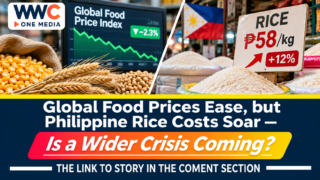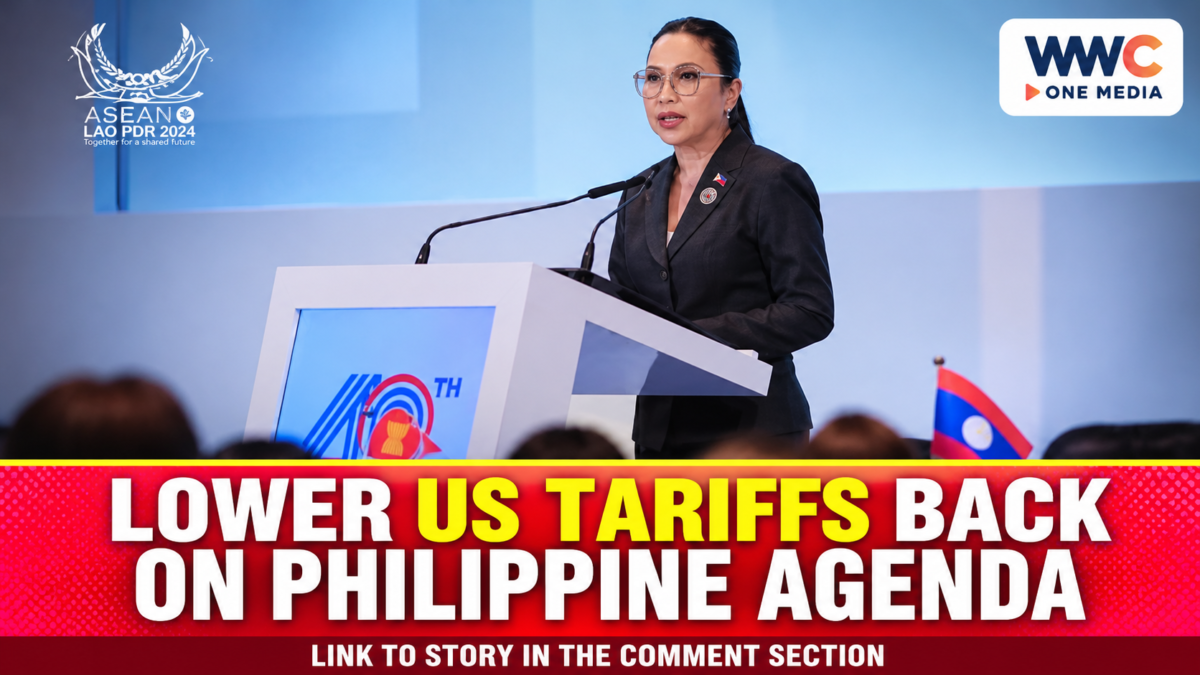
The Philippines is seeking better access for its exporters to the United States as Washington maintains a 12.5% tariff measure covering most imports from countries it considers to have failed to adequately prohibit goods produced through forced labour. The issue has become more pressing as the two countries navigate trade discussions during the November 2026 ASEAN meetings in Manila.
The stakes are significant. The United States was the Philippines’ largest export destination in 2025, receiving US$13.46 billion worth of Philippine goods, or 15.9% of total exports. Any change in the cost of entering that market could affect manufacturers, agricultural producers and workers whose livelihoods depend on export orders. Philippine Statistics Authority
But the tariff issue is more complicated than simply asking Washington to lower a percentage. The US measure is linked to its investigation into how trading partners prevent imports made with forced labour. Manila has introduced its own supply-chain enforcement measures, but the two governments still face the task of determining whether those steps satisfy Washington’s requirements.
Why the US tariff issue matters to Philippine exporters
The United States Trade Representative (USTR) announced its final action under Section 301 of the US Trade Act of 1974 on July 23, 2026. The action imposed tariffs on 60 economies over what Washington described as failures to impose and effectively enforce prohibitions on importing goods produced with forced labour.
Under the USTR determination, economies that have adopted or committed to enforce a forced-labour import prohibition qualify for a 10% Section 301 duty rate. Other investigated economies face a 12.5% rate, subject to specified product exemptions. United States Trade Representative+1
The Philippines is included in the 12.5% category in the US government’s published tariff action.
This is important because the measure is not simply a general adjustment to ordinary customs duties. It is a trade action tied to a specific US policy objective: preventing products made through forced labour from entering American supply chains.
For Philippine businesses, the practical concern is whether covered products can remain competitive when the additional duty increases the cost of selling into the US market.
The measure does not apply indiscriminately to every product. The USTR has identified exemptions covering certain categories, including goods subject to separate Section 232 tariffs and products that meet specified economic or supply-related criteria. United States Trade Representative+1
Forced-labour enforcement is at the centre of the dispute
The US action followed an investigation that began on March 12, 2026. The USTR said the process included consultations with more than 45 governments, public hearings and the review of written submissions.
On June 2, 2026, the USTR determined that the practices of the 60 investigated economies concerning forced-labour import prohibitions were unreasonable and burdened or restricted US commerce. It subsequently proposed responsive measures before announcing the final tariff action in July. United States Trade Representative
The US position places responsibility on trading partners to establish and effectively enforce restrictions against imported goods produced through forced labour.
For the Philippines, this creates a policy challenge that extends beyond tariff negotiations. The government must demonstrate that its domestic rules can identify suspect shipments, investigate supply chains and prevent prohibited goods from entering the local market.
The issue also has implications for Philippine exporters that supply international companies with strict labour-compliance requirements. Even where a particular shipment is not covered by the US tariff, scrutiny of labour practices can affect purchasing decisions and supplier relationships.
Manila introduced a supply-chain measure in July
The Philippine government has taken steps to strengthen its own controls.
On July 24, 2026, the Department of Labor and Employment, Department of Trade and Industry and Department of Finance announced the signing of a joint administrative order establishing a unified committee to address imported goods potentially linked to forced labour.
The order provides for the collection of reports concerning suspect imported products, investigation of claims and recommendations on how authorities should respond. The three departments said the measure would establish clearer procedures for inspecting incoming shipments and preventing goods linked to forced labour from entering the local market. Department of Labor and Employment
The timing is notable. The US announced its final Section 301 tariff action on July 23, one day before the Philippine departments announced their joint administrative order.
However, the existence of a domestic order does not automatically mean the United States will change its tariff classification. Washington’s stated standard involves both adopting a prohibition and effectively enforcing it.
That distinction makes implementation important. Authorities must be able to show that the rules are operational, investigations are credible and enforcement can be demonstrated through actual procedures and results.
The US market is too important to ignore
The Philippine Statistics Authority’s 2025 merchandise trade report shows the importance of the American market.
Philippine exports reached US$84.48 billion in 2025, an increase of 15.3% from US$73.27 billion in 2024. The United States accounted for US$13.46 billion of those exports, making it the country’s largest export destination. Philippine Statistics Authority+1
Electronic products were the country’s largest export commodity group, generating US$45.89 billion, equivalent to 54.3% of total exports in 2025. Manufactured goods as a broader category accounted for US$67.59 billion, or 80% of export sales. Philippine Statistics Authority
These figures show why market access matters to the Philippine economy. Export industries depend on predictable rules, competitive costs and the ability to fulfil orders without unexpected changes in market conditions.
A tariff increase can affect the final landed cost of covered products. Depending on the product, contractual arrangements and the ability of buyers and sellers to absorb additional costs, the burden may be shared across importers, exporters and customers.
For smaller Philippine suppliers, even a relatively modest increase can matter when competing against businesses from countries facing different tariff treatment.
Lower duties would help, but compliance will remain essential
A reduction in the US tariff would be welcome for covered Philippine exporters, but the long-term issue is how the country positions itself in global supply chains.
Labour compliance is increasingly connected to market access. Governments and companies face growing pressure to establish that products are made under acceptable working conditions and that suppliers can be monitored effectively.
The Philippine joint administrative order is a step towards strengthening domestic oversight. Its effectiveness will depend on how the responsible agencies coordinate investigations, process complaints and enforce applicable rules.
The US tariff framework also leaves room for different treatment when governments adopt and enforce forced-labour import prohibitions. That makes technical discussions between Philippine authorities and the USTR important, particularly in clarifying what evidence Washington requires before reconsidering the country’s tariff treatment. United States Trade Representative+1
For Manila, the strongest negotiating position would therefore combine a request for more favourable trade terms with verifiable progress in enforcement. A tariff concession based on a clear compliance framework would be more durable than a temporary adjustment unsupported by regulatory improvements.
What happens next
US President Donald Trump is attending the 49th ASEAN Summit and Related Summits in Manila from Nov. 16 to 18, 2026. The Presidential Communications Office confirmed his attendance in October, although the public announcement did not provide the detailed agenda of any bilateral trade discussions. Presidential Communications Office+1
The next important development will be whether Philippine and US officials can make progress on the tariff issue and clarify the conditions for a lower rate.
For exporters, the immediate concern is the treatment of products covered by the additional duty. For the government, the challenge is to demonstrate that its forced-labour controls are effective enough to support a change in Washington’s assessment.
The Philippines has a substantial commercial relationship with the United States and a domestic enforcement measure now in place. Whether those factors will translate into lower tariffs remains to be established.
The bigger test is whether the country can secure better market access while strengthening the labour standards and supply-chain safeguards expected by its trading partners.