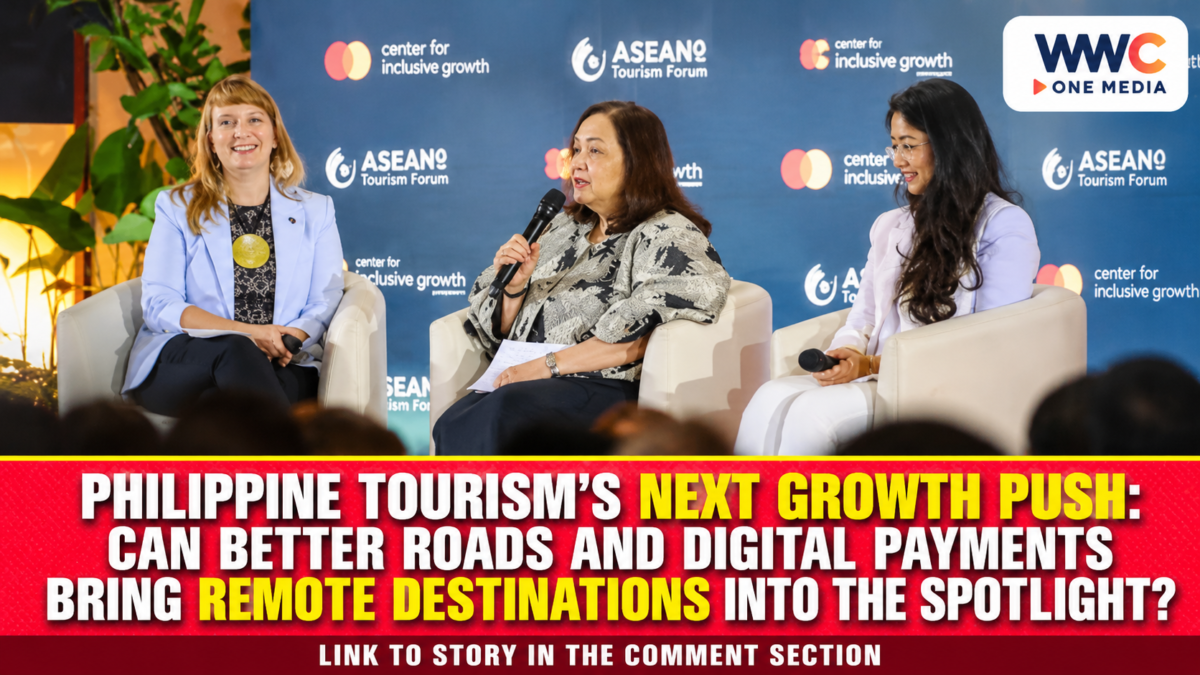
The Department of Tourism is pressing for stronger transport links and wider digital services as it tries to bring more visitors to destinations beyond the country’s established tourism centres. The strategy, presented by Tourism Secretary Dita Angara-Mathay at the 2026 ASEAN Inclusive Growth Summit on Nov. 11, puts local businesses and communities at the centre of the next phase of Philippine tourism development.
The initiative goes beyond attracting more arrivals. It aims to make lesser-known destinations easier to reach, help small tourism enterprises connect with international customers and give local communities a larger share of visitor spending.
That approach addresses a persistent weakness in the industry: a destination may have natural attractions and cultural experiences, but its economic potential remains limited if visitors cannot get there conveniently or local operators cannot reach customers online.
Tourism growth depends on more than attractive destinations
The DOT’s latest direction places physical access alongside digital access.
Angara-Mathay said the department wants investments in ports and airports while helping micro, small and medium enterprises (MSMEs) join digital platforms with broad market reach. The department also renewed partnerships with online travel platform Klook and e-wallet provider GCash to support tourism promotion and cashless payments.
The Klook arrangement is intended to use the platform’s reach to promote curated Philippine tour packages. The GCash agreement, meanwhile, seeks to expand cashless payment adoption among tourism MSMEs nationwide. These efforts are designed to make the visitor experience more accessible, from discovering and booking a trip to paying for services. Philippine Information Agency
The distinction is important for small operators. A homestay, local tour guide or community-based food business may offer an experience that travellers want, but it can struggle to compete if potential customers cannot easily find, book or pay for its services.
Digital tools can help address those barriers. They cannot, however, replace reliable transport, electricity, mobile connectivity and the quality of the service itself.
The infrastructure gap could decide which destinations benefit
For emerging tourism areas, accessibility remains a basic requirement.
Airports and seaports connect destinations to major visitor markets, while roads link gateways to hotels, attractions, restaurants and community enterprises. If one part of that network is inadequate, the entire travel experience can become more difficult.
The DOT has previously identified tourism road requirements as a funding concern. Its proposed infrastructure programme has included projects intended to improve access to destinations outside established tourism centres. WWC ONE MEDIA previously examined the department’s request for funding for tourism roads and improved access to destinations.
The issue is not simply whether a road or port can be built. Infrastructure must connect to places with viable tourism products, adequate services and communities prepared to accommodate visitors.
A new road may reduce travel time, but it does not automatically create accommodation, trained workers, waste-management facilities or reliable public transport. These supporting requirements determine whether improved access can translate into sustained economic activity.
The DOT’s latest call for investment therefore raises a broader coordination challenge involving transport agencies, local governments, tourism operators and infrastructure authorities.
Digital payments could help small businesses capture visitor spending
The department’s renewed digital partnerships are intended to address another obstacle: the ability of small enterprises to participate in a tourism market increasingly shaped by online discovery and electronic transactions.
For larger hotels and established travel companies, online reservations and digital payment systems are already part of normal operations. Smaller operators may have fewer resources to develop booking channels, maintain digital marketing campaigns or accept different payment methods.
The DOT’s cooperation with Klook and GCash is intended to widen access to these tools. Better online visibility could help local tour providers and accommodation businesses reach travellers who might otherwise book only with familiar brands.
Cashless payments can also make transactions more convenient, particularly for visitors who do not carry enough local currency. For merchants, electronic payment options can provide another way to receive customer payments and record transactions.
But adoption will depend on practical conditions. Businesses need dependable internet or mobile coverage, affordable devices, clear transaction procedures and sufficient digital skills. Payment fees and settlement arrangements also matter, especially for small enterprises operating on narrow margins.
The department’s objective is not achieved simply by signing partnership agreements. The more meaningful measure will be how many eligible businesses actually use the services and whether those tools help them generate additional bookings and sales.
Tourism’s economic contribution makes inclusion a national concern
The Philippine Statistics Authority’s 2025 Tourism Satellite Account shows why the sector matters beyond travel promotion.
Tourism Direct Gross Value Added reached ₱2.27 trillion in 2025, equivalent to 8.1% of the Philippine economy. Employment in tourism industries was estimated at 7.70 million people, representing 15.7% of total employment. Philippine Statistics Authority
However, the figures also show why growth should not be judged by a single headline number. Tourism Direct Gross Value Added declined by 1.4% from ₱2.30 trillion in 2024, while inbound tourism expenditure fell by 6.4% to ₱698.46 billion in 2025. Domestic tourism expenditure, by contrast, increased by 3% to ₱3.26 trillion. Philippine Statistics Authority
These differences point to an industry with substantial domestic economic activity but continuing challenges in attracting and retaining international visitor spending.
A strategy that spreads opportunities to more communities could help diversify the sector’s sources of income. Yet the benefits will depend on whether emerging destinations can offer competitive services and whether local businesses are equipped to serve visitors consistently.
The department has also been emphasising tourism investment readiness and stronger gateways. That wider policy direction is reflected in the Philippines’ push for an ASEAN tourism investment framework, which WWC ONE MEDIA previously covered in its report on making regional tourism destinations ready for investment.
Community participation must go beyond marketing
The DOT is also promoting experiential travel, including food, adventure and cultural activities in Mindanao.
Angara-Mathay highlighted opportunities for visitors to stay in homestays, experience local cuisine and interact with weavers and farmers. The approach gives communities a role beyond providing scenery or serving as a backdrop for tourism campaigns. Philippine Information Agency
This model could create opportunities for local producers, guides, artisans, farmers and small accommodation providers. Visitors who spend on locally organised experiences may support a wider network of businesses than those who rely exclusively on large resorts or established tour operators.
Still, community-based tourism requires careful planning. Local enterprises need training, fair access to promotional platforms and a reasonable opportunity to participate in tourism supply chains. Communities also need safeguards against overcrowding, environmental damage and the loss of cultural practices through poorly managed commercialisation.
Accreditation and service standards are part of that process. The growth of the accreditation system in Central Visayas, for example, illustrates the importance of helping smaller operators meet recognised requirements. WWC ONE MEDIA has examined the increase in accredited tourism enterprises in Cebu and Bohol.
A wider tourism market should create opportunities, but those opportunities need to be supported by credible standards and effective oversight.
What happens next
The 2026 ASEAN Inclusive Growth Summit took place ahead of the 49th ASEAN Summit and Related Summits, scheduled for Nov. 15 to 18. The DOT’s announcements outline a policy direction, but the real test will come through implementation.
That means tracking whether transport improvements reach underserved destinations, whether digital partnerships result in active MSME participation and whether local communities receive measurable economic benefits.
The department will also need coordination with infrastructure agencies and local governments to ensure that promotion does not outpace the capacity of destinations to receive visitors.
For the Philippines, tourism growth will be more inclusive when a visitor’s spending reaches beyond major gateways and established hotel groups. Better roads and digital platforms can help make that possible, but lasting results will depend on investment, reliable services and meaningful participation by local enterprises.
The country has destinations worth discovering. The bigger challenge is making sure the people who live there can benefit when more travellers arrive.