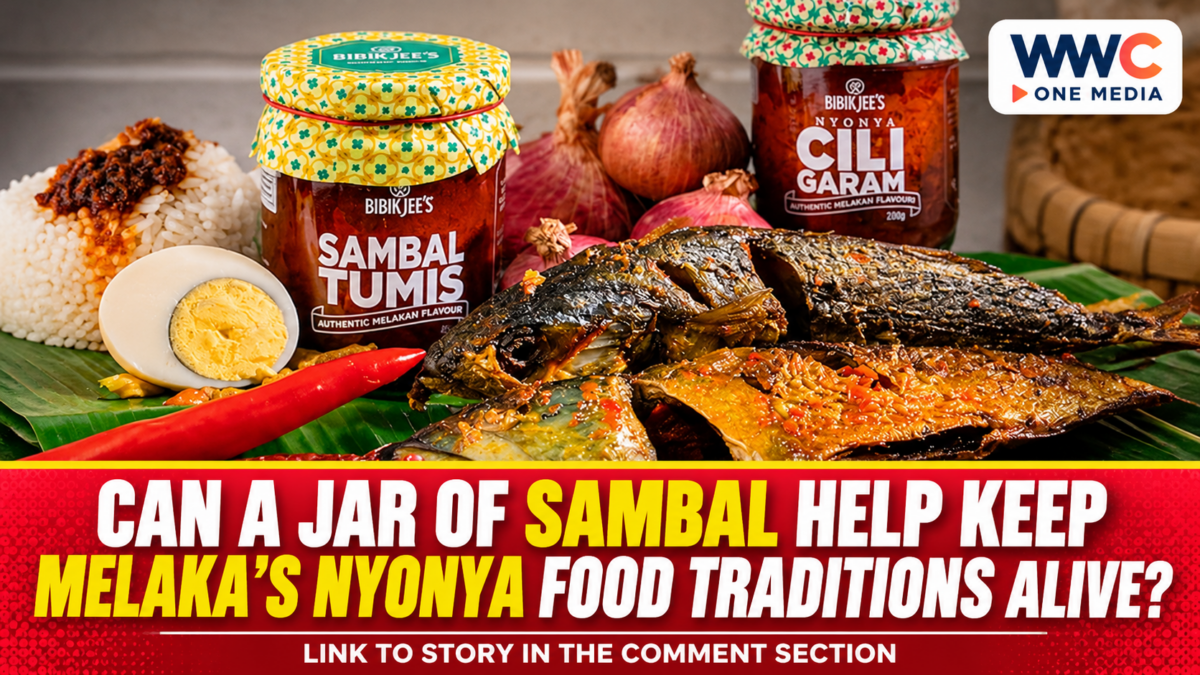
A Melaka-based food brand, BibikJee’s Nyonya Flavours, is bringing Peranakan-style sambal to online shoppers through two ready-to-eat products listed on its Shopee storefront. Its small product range points to a larger question for Malaysia’s traditional food culture: how can recipes rooted in household kitchens remain part of everyday life as food businesses adapt to modern retail?
The brand presents its products as Melaka Peranakan sambal and describes its recipes as connected to its late mother’s cooking. Its public shopping pages list Nyonya Sambal Tumis and Nyonya Cili Garam, both offered as ready-to-eat products. Linktree+3
The wider issue goes beyond one seller. Malaysia’s National Heritage Department has warned that traditional food knowledge can fade when recipes, preparation techniques and the cultural meaning behind dishes are passed on orally but not consistently documented or practised. Heritage 2026
Nyonya food heritage is more than a list of ingredients
Peranakan food is part of a broader cultural tradition associated with communities in Malaysia, including Melaka and Penang. The National Heritage Department’s material on traditional food describes heritage dishes as expressions of local identity, shaped by their flavours, textures, aromas and methods of preparation.
That distinction matters. A traditional dish is not always defined by its ingredient list alone. The order in which ingredients are prepared, the techniques used and the knowledge developed through repeated cooking can all contribute to a dish’s character.
The department says food recipes and preparation knowledge are commonly transmitted orally between generations. It also warns that knowledge can be lost when there is no one to inherit and practise it. Its preservation work includes documentation, research and programmes intended to make traditional food knowledge available to wider audiences. Heritage 2026
This is the cultural context in which a product such as BibikJee’s sambal can be understood. The brand’s own description connects its offerings with Melaka Peranakan cooking, although its public pages do not provide enough detail to independently verify the complete history of the recipes.
What BibikJee’s currently sells
BibikJee’s public Linktree identifies the business as a source of Melaka Peranakan sambal and directs customers to its social media pages, website and Shopee Malaysia shop. The linked Shopee storefront displays three product listings, including a twin-pack option and individual jars of two sambal varieties. Linktree+1
The individual listings identify the products as Nyonya Sambal Tumis and Nyonya Cili Garam. Each is displayed at RM24 on the pages reviewed, while the twin-pack listing is shown at RM48. Prices and availability can change, so shoppers should check the live listings before ordering. Shopee Malaysia+2
The storefront classifies the products under groceries, canned and packed food, and sambal. It also displays a shop rating of 5.0 and 17 followers on the shop page reviewed. These are platform-displayed figures, not an independent assessment of product quality or a measure of the business’s overall sales. Shopee Malaysia
The available public product pages do not provide enough accessible detail to establish a complete ingredient list, nutritional profile, shelf life, manufacturing process or certification status. Those details should be checked on the packaging or confirmed directly with the seller before consumers rely on them.
Why preserving a recipe can be difficult
Turning a household recipe into a product that can be sold repeatedly involves more than placing food in a jar. A business must make decisions about ingredient sourcing, consistency, packaging, storage, labelling and distribution.
For heritage food producers, those commercial requirements can create a balancing act. Customers may expect a familiar taste, while the business needs a repeatable process that can meet food-safety and retail requirements.
That does not mean commercial production automatically weakens a traditional recipe. It does mean that preserving a dish requires attention to both its cultural identity and the practical standards involved in preparing food for sale.
Malaysia’s National Heritage Department identifies documentation and continued practice as important parts of safeguarding traditional food knowledge. The department’s work reflects a broader principle: preserving a recipe means keeping knowledge about its preparation accessible, not merely keeping the name of a dish alive. Heritage 2026
Melaka’s food identity reaches beyond one business
Melaka’s food culture is not limited to one restaurant, product or style of cooking. Visitors encounter a range of local dishes and influences across the state, from established dining areas to neighbourhood businesses.
WWC ONE MEDIA previously looked at that wider food landscape in its report on a Melaka restaurant serving kampung chicken rice and Nyonya laksa beyond Jonker Street. The story offers another example of how Nyonya dishes remain part of the region’s everyday food offering.
The cultural links also extend beyond Malaysia. In Phuket, Peranakan heritage forms part of a wider regional identity shaped by generations of cultural exchange. WWC’s report on Phuket’s Baba-Peranakan heritage explores how that history remains visible in local culture.
Language is another part of this heritage. WWC’s coverage of Baba Malay and other heritage languages in Singapore looks at the challenges facing cultural knowledge passed through families and communities. Food and language are different forms of heritage, but both depend on people continuing to use and transmit what they know.
Online retail gives traditional products another route to customers
BibikJee’s use of an online marketplace gives its products a digital retail presence beyond a physical food counter. Its Linktree also directs potential customers to social media and the brand’s own website, creating several points through which shoppers can find the business. Linktree+1
For small food brands, online retail can make it easier for customers to discover products without visiting the place where they are made. It can also expose sellers to questions that are central to consumer trust: What are the ingredients? How should the product be stored? How long does it last? What food-safety standards apply?
Those questions are especially important for packaged food. A heritage label can tell shoppers something about a product’s cultural inspiration, but it does not replace clear product information or independently verified safety and certification details.
The available storefront establishes that BibikJee’s lists two sambal products for sale. It does not, by itself, establish the brand’s production capacity, retail distribution, sales performance or wider commercial reach.
What happens next
The next meaningful test for any food brand built around traditional recipes is whether it can maintain product consistency while making its methods and identity understandable to new customers.
For BibikJee’s, that means the public information available to shoppers will matter. Clear ingredient details, storage instructions, product labelling and accessible information about the recipes would help customers make informed choices while giving the brand a stronger record of what it is preserving.
For Malaysia’s wider food heritage, the National Heritage Department’s emphasis on documentation and continued practice points to a responsibility that extends beyond individual businesses. Families, cooks, researchers, cultural organisations and food producers all have a role in keeping traditional knowledge in use. Heritage 2026
A jar of sambal cannot preserve an entire culinary tradition on its own. But products that keep traditional flavours in circulation can form one part of a larger effort — provided the knowledge behind them is also recorded, shared and practised.
FAQ
What is BibikJee’s Nyonya Flavours?
BibikJee’s Nyonya Flavours is a food brand that describes its products as Melaka Peranakan sambal. Its public Linktree links to its website, social media accounts and Shopee Malaysia shop. Linktree
What products does BibikJee’s list for sale?
Its Shopee storefront lists Nyonya Sambal Tumis and Nyonya Cili Garam, as well as a twin-pack option. The individual listings were displayed at RM24 each when reviewed. Shopee Malaysia+2
What does Nyonya food heritage mean?
It refers to culinary traditions associated with Peranakan communities, including dishes, ingredients and preparation knowledge passed between generations. Malaysia’s National Heritage Department describes traditional food as part of local cultural identity and highlights the importance of preserving recipes and preparation knowledge. Heritage 2026
Why is documenting traditional recipes important?
The National Heritage Department says traditional recipes and preparation methods are often passed down orally and can be lost when they are no longer practised or inherited. Documentation helps preserve knowledge for future reference. Heritage 2026
Where can customers find BibikJee’s products?
The brand’s public Linktree directs customers to its Shopee Malaysia shop and social media accounts. The listed products can be viewed through its Shopee storefron