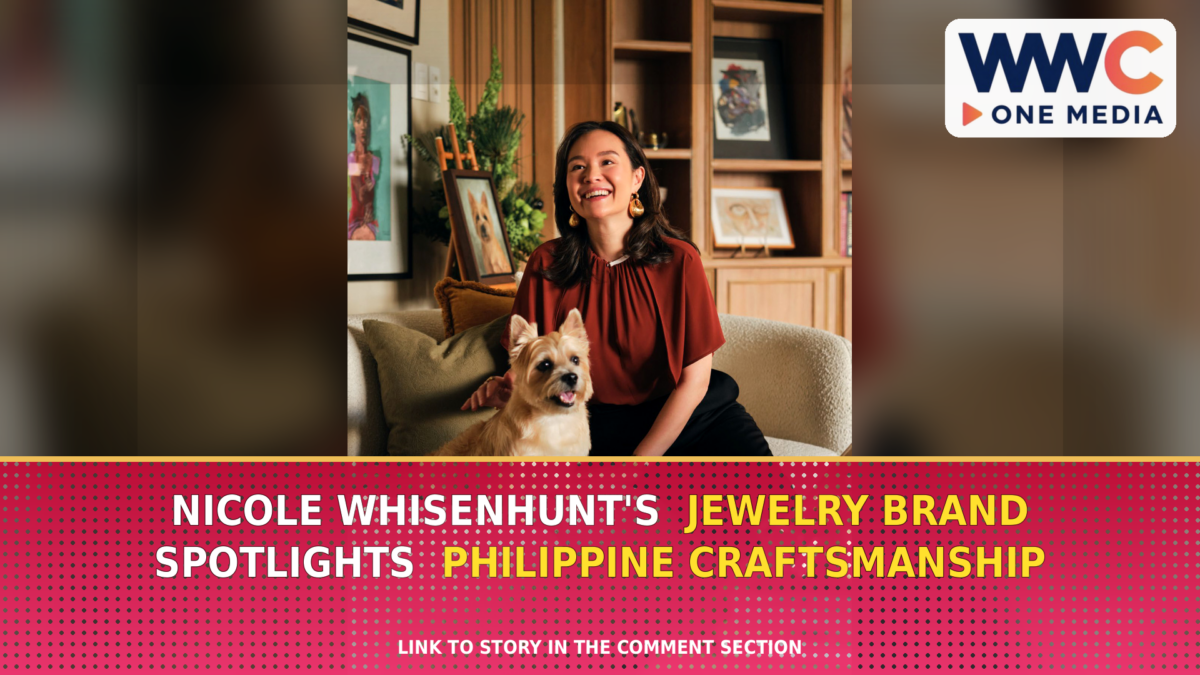
Nicole Whisenhunt’s fine jewelry business is built around an aspect of luxury that is easy to overlook: the people and traditional skills behind each finished piece. Founded in 2012, her namesake brand brings together jewellery design and the work of second-generation goldsmiths, gem setters, polishers and wax carvers in the Philippines.
The business offers a useful look at how a Filipino designer can position handmade craftsmanship as part of a contemporary luxury brand. Its identity is not limited to the appearance of the jewellery; it also places importance on the techniques, expertise and creative work involved in making it.
The brand’s public profile in the Center for International Trade Expositions and Missions’ FAME+ directory identifies Whisenhunt as its founder and describes its workshop as a team combining traditional jewellery skills with modern methods. That detail offers a more substantial story than simply treating luxury as a matter of expensive materials or elegant presentation. FAME+
Nicole Whisenhunt built her brand around handmade jewellery
Whisenhunt Fine Jewelry was founded in 2012 by Filipina designer Nicole Whisenhunt. Its profile in the FAME+ directory describes the business as focused on artistry, craftsmanship, expertise and innovation.
The company’s stated approach draws inspiration from different periods in art and design. Each piece is developed with an intended meaning and background story, giving the brand a design identity that reaches beyond seasonal fashion.
This approach places the creative process at the centre of the business. Instead of presenting jewellery only as an accessory, the brand connects its products with design history and the skills required to turn materials into finished objects.
The distinction matters in a market where luxury products are often recognised through brand names, precious materials and retail presentation. Craftsmanship provides another way to understand value: the time, technical knowledge and manual work involved in producing an item.
For a Philippine-based jewellery label, that emphasis also brings attention to the local people involved in the production process. FAME+
The workshop puts local artisans at the centre
One of the most significant details in the company’s public profile is its description of the workshop.
The team includes second-generation goldsmiths, gem setters, polishers and wax carvers. These specialists combine traditional skills with modern innovations to produce bespoke jewellery and pieces for the brand’s annual collections.
Each role contributes a different part of the process. Goldsmiths work with metal, gem setters secure stones, polishers refine surfaces, and wax carvers help create forms used in jewellery production.
Together, these disciplines show why jewellery making involves more than selecting a design and assembling materials. A finished piece depends on several stages of technical work, with each requiring specialised knowledge.
The brand also identifies the preservation and showcasing of handmade jewellery in the Philippines as part of its advocacy. That gives its workshop a cultural dimension alongside its commercial purpose.
Preserving traditional skills does not mean rejecting new techniques. The company’s own description points to a combination of established craftsmanship and modern methods, suggesting that heritage and innovation can operate together rather than compete. FAME+
Why the handmade process matters in luxury
The value of handmade jewellery is not always immediately visible to a buyer. Two pieces may look similar at first glance, yet differ in the complexity of their construction, the expertise involved and the attention given to finishing.
That is where a brand’s production story becomes important. Explaining who makes a piece and what skills are involved gives customers more information with which to assess its design and workmanship.
For independent designers, this can also help establish a recognisable identity. A brand built around a particular design language and skilled workshop has a clearer story to communicate than one relying only on changing trends.
Whisenhunt’s FAME+ profile describes its collections as bespoke and annual, indicating two different areas of work: pieces developed for individual clients and designs produced as part of the brand’s collection activity.
Bespoke work can give clients an opportunity to commission jewellery around a particular brief, while an annual collection allows a designer to present a more defined body of creative work. Both depend on the relationship between design direction and the technical capabilities of the workshop.
The distinction is relevant to the wider luxury market because customers increasingly encounter products through digital catalogues and social media, where the finished appearance is often the first thing they see. A clear account of the making process can add context that a product photograph cannot provide.
The brand’s services extend beyond finished jewellery
Whisenhunt’s public business profile also lists portrait miniatures and stone-setting services.
These offerings show that the company’s work is not confined to selling completed jewellery designs. Stone setting is a specialised service that requires technical precision, while portrait miniatures introduce another form of commissioned work.
The range gives the business more than one way to engage with clients. A customer may be interested in a finished design, a bespoke piece or a service connected with an existing item.
For a specialist jewellery studio, such services can make technical expertise an important part of the customer relationship. They also demonstrate how a workshop’s capabilities can support different creative requirements.
The company’s listed products include pearl and diamond jewellery, emerald and diamond earrings, and vintage pieces. These examples show a mix of contemporary designs and vintage jewellery within the brand’s public catalogue. FAME+
Design and entertaining share an appreciation for detail
The connection between jewellery and home entertaining is not difficult to understand, even though they serve different purposes.
Jewellery design involves decisions about proportion, materials, texture and how individual elements work together. A thoughtfully arranged dining table also depends on composition: the relationship between dinnerware, glassware, linens, flowers and the food being served.
The homeware market reflects this interest in considered presentation. In the Philippines, Statement Theory’s official website presents tabletop products, entertaining essentials and home accents through its retail locations at Power Plant Mall and The Makati Tuscany in Makati City.
Its catalogue includes tableware from international brands such as Vista Alegre, Mottahedeh and Royal Limoges. The business describes its approach as a curated selection of products intended to bring together design and everyday living. Statement Theory+1
The same broader appreciation for considered interiors can be seen in WWC ONE MEDIA’s coverage of a Victorian family home redesigned for modern living and entertaining. The project illustrates how furnishings, materials and practical spaces can work together to support both daily routines and gatherings.
Another example is Harper House in New York, where historic architecture meets contemporary family life. Its restoration shows how a home can retain its character while adapting to the needs of the people who use it.
These examples are not evidence of a direct business connection to Whisenhunt. They illustrate a wider design principle: details matter most when they contribute to a coherent whole.
Why craftsmanship remains part of the conversation
The appeal of handmade products goes beyond appearance. It raises questions about where an item comes from, who made it and what knowledge was required to produce it.
For Philippine designers, these questions can also bring attention to local skills that might otherwise remain behind the scenes. A jewellery brand that identifies its artisans and explains their roles gives customers a clearer picture of the work supporting its collections.
That approach is particularly relevant in a retail environment where consumers can compare products from many countries with a few online searches. A distinctive design identity and a credible account of production can help a business explain what sets its work apart.
Luxury homeware offers a related example. WWC’s report on Victoria Beckham’s move into designer tableware explored how design identities can extend beyond fashion into the home.
For Whisenhunt, the documented emphasis remains firmly rooted in jewellery craftsmanship and the people who make the pieces possible. Its public profile gives particular weight to the combination of traditional expertise, modern methods and handmade production.
What happens next
Whisenhunt’s brand profile establishes its founding year, its workshop structure and the services it offers. However, it does not provide current production figures, employment totals, sales performance or a detailed account of future expansion plans.
Those details would be necessary to assess the company’s commercial growth or measure the wider economic impact of its work.
For now, the clearest part of its identity is the emphasis on skilled local artisans and jewellery-making traditions. The brand’s challenge, as with any specialist luxury business, is to keep that craftsmanship visible while continuing to develop designs that appeal to contemporary customers.
The finished jewellery may attract attention first, but the people behind the work are an important part of the story. And in a market where luxury can easily become a question of labels and price tags, that is a distinction worth examining.