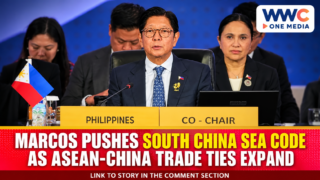
MANILA, Philippines — November 16, 2026 — The Philippines’ 2026 ASEAN chairship is moving beyond summit speeches, with regional leaders adopting a fresh position on Myanmar, signing a digital economy agreement and marking a major change to the bloc’s institutional structure.
The developments emerged during the 49th ASEAN Summit and related meetings in Manila, where President Ferdinand R. Marcos Jr. is chairing the regional gathering under the theme “Navigating Our Future, Together.” They provide a more concrete measure of the region’s cooperation agenda than declarations of solidarity alone. Presidential Communications Office+2
The official documents point to three areas that will shape ASEAN’s next phase: economic integration, political stability and the organisation’s expansion to 11 members. But the records also show that unity does not mean every regional problem has been resolved.
ASEAN summit outcomes include a signed digital economy agreement
One of the most significant economic developments is the signing of the ASEAN Digital Economy Framework Agreement, or DEFA, in Manila on November 14.
The ASEAN Secretariat confirmed that Secretary-General Kao Kim Hourn attended the signing ceremony held alongside the 28th ASEAN Economic Community Council Meeting.
The agreement is intended to advance a regional digital economy that is open, secure, interoperable, competitive and inclusive. The ASEAN Secretariat said DEFA is expected to enter into force in early 2027. ASEAN Main Portal
The agreement matters because digital commerce increasingly crosses national borders. Businesses rely on electronic transactions, digital services and data-based systems to reach customers and suppliers in other markets.
A common regional framework could help make those activities more predictable. However, the signing does not mean every provision is already operational or that businesses can immediately use all the benefits.
Implementation, national procedures and the eventual entry into force will determine how the agreement affects companies and consumers.
WWC has examined the commercial implications in its report on the ASEAN digital pact signed in Manila.
Myanmar remains a difficult test for ASEAN unity
The summit’s political agenda faces a more complicated challenge.
On November 15, ASEAN leaders issued a formal review and decision on the implementation of the Five-Point Consensus, the bloc’s framework for addressing the crisis in Myanmar.
The document records continuing concern over conflict and the humanitarian situation. It also calls for substantive progress in implementing the consensus and says ASEAN should calibrate its engagement with Myanmar based on developments on the ground.
The leaders denounced violence against civilians and public facilities and urged all parties to halt indiscriminate violence, exercise restraint, protect civilians and allow humanitarian assistance to reach people in need. asean.org
The document also reaffirmed ASEAN’s commitment to helping Myanmar find a peaceful and durable solution.
This is an important distinction: ASEAN has restated its position, but the statement does not establish that the conflict has ended or that the Five-Point Consensus has been fully implemented.
For the Philippines, the issue tests the practical limits of regional diplomacy. ASEAN depends on cooperation among sovereign governments, but its ability to respond to a crisis also depends on whether its members can secure meaningful action from the parties involved.
The organisation’s challenge is to maintain engagement while pressing for progress that can be demonstrated on the ground.
Timor-Leste’s membership is reflected in an updated ASEAN Charter
The summit also marked an institutional development for the regional organisation.
The ASEAN Secretariat confirmed the ceremonial unveiling of an updated emblem and flag during the Manila meetings. The change coincides with the entry into force of the Cebu Protocol, which amends the ASEAN Charter and its annexes.
The Secretariat described the protocol as the first amendment to the ASEAN Charter since its adoption in 2007. The updated charter reflects Timor-Leste’s status as ASEAN’s 11th member state. ASEAN Main Portal+1
The change is more than a symbolic addition to the organisation’s identity. An 11-member ASEAN has a broader institutional and diplomatic structure, with Timor-Leste now included in the regional grouping.
Its integration will also require sustained participation in ASEAN’s economic, political-security and socio-cultural work.
The expanded membership makes regional cooperation more representative, but it also increases the importance of building common capacity among countries with different economic resources and institutional capabilities.
The Philippines is tying regional cooperation to economic resilience
The Marcos administration has presented the 2026 chairship as an opportunity to advance cooperation on issues that directly affect households and businesses.
In a November 12 official communication, the Presidential Communications Office identified food and energy security, employment, agriculture and livelihoods among the areas requiring regional coordination.
The government also highlighted the effects of economic uncertainty and disrupted energy supplies on households across Southeast Asia. Presidential Communications Office
These priorities have a direct domestic connection. The Philippines remains exposed to changes in international fuel markets, food supply chains and transport costs.
Regional coordination could help countries prepare for supply disruptions and strengthen their ability to respond to emergencies. But cooperation does not automatically guarantee lower prices or immediate improvements in household purchasing power.
WWC previously examined the proposed ASEAN joint oil-stockpiling arrangement, which could provide participating countries with contractual access to petroleum products stored in other member states.
The arrangement remains a developing initiative, rather than a fully operational regional reserve. Its value will depend on the final terms, available supplies and the ability to deliver fuel during an emergency.
Maritime security remains an unfinished regional priority
The summit’s wider agenda also includes maritime cooperation and efforts to advance a Code of Conduct in the South China Sea.
The Philippines has identified maritime cooperation as one of its chairship priorities, with the government emphasising the importance of international law, particularly the United Nations Convention on the Law of the Sea.
The negotiations remain an important test of ASEAN’s ability to maintain a common position on regional security issues.
An agreement could provide clearer expectations for conduct and help reduce the risks of incidents at sea. But the quality of any final arrangement will depend on its wording, consistency with international law and practical implementation.
WWC’s examination of the South China Sea Code’s 2026 target explains why the negotiations remain consequential as the year approaches its final weeks.
The public record does not establish that a final Code of Conduct has been completed during the Manila summit.
What happens next
The 49th ASEAN Summit and related meetings continue through November 17.
The official programme includes engagement with dialogue partners, the 29th ASEAN Plus Three Summit and the 21st East Asia Summit. The Philippines is also scheduled to hand over the ASEAN chairship to Singapore at the closing ceremonies. Presidential Communications Office+1
The next measure of progress will be implementation.
For DEFA, attention will turn to the steps required before its expected entry into force in early 2027. For Myanmar, the question is whether the latest regional position leads to measurable progress on humanitarian access and the Five-Point Consensus. For Timor-Leste, the focus will be on its participation in ASEAN’s institutions and programmes.
The Manila summit has produced important documents and institutional milestones. Whether those developments translate into lasting improvements will depend on what member states do after the meetings conclude.
Frequently asked questions
1. What are the major outcomes of the 49th ASEAN Summit in Manila?
The developments include the signing of the ASEAN Digital Economy Framework Agreement, a leaders’ review of the Myanmar Five-Point Consensus and the implementation of the Cebu Protocol reflecting Timor-Leste’s membership.
2. What is the ASEAN Digital Economy Framework Agreement?
DEFA is a regional agreement intended to support an open, secure, interoperable, competitive and inclusive digital economy. It is expected to enter into force in early 2027.
3. Is the Myanmar crisis resolved?
No. ASEAN’s November 15 document expresses continuing concern over conflict and the humanitarian situation and calls for further implementation of the Five-Point Consensus.
4. How many members does ASEAN now have?
ASEAN has 11 member states, with Timor-Leste’s status reflected in the updated ASEAN Charter following the Cebu Protocol.
5. When will the Philippines hand over the ASEAN chairship?
The handover to Singapore is scheduled during the closing ceremonies of the 49th ASEAN Summit and Related Summits on November 17, 2026.