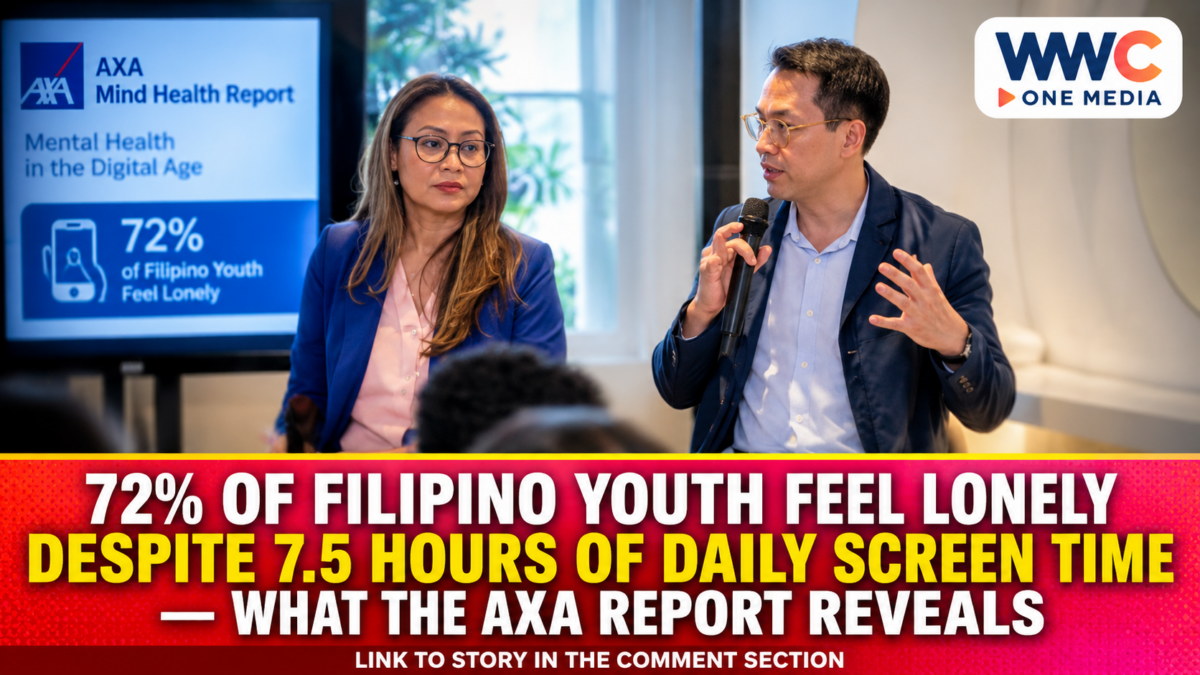
For many young Filipinos, smartphones have become essential tools for education, communication and entertainment. But findings released by AXA Philippines in its 2026 Mind Health Report point to a growing contradiction: spending more time connected does not necessarily mean feeling less isolated.
The company’s report says 72% of Filipino youth experience feelings of loneliness or sadness, while their average daily screen exposure reaches 7.5 hours. More strikingly, 98% say screen time negatively affects their daily lives.
The findings raise an important question for families, schools, employers and technology companies: how can a generation that is constantly connected still struggle to maintain emotional well-being?
Digital Habits Are Becoming a Well-Being Concern
The numbers suggest that digital exposure deserves closer attention, particularly when it begins affecting everyday activities.
AXA’s report identifies disrupted sleep, reduced concentration and emotional overstimulation among the concerns associated with prolonged screen exposure.
The issue is not simply the number of hours spent looking at a device. Smartphones serve different purposes, and not all digital activities carry the same effects.
A student attending online classes, a young employee completing work assignments and someone repeatedly scrolling through social media may spend similar amounts of time on a screen but experience very different routines.
The more important consideration is whether digital habits interfere with sleep, physical activity, personal relationships and responsibilities.
For young people, these activities often overlap. School announcements arrive through messaging applications, assignments require internet access, friendships develop through social platforms, and entertainment is available around the clock.
This makes completely disconnecting from technology unrealistic for many households.
However, the findings suggest that healthier digital routines should become part of broader conversations about youth well-being.
The Philippine Mind Health Picture Extends Beyond Screen Time
Digital exposure is only one part of the broader picture presented in the 2026 report.
AXA said approximately 31% of Filipinos remain in a state described as languishing, even as the proportion classified as struggling showed slight improvement.
The report also identified financial instability and rising social unrest among the continuing pressures affecting psychological well-being.
These findings matter because young people do not experience digital fatigue in isolation.
Financial uncertainty within their households, academic expectations, employment difficulties and concerns about the future can contribute to an environment in which emotional recovery becomes more difficult.
The relationship between these pressures should not be reduced to a claim that smartphones cause loneliness or mental health conditions.
The report presents survey findings and reported experiences. It does not establish that screen exposure alone causes the emotional difficulties experienced by young Filipinos.
Nevertheless, the combination of loneliness, prolonged screen exposure and broader economic pressures deserves attention.
AI Is Becoming an Alternative Source of Mental Health Guidance
Another significant development in the report concerns the increasing use of artificial intelligence for mental health-related support.
AXA reported that 29% of Filipinos regularly use AI for mental health management, compared with a global average of 21%.
The company also identified greater regular engagement among people aged 18 to 34.
This reflects how digital technology is changing the way people seek information and discuss personal concerns.
AI tools can provide immediate responses, explain unfamiliar concepts and help users organise their thoughts. Their availability can make them appealing to people who may feel uncomfortable discussing emotional difficulties with another person.
But convenience does not automatically translate into reliable guidance.
AXA reported that 33% of respondents had felt uneasy or concerned after receiving AI guidance. Another 25% said AI recommendations had led to harmful behaviour.
These findings highlight the importance of understanding the limitations of automated systems.
AI applications do not replace qualified mental health professionals. They may misunderstand context, provide incomplete information or generate recommendations that are unsuitable for an individual’s circumstances.
For that reason, AI should be treated as a supplementary information tool rather than a substitute for professional assessment and care.
Why Access to Professional Support Remains Important
One of the most important findings in the Philippine report concerns the affordability of mental health services.
AXA identified the cost of mental health care as the country’s primary barrier to accessing support.
This creates a difficult situation for individuals who recognise that they may need assistance but cannot easily afford consultations or other services.
Awareness campaigns can encourage people to seek help, but awareness alone cannot remove financial and practical barriers.
The challenge is particularly relevant to students and young workers who may have limited personal income or depend on their families for access to health services.
The country’s education system also faces questions about the availability of trained professionals.
As previously examined by WWC ONE MEDIA in its report on the shortage of guidance counselors across Philippine public schools, access to school-based guidance remains an important part of ensuring that students have someone qualified to approach when they need assistance.
The issue goes beyond the availability of information online.
Young people also need accessible opportunities to speak with trained individuals who can understand their circumstances and connect them with appropriate services.
The Growing Importance of Human Connection
The report’s findings also bring attention to the importance of relationships outside digital platforms.
Online communication can help young people maintain friendships, participate in communities and stay informed.
However, digital interaction cannot always provide the same experience as meaningful face-to-face relationships.
Family conversations, friendships, school activities and community involvement can provide opportunities for young people to feel heard and supported.
These connections are particularly important when someone begins withdrawing from everyday activities or experiencing persistent emotional difficulties.
The country’s growing demand for accessible assistance is also reflected in the National Center for Mental Health crisis hotline, which has received increased attention as more Filipinos seek support.
WWC ONE MEDIA previously examined the increase in NCMH crisis hotline calls and the growing number of younger people seeking help.
The broader lesson is that support systems must extend beyond digital applications.
Technology companies also have responsibilities when designing services used extensively by younger audiences.
International developments involving social media platforms have brought greater attention to questions about online safety and product design. WWC ONE MEDIA previously explored the growing legal scrutiny surrounding social media platforms and youth mental health.
Although those legal developments involve separate cases and jurisdictions, they demonstrate why digital well-being has become an increasingly important public discussion.
What Happens Next: Making Digital Well-Being Part of Everyday Life
The findings present an opportunity for families, schools, employers and policymakers to reconsider how digital technology fits into young people’s daily routines.
For families, this could mean encouraging regular conversations about online experiences rather than focusing exclusively on restrictions.
Schools can strengthen digital literacy programmes and make guidance services more accessible.
Employers can also consider how constant digital communication, workload expectations and after-hours messaging affect younger employees.
Technology companies, meanwhile, can continue improving privacy protections, age-appropriate safeguards and features that give users greater control over their digital experiences.
AXA Philippines has also identified its Mind Health Self-Check tool as one resource intended to help individuals assess and monitor their well-being. The company additionally describes health plans that include mental health consultations and coverage for selected conditions. Availability and eligibility depend on the applicable policy terms.
Ultimately, the objective should not be to eliminate technology from young people’s lives.
Digital tools remain important for education, employment and social participation.
The greater challenge is ensuring that constant connectivity does not come at the expense of rest, meaningful relationships and access to appropriate support.
Frequently Asked Questions
1. What percentage of Filipino youth experience loneliness or sadness?
AXA’s 2026 Mind Health Report says 72% of Filipino youth report feelings of loneliness or sadness.
2. How many hours do Filipino youth spend on screens daily?
The report places their average daily screen exposure at 7.5 hours.
3. Does screen time affect the daily lives of Filipinos?
AXA reported that 98% of Filipino respondents said screen time negatively affects their daily lives.
4. Are Filipinos using AI for mental health support?
Yes. AXA reported that 29% regularly use AI for mental health management, compared with the global average of 21%.
5. What is the biggest reported barrier to mental health support in the Philippines?
AXA identified the cost of mental health services as the primary barrier to accessing support in the country.