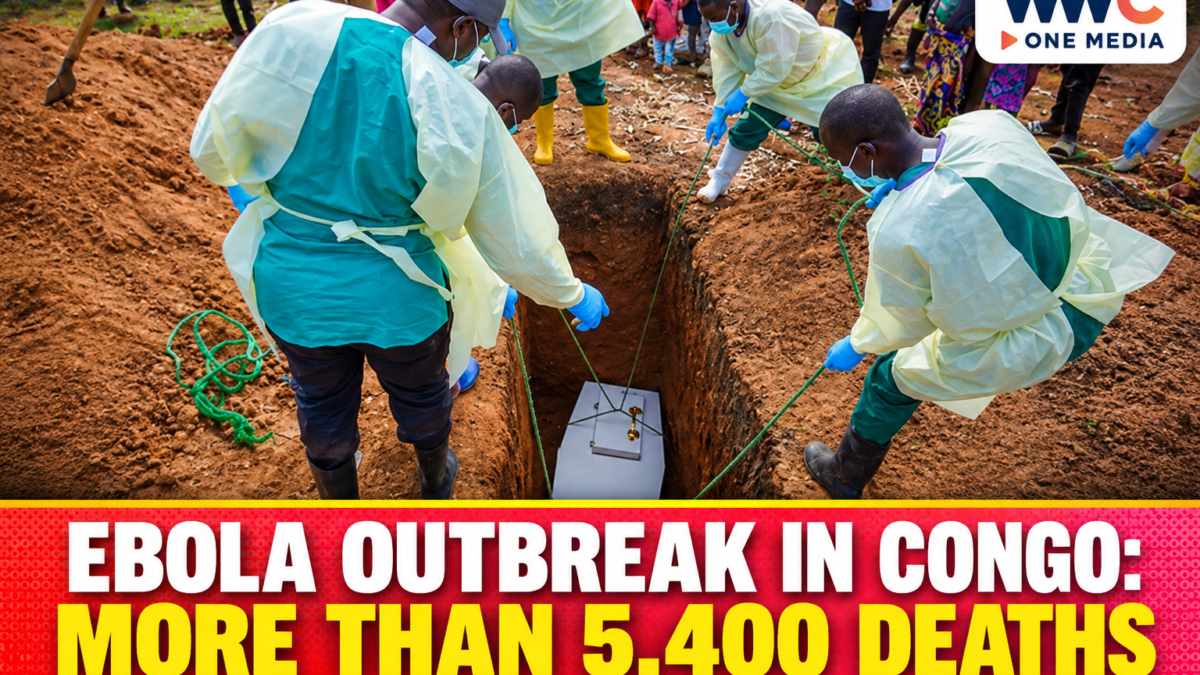
The Ebola outbreak in the Democratic Republic of the Congo (DRC) has surpassed 11,000 reported cases and 5,400 deaths, with the World Health Organization (WHO) warning on Nov. 14, 2026, that insecurity, population displacement and gaps in healthcare access continue to undermine containment efforts.
Six months after the outbreak began, health authorities have expanded emergency operations across affected communities, but hundreds of new infections are still being reported every week. The scale of the crisis is raising concerns about whether existing response systems can reach vulnerable populations quickly enough to stop further transmission.
The outbreak is caused by the Bundibugyo virus, a relatively rare Ebola virus species for which there is currently no licensed vaccine or specific approved treatment. The continuing spread demonstrates how difficult it can be to contain an infectious disease when healthcare infrastructure, security and community access are under pressure.
Congo’s Ebola Outbreak Has Spread Across Eight Provinces
The latest WHO figures show that the outbreak has expanded well beyond its original locations.
As of Nov. 11, 2026, the DRC had recorded 11,197 confirmed cases and 5,471 confirmed deaths. The country also reported 3,045 recoveries, while the confirmed case fatality ratio stood at 49%.
Across all affected countries, WHO recorded 11,228 confirmed cases and 5,475 confirmed deaths, including infections reported in Uganda, France, Kenya and Nigeria.
The outbreak had reached 67 health zones across eight provinces in the DRC by the November assessment.
These figures illustrate the difficulty of containing the virus in a country where large distances, population movements and security problems complicate the delivery of healthcare.
The numbers also require careful interpretation. Confirmed cases represent infections identified through surveillance and testing, meaning the reported totals do not necessarily capture every infection occurring in affected communities. World Health Organization+1
Why Health Workers Are Struggling to Contain Ebola
One of the biggest obstacles is the difficulty of reaching communities where infections are being identified late.
WHO has reported that two-thirds of confirmed deaths are occurring in communities rather than healthcare facilities.
This suggests that many infected people are not receiving medical attention early enough. It also makes identifying people who may have been exposed more difficult.
Contact tracing is essential during an Ebola outbreak because health teams need to identify individuals who have had contact with infected patients and monitor them for possible symptoms.
When people cannot be located, move between communities or avoid reporting suspected infections, transmission chains become harder to identify.
Security concerns are making the situation worse.
In its Nov. 11 briefing, WHO Director-General Tedros Adhanom Ghebreyesus described insecurity as one of the greatest obstacles to the response.
He highlighted an attack in Cantine-Aloya that killed 66 civilians, including three health workers. Three health facilities were also looted and burned.
More than 1,000 contacts were subsequently lost to follow-up, while three confirmed cases remained unaccounted for.
WHO said these incidents disrupted operations and restricted humanitarian access. 11 November 2026
The consequences extend beyond the immediate danger to medical personnel.
When healthcare teams cannot safely enter affected communities, they lose opportunities to identify infections, conduct testing, provide treatment and educate residents about transmission risks.
This creates additional pressure on an already stretched emergency response.
Children Are Among the Most Vulnerable
The outbreak is also having a particularly serious impact on children.
WHO’s Nov. 15 assessment reported that children accounted for more than one-quarter of confirmed cases and approximately one-third of deaths.
Seven in 10 children under five with confirmed Ebola had died.
These figures highlight the importance of ensuring that children in affected communities can access medical assessment and appropriate care.
The wider humanitarian situation also matters.
Families displaced by conflict may struggle to access healthcare, food, clean water and other essential services.
Children who lose caregivers or become separated from their families can face additional difficulties during an emergency.
WHO has therefore stressed that Ebola operations must work alongside other humanitarian services instead of concentrating exclusively on the virus.
The organisation has called for continued support for nutrition, maternal and newborn healthcare, child protection, water and sanitation, and psychosocial services.
This broader approach is important because an outbreak can weaken already fragile communities if other essential health needs are neglected. Regional Office for Africa+1
Why the Bundibugyo Virus Makes the Response More Complicated
The current emergency involves Bundibugyo virus, a species of Ebola virus that presents particular challenges for vaccine development.
The Ervebo vaccine, widely used during previous Ebola emergencies, targets the Zaire species of Ebola virus. It is not an established licensed vaccine specifically for Bundibugyo virus disease.
WHO Director-General Tedros said on Nov. 11 that a trial involving the Ervebo vaccine had begun the previous month.
WHO expert groups had also recommended adding two vaccine candidates developed specifically for Bundibugyo virus to the research effort.
These developments are important, but experimental research should not be confused with an approved and proven prevention programme for the current outbreak.
For now, the response continues to depend heavily on early detection, isolation, clinical care, contact tracing, infection prevention and safe burial procedures.
WHO has stressed that vaccination research cannot replace these immediate measures.
The distinction matters because public understanding of Ebola vaccines can influence how people assess their own risks and the effectiveness of emergency response programmes. 11 November 2026+1
International Spread Raises Regional Concerns
The outbreak is no longer confined to the DRC.
WHO’s November 12 epidemiological update recorded imported cases in several other countries, including Uganda, France, Kenya and Nigeria.
Kenya had recorded nine confirmed cases, including two deaths, while Nigeria had reported one confirmed imported case.
The figures demonstrate why neighbouring countries and international health authorities must maintain surveillance and preparedness.
However, an imported case does not automatically mean that sustained local transmission has been established in the country concerned.
Border screening, laboratory testing, contact identification and coordination between health authorities remain important tools for preventing further spread.
WHO’s earlier disease outbreak assessment also highlighted the importance of monitoring official border crossings and informal travel routes.
The situation illustrates how infectious diseases can cross national boundaries when populations move for work, trade, family responsibilities or because of conflict.
For countries outside the affected region, the appropriate response is preparedness and reliable public-health information rather than unnecessary alarm. World Health Organization+1
What Happens Next?
The DRC government has updated its national Ebola response plan through January 2027.
WHO and the Africa Centres for Disease Control and Prevention are also revising their continental preparedness and response arrangements for the next phase.
The immediate priorities include improving access to hard-to-reach communities, strengthening contact tracing, protecting healthcare workers and ensuring that frontline personnel receive their payments on time.
WHO has also called for sustained international financial support, with funding directed towards urgent operational needs rather than commitments that do not reach affected communities.
The organisation says community participation must remain central to the response.
That means working with local leaders, listening to residents and ensuring that healthcare teams understand the difficulties people face when seeking assistance.
The coming months will be important in determining whether the expanded response can reduce transmission across the affected provinces.
For now, the outbreak remains a major public-health emergency, with the greatest immediate challenges concentrated in communities where insecurity and limited access prevent health workers from responding quickly.
Frequently Asked Questions
1. What type of Ebola virus is spreading in Congo?
The current outbreak is caused by Bundibugyo virus, a species of Ebola virus distinct from the Zaire species responsible for several previous major outbreaks.
2. How many people have died in the 2026 Congo Ebola outbreak?
WHO reported 5,471 confirmed deaths in the Democratic Republic of the Congo as of Nov. 11, 2026.
3. Is there an approved vaccine for Bundibugyo Ebola?
There is currently no licensed vaccine specifically approved for Bundibugyo virus disease. Vaccine research and clinical trials are ongoing.
4. Why is the Ebola outbreak difficult to control?
The response faces several obstacles, including armed conflict, displacement, limited healthcare access, delayed identification of infections and difficulties tracing people exposed to the virus.
5. Has Ebola spread outside Congo?
Yes. WHO has recorded imported cases in Uganda, France, Kenya and Nigeria. These cases have prompted additional surveillance and preparedness measures.