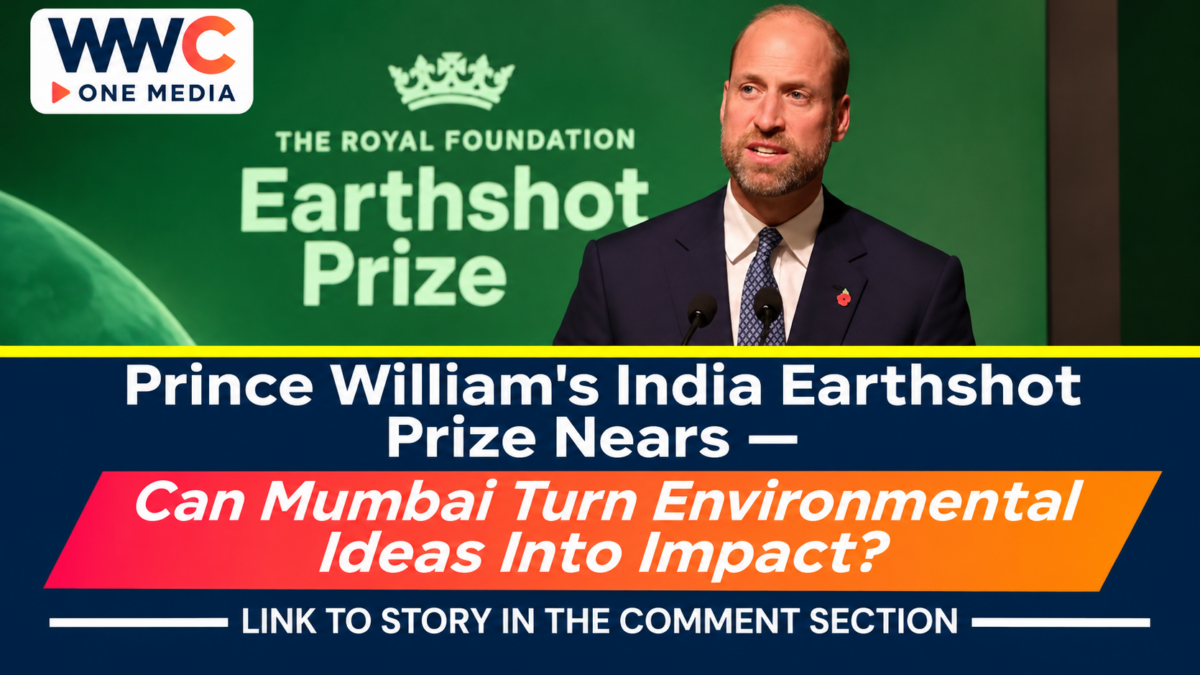
LONDON, Nov. 15, 2026 — Prince William’s Earthshot Prize is preparing to convene environmental innovators in Mumbai on Nov. 16–17, culminating in five awards worth £1 million each. The event’s official programme lists 15 finalists from around the world, including the Philippines’ Mother Earth Foundation, as the initiative tests whether promising projects can expand beyond their original communities.
Reports of a joint India visit by William and Catherine, Princess of Wales, have drawn additional attention to the occasion. The original Kensington Palace announcement confirming Catherine’s itinerary was not independently accessible during this review, so her planned participation remains subject to direct palace-record verification before publication as a confirmed engagement.
India Earthshot Prize: What Is Confirmed?
The Earthshot Prize’s published programme places its Mumbai summit on Nov. 16–17 and the sixth annual awards ceremony on Tuesday, Nov. 17. The competition has five categories: protecting and restoring nature, cleaning the air, reviving oceans, building a waste-free world and fixing the climate.
One winner from each category is scheduled to receive £1 million to help expand its environmental solution. The money is an award to selected organisations, not an automatic payment to every finalist or a direct government grant to India.
The organiser’s September announcement said this year’s 15 finalists were selected from a database of nearly 7,000 nominations across 169 countries. The finalists range from community organisations to companies, countries and cities. Winners had not yet been announced as of Nov. 15.
This distinction between finalists and awardees matters: naming a project among the last 15 demonstrates recognition, but does not establish it will secure one of the five awards.
A Philippine Organisation Is Among the Finalists
Mother Earth Foundation, from the Philippines, appears in the official 2026 finalist roster under the category for building a waste-free world. The nomination offers a Philippine connection to an event that otherwise might be seen primarily as a British royal engagement in India.
It also makes the event relevant to regional discussions about community waste management. The finalist list highlights waste solutions alongside transport, conservation and renewable-energy projects, demonstrating how environmental work can take many forms rather than focusing exclusively on carbon emissions.
WWC previously examined Philippine climate-reporting and transparency efforts. Reliable data on results will also matter for award finalists: recognition and publicity should ultimately be accompanied by measurable impact.
Analysis: For a Philippine organisation, an international finalist designation may increase access to partners and potential funders. It does not by itself establish new financing, contractual partnerships or the future scale of its work.
Why Mumbai Is Hosting the Global Event
The prize’s official Mumbai programme describes India as a setting in which environmental pressures and opportunities for innovation meet. It identifies clean technology, nature restoration and sustainability alongside the country’s entrepreneurial activity as reasons to convene the event there.
The November summit preview says India had produced seven Earthshot finalists and four winners in previous editions, more than any other country. That track record helps explain the selection of Mumbai, but the number refers to the programme’s previously recognised innovators, not a government ranking of India’s overall environmental performance.
India also has two finalists in this year’s cohort: Mahindra Last Mile Mobility, recognised in the clean-air category, and Mahila Housing Trust, recognised in the climate category. Their presence shows the range of approaches being celebrated, from mobility to resilience in communities.
The city’s role as host does not automatically mean the prize money will all remain in India. The five winners will be selected from the international finalists, with the announcements scheduled for Nov. 17.
Young People and Business Leaders Have Separate Roles
The programme includes a Children’s Earthshot event, featuring student teams from India. The summit preview describes 15 finalist teams scheduled to participate, with five winning teams expected to receive US$2,000 each for their projects.
Those youth awards are distinct from the main five £1 million Earthshot prizes. Combining the two into one total would overstate what an individual young team stands to receive.
A separate Impact Assembly is scheduled to connect finalists with partner organisations, businesses and other supporters. The programme describes this as an opportunity to develop relationships and make announcements. Neither attendance nor a meeting guarantees investment.
The Earthshot Prize also announced an India Advisory Council on Nov. 6, intended to support local partnerships and help environmental innovators grow beyond the ceremony. The council is evidence that organisers intend a continuing presence, rather than treating the awards night as the only measure of success.
A High-Profile Ceremony Faces an Implementation Test
An official event announcement lists filmmaker Karan Johar as host and names performers and presenters including Alia Bhatt, Sachin Tendulkar, Rami Malek and Take That. That public programme helps explain the ceremony’s cultural visibility, but celebrity attendance does not itself measure environmental results.
Analysis: The more durable test is whether shortlisted ideas attract follow-on financing, adoptable technology, partnerships and verified outcomes. The £1 million awards could support that process, but scaling projects across markets can require regulation, infrastructure and ongoing funding.
The practical challenge mirrors the wider question raised in WWC’s coverage of the COP31 climate negotiations: how to convert ambitious environmental promises into visible results.
For vulnerable communities, resources and delivery mechanisms matter as much as announcements. WWC also examined Philippine efforts to improve access to climate-loss financing, a distinct programme with a similar implementation challenge.
What Happens Next
The Mumbai summit is scheduled to begin Nov. 16, with the five main Earthshot winners due to be named Nov. 17. The prize’s official website also says the awards show will stream on Prime Video on Nov. 30.
An updated royal itinerary or Court Circular entry would separately provide a primary-record basis for confirming which engagements Catherine attends. Until that is available, coverage should distinguish the documented Earthshot schedule from the independently unverified details of the reported joint visit.
For the Philippines, the most concrete question is what recognition means for Mother Earth Foundation after the ceremony: an award, a partnership, greater reach or simply a place among the finalists. Those outcomes will require subsequent public records to establish.
Frequently Asked Questions
When is the 2026 Earthshot Prize in India?
The official Mumbai programme schedules activities for Nov. 16–17, 2026, with the main awards ceremony on Nov. 17.
How much do Earthshot winners receive?
Five winners are scheduled to receive £1 million each, one across each of the five environmental categories.
Is a Philippine group competing?
Yes. Mother Earth Foundation is listed among the 15 finalists, in the waste-free world category.
Is Princess Kate definitely attending the India events?
Multiple reports describe a Kensington Palace confirmation, but the original palace announcement was not independently opened for this fact-check. Her precise schedule needs direct official verification.