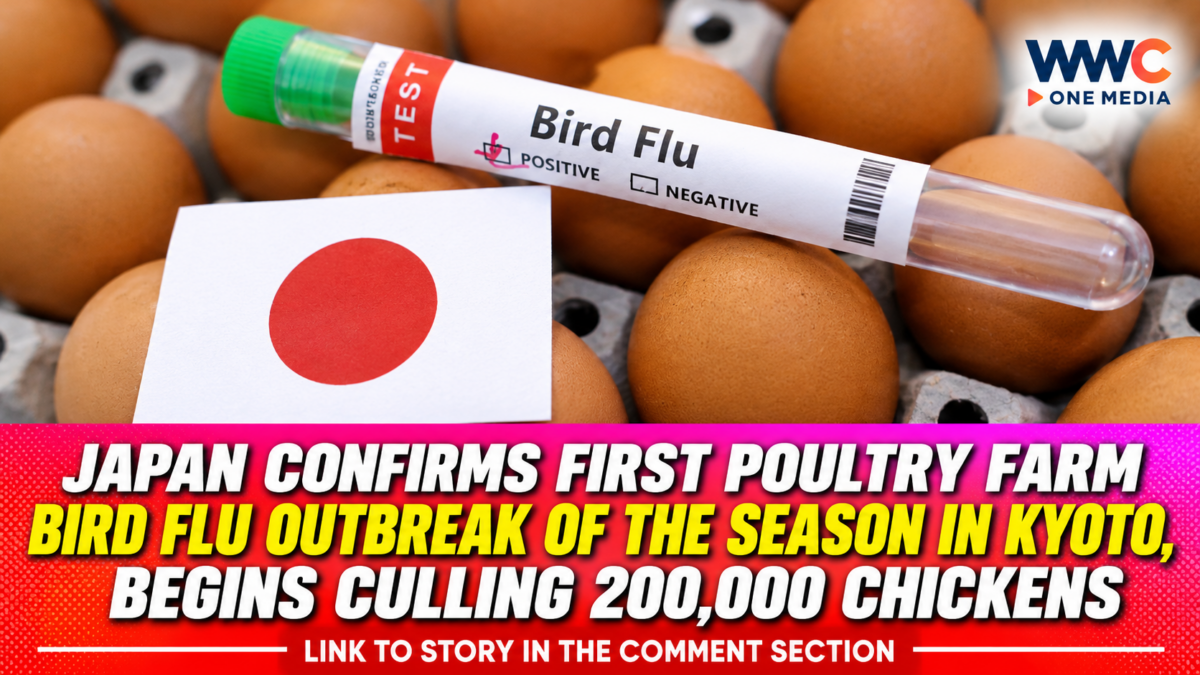
Japan has confirmed its first bird flu outbreak at a poultry farm for the 2026–2027 season, triggering an emergency operation to cull approximately 200,000 egg-laying chickens in Kyoto Prefecture as authorities race to prevent the highly contagious virus from spreading to neighbouring farms.
The outbreak was confirmed on November 12 at a poultry farm in Kameoka, western Japan, after officials detected an unusual increase in chicken deaths and conducted laboratory testing.
Fourteen chickens had died at the affected facility, according to Japan’s agriculture ministry. Genetic testing subsequently confirmed the presence of highly pathogenic avian influenza, prompting authorities to begin large-scale disease-control measures.
The outbreak is the first confirmed case at a Japanese poultry farm this season. However, it is important to distinguish this from earlier detections of bird flu in wild birds elsewhere in Japan.
The discovery has raised concerns for the country’s poultry industry, particularly as Japan approaches a period of increased demand for eggs and food products toward the end of the year.
200,000 Chickens Face Culling in Kyoto
The affected farm is located in Kameoka, Kyoto Prefecture, and houses approximately 200,000 egg-laying chickens.
The Kyoto prefectural government began culling the birds after genetic testing confirmed the outbreak on November 12.
Japan’s Ministry of Agriculture, Forestry and Fisheries said the farm had already voluntarily restricted the movement of poultry and related items after reporting the unusual deaths.
The government is also implementing containment measures to reduce the risk of the virus spreading to other poultry operations.
Under the emergency response plan, farms within a three-kilometre radius of the affected facility are subject to movement restrictions, while farms between three and 10 kilometres away face restrictions on shipping poultry and related products.
Authorities are also conducting inspections and surveillance at farms within the affected zones.
The measures are intended to prevent infected birds, eggs and other potentially exposed materials from moving through the agricultural supply chain.
300,000 Chickens at Seven Nearby Farms Face Movement Restrictions
The outbreak has consequences beyond the farm where the infection was detected.
According to Jiji Press reporting carried by Nippon.com, authorities have prohibited the transportation of approximately 300,000 chickens from seven nearby farms within a 10-kilometre radius.
These restrictions are designed to limit possible transmission while officials assess the health status of surrounding poultry operations.
The movement controls do not mean all 300,000 chickens have been infected or will automatically be culled.
Instead, they are precautionary measures intended to contain the outbreak and prevent potentially exposed poultry from being transported to other locations.
The government is also strengthening disinfection procedures around the affected farm and establishing disinfection points along major roads.
How the Bird Flu Outbreak Was Detected
The outbreak came to light on November 11, when the farm reported an unusual increase in chicken deaths to the Kyoto authorities.
Officials from the local livestock hygiene centre inspected the facility and conducted preliminary testing.
The initial tests returned positive results for avian influenza.
Genetic testing conducted the following morning confirmed the highly pathogenic avian influenza classification, prompting the national government to activate its emergency response arrangements.
Chief Cabinet Secretary Minoru Kihara urged poultry farmers throughout Japan to maintain strict hygiene standards and remain alert for unusual signs of illness among their birds.
Agriculture Minister Arata Takebe also called for early detection, immediate reporting and thorough disease-prevention practices.
The national government is coordinating with Kyoto authorities, dispatching specialists and supporting the culling and disposal operation.
The ministry is also encouraging other prefectures to strengthen surveillance and review their farm biosecurity procedures.
Japan’s Egg Prices Could Face Additional Pressure
The outbreak comes at a difficult time for Japanese consumers already dealing with elevated egg prices.
According to a Japanese agriculture ministry food-price survey reported by The Japan Times, the average retail price of a pack of 10 eggs reached 312 yen in October 2026.
That was the highest level recorded since the survey began in August 2003.
The latest outbreak could add further pressure if additional poultry farms are affected or if restrictions disrupt the movement of eggs and poultry products.
However, the full effect on national egg supplies and consumer prices remains uncertain.
The culling of 200,000 laying hens represents a substantial loss of production capacity at one farm, but it does not automatically mean Japan will experience a nationwide egg shortage.
The government’s priority is to prevent further infections and protect the wider poultry supply chain.
Agriculture Minister Takebe has said authorities will work to prevent the outbreak from disrupting supply and demand.
Why Bird Flu Is Such a Serious Threat to Poultry Farms
Highly pathogenic avian influenza is a contagious viral disease that can spread rapidly among susceptible bird populations.
In commercial poultry operations, an outbreak can lead to significant losses because infected flocks may experience high mortality rates.
The virus can spread through direct contact with infected birds and through contaminated equipment, clothing, vehicles, feed or other materials.
This is why authorities impose strict controls on poultry movement and require farms to maintain rigorous hygiene procedures.
Biosecurity measures commonly include restricting access to poultry houses, disinfecting vehicles and equipment, controlling contact with wild birds and monitoring flocks for unusual illness or deaths.
Early reporting is especially important because delays can allow the virus to spread before authorities have an opportunity to isolate the affected operation.
Japan’s response in Kyoto follows this approach, with the culling operation, movement restrictions and disinfection measures intended to contain the infection before it reaches additional farms.
First Farm Outbreak Does Not Mean Japan Had No Earlier Bird Flu Detections
Although the Kyoto incident is being described as Japan’s first poultry-farm outbreak of the season, bird flu had already been detected in wild birds.
The Japan Poultry Association reported earlier highly pathogenic avian influenza detections in wild birds, including a case in Akita Prefecture announced on November 6.
This distinction is important because wild-bird detections and infections at commercial poultry farms are tracked separately.
Wild birds can carry and spread avian influenza viruses across different regions, creating potential exposure risks for domestic poultry.
The confirmation of the Kyoto farm outbreak therefore represents a significant development in the seasonal disease situation, rather than Japan’s first detection of the virus in any bird population.
The presence of the virus in wildlife makes surveillance and farm biosecurity especially important during the migration season.
Should Consumers Be Worried About Eating Chicken and Eggs?
The outbreak has also raised questions about whether chicken meat and eggs remain safe for consumers.
Japan’s Ministry of Agriculture, Forestry and Fisheries states that, under the country’s current circumstances, the possibility of humans becoming infected with bird flu by eating chicken meat or eggs is not considered a concern.
Proper food handling and thorough cooking remain important.
Consumers should continue following ordinary food-safety practices, including cooking poultry thoroughly, avoiding cross-contamination between raw meat and ready-to-eat food, and washing hands and kitchen equipment after handling raw poultry.
The outbreak does not mean that chicken and eggs already available in shops are automatically contaminated.
Authorities are implementing movement restrictions and disposal measures to prevent potentially infected poultry from entering the food supply.
People should also avoid touching sick or dead wild birds and report unusual bird deaths to the relevant local authorities.
Japan’s Poultry Industry Faces Another Biosecurity Test
The Kyoto outbreak highlights the continuing vulnerability of commercial poultry production to highly pathogenic avian influenza.
Japan has experienced bird flu outbreaks in previous seasons, with large-scale culling operations used to prevent the virus from spreading between farms.
The latest case is another reminder that even large, professionally managed poultry operations can face disease threats when avian influenza circulates among wild bird populations.
For farmers, the financial consequences can extend beyond the loss of livestock.
Outbreaks can lead to production interruptions, additional disinfection expenses, restrictions on transportation and uncertainty for businesses involved in processing, distribution and retail.
For consumers, the biggest concern is whether repeated outbreaks could place additional pressure on food prices.
The Japanese government is now working to contain the Kyoto outbreak while monitoring surrounding farms and strengthening preventive measures nationwide.
The coming days will be important in determining whether the virus remains confined to the affected area or spreads to other poultry operations.
With 200,000 chickens being culled and another 300,000 birds at nearby farms subject to movement restrictions, Japan faces a critical test of its ability to protect its poultry industry.
The immediate priority is containment. But as egg prices already sit at record levels, one question is becoming increasingly important: Can Japan stop the bird flu outbreak in Kyoto before it triggers another shock to the country’s already expensive egg supply?