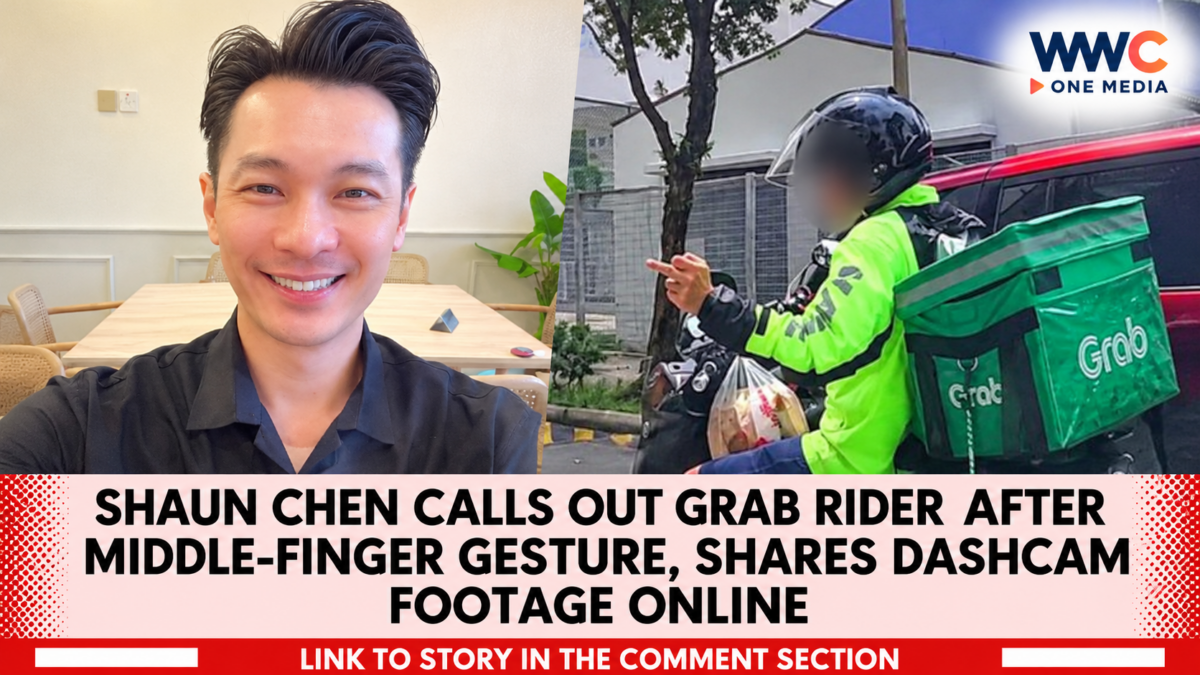
Singapore-based Malaysian actor Shaun Chen has publicly called out a Grab rider after the motorcyclist allegedly gave him the middle finger while passing his stationary vehicle, prompting the actor to question the rider’s behaviour and tag Grab Singapore on social media.
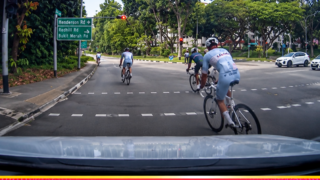
The 48-year-old Mediacorp star shared dashcam footage and photographs of the incident through his Instagram Stories on Thursday, November 12, 2026. The post quickly attracted attention because it showed the rider making an offensive hand gesture directly towards the actor.
“Why so rude?? Is it normal to point middle finger like that?” Chen wrote while tagging Grab Singapore’s official Instagram account.
The footage showed Chen’s vehicle stationary on a Singapore road at an unidentified location. As the Grab rider passed, he appeared to raise his hand and display the middle-finger gesture.
Chen also posted a closer image of the rider making the gesture and a photograph showing the motorcycle’s registration plate.
The actor’s decision to bring the incident to Grab’s attention has raised questions about professional conduct, road etiquette and how ride-hailing platforms should respond when their driver- or delivery-partners are involved in confrontations on the road.
Shaun Chen Shares Dashcam Video and Tags Grab Singapore
Unlike a private complaint submitted directly to a company, Chen chose to make the incident visible through his social media account.
His post included the dashcam recording, which captured the rider passing his stationary vehicle and making the offensive gesture.
The actor did not publicly provide a detailed explanation of what happened before the exchange, and the location of the incident was not identified in the report.
That missing context is important. The footage shows the gesture, but it does not independently establish what led to the encounter or whether an argument had taken place beforehand.
Chen’s public question nevertheless put the spotlight on the rider’s conduct and prompted attention towards Grab Singapore.
AsiaOne reported that it had contacted Grab for comment. At the time of publication, the company had not provided a response in the report.
There was also no confirmation that the rider had been suspended, disciplined or formally investigated by the platform.
Not the First Time Shaun Chen Has Spoken Out About a Road Incident
The latest incident is particularly notable because Chen has previously used social media to seek answers following a serious road tragedy involving his family.
In 2025, the actor shared dashcam footage connected to a hit-and-run accident in Malaysia that resulted in his father’s death.
He also posted an image of the suspected vehicle’s registration plate and appealed for the person responsible to acknowledge what had happened.
Chen explained at the time that he was not seeking revenge but wanted accountability. The driver subsequently surrendered to Malaysian police.
The earlier tragedy was far more serious than the latest roadside confrontation, but both incidents demonstrate why the actor has been willing to use publicly available footage to draw attention to road-related issues.
His latest post, however, concerns an offensive gesture rather than a reported collision or physical injury.
Grab Has Faced Other Public Complaints About Driver Conduct
The incident comes as ride-hailing services continue to face public scrutiny over passenger safety, driver behaviour and professional boundaries.
In September, a Grab passenger in Singapore raised concerns after alleging that a private-hire vehicle driver streamed television dramas and videos while driving.
The passenger said the journey lasted around 10 minutes and questioned whether the driver was paying sufficient attention to the road.
The incident generated a divided online reaction, with some commenters discussing driver fatigue while others argued that watching videos while driving creates an unacceptable distraction.
WWC ONE MEDIA covered the controversy in Grab Passenger Calls Out PHV Driver for Allegedly Streaming Videos While Driving.
Although the circumstances are different, both incidents have drawn attention to the expectations placed on people working in transport and delivery services.
Grab Previously Apologised Over Microdrama That Triggered Safety Concerns
Grab Singapore has also faced criticism over how its brand is represented in entertainment content.
In September 2026, the company apologised after its promotional microdrama, I Fell In Love With My Grab Driver, attracted criticism from viewers who believed the storyline could blur professional boundaries between drivers and passengers.
The series featured local actors Glenn Yong and Regina Lim. Some viewers questioned whether its romantic premise was appropriate for a service where passenger safety and professional conduct are important.
Grab clarified that the relationship in the story developed outside the normal driver-passenger arrangement and stressed that inappropriate actions or conversations were unacceptable.
The company acknowledged that it should have been more thoughtful about how the campaign’s title and concept might be interpreted.
WWC ONE MEDIA reported on the response in Grab Singapore Apologises After Microdrama Sparks Safety and Harassment Concerns.
The marketing controversy is separate from Chen’s encounter, but it illustrates the public attention that Grab’s brand and the conduct associated with its services can attract.
Grab’s Expanding Transport Business Faces Other Safety Questions
The company is also expanding into new forms of transportation, including autonomous vehicles.
In November, a Grab autonomous vehicle in Punggol was involved in a near-miss with a schoolgirl at a pedestrian crossing. The Land Transport Authority subsequently ordered a pause on certain autonomous-vehicle testing activities while the incident was investigated.
The incident raised questions about pedestrian safety and how automated driving systems respond to unexpected situations.
WWC ONE MEDIA examined the development in Grab’s Self-Driving Car Nearly Hits Schoolgirl in Punggol, Forcing LTA to Halt Some Tests.
Separately, the ride-hailing industry has faced pressure from drivers over earnings, commissions and working conditions across Southeast Asia.
WWC ONE MEDIA explored those wider challenges in Grab and GoTo Face Driver Backlash Across Southeast Asia.
These wider issues should not be confused with the incident involving Chen. There is no evidence that the rider’s alleged gesture was connected to any dispute over fares, employment conditions or the platform’s policies.
What Can Grab Do If a Rider Is Reported for Misconduct?
Ride-hailing and delivery platforms rely heavily on public confidence. Customers and other road users expect people operating under their brands to behave professionally, even when they encounter disagreements or stressful situations.
When a complaint is submitted, a platform may need to establish the identity of the person involved, review available footage, obtain accounts from the parties and determine whether its conduct policies have been breached.
However, no specific action against the rider in Chen’s video has been confirmed.
It is also important to distinguish between an offensive gesture and conduct that constitutes a criminal offence. Whether the incident warrants police attention or other legal action would depend on the full circumstances and applicable law.
For now, the public footage provides only part of the story.
A Roadside Gesture Becomes a Public Debate
Chen’s decision to share the footage has turned a brief roadside encounter into a wider discussion about courtesy and behaviour in Singapore.
For many viewers, the middle-finger gesture is an unmistakable sign of disrespect. Others may want to know what happened before the rider passed the actor’s vehicle.
Without additional footage or statements from the rider, the full circumstances remain unclear.
The next important development may be Grab Singapore’s response and whether the company can establish what happened before the video was recorded.
For Chen, the question was straightforward: why should a rider behave that way?
For the public, the incident raises a broader question about whether professional conduct should remain an expectation even when road users disagree.