SINGAPORE | October 23, 2026 — Singapore’s ruling People’s Action Party (PAP) is approaching a pivotal leadership election that could reshape the party’s inner circle, with younger ministers potentially gaining influential positions while some veteran political figures make way.
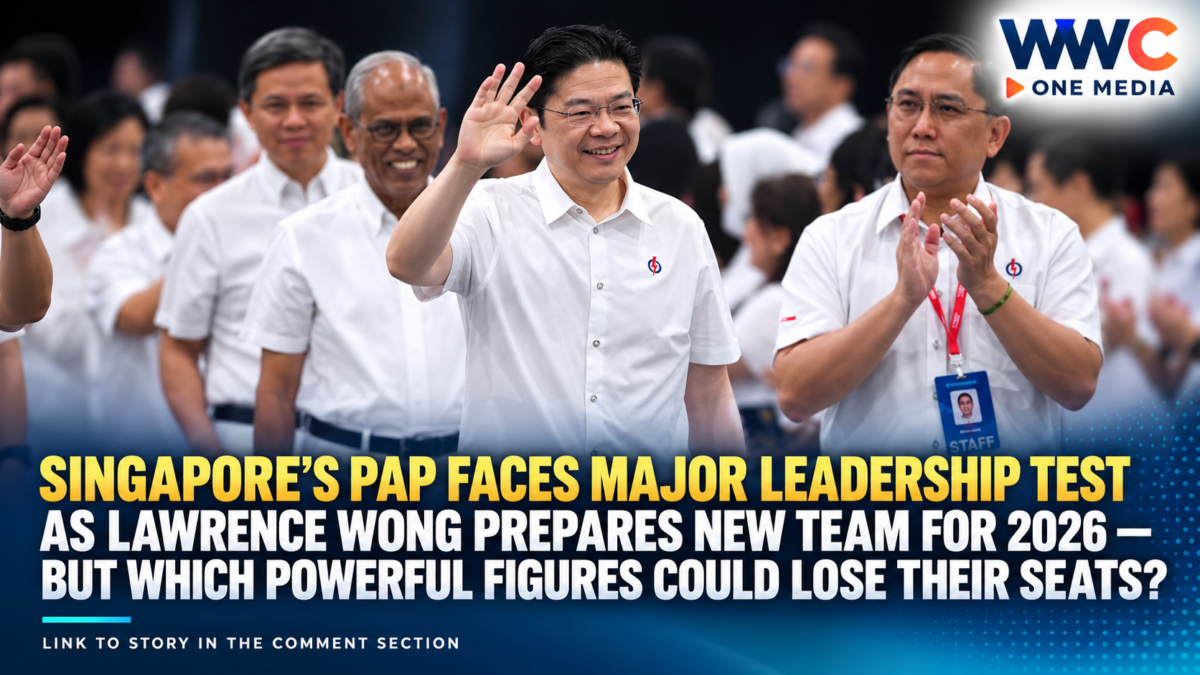
Prime Minister Lawrence Wong, who also serves as PAP secretary-general, faces a significant test of his leadership as party cadres prepare to elect the 39th Central Executive Committee (CEC) on Sunday, October 25.
The vote will be the first CEC election since Wong led the PAP through the 2025 general election as prime minister. It could offer an important indication of how he intends to develop the party’s next generation of leaders.
Political analysts, however, are cautioning against expectations of a dramatic overhaul. Rather than removing experienced politicians in one sweeping move, Wong is expected to pursue a gradual transition combining established leadership with rising political talent.
Younger Ministers Could Enter the PAP’s Powerful Inner Circle
Among the politicians attracting attention are Transport Minister Jeffrey Siow, Minister for Culture, Community and Youth David Neo, and Acting Manpower Minister Jasmin Lau.
All three entered Parliament in 2025 and subsequently assumed significant government responsibilities. None currently sits on the PAP’s CEC.
Political observers interviewed by Channel NewsAsia believe their growing ministerial responsibilities make them potential candidates for the party’s highest decision-making body.
Zaqy Mohamad, who became acting minister-in-charge of Muslim affairs, is another figure to watch. Unlike the three first-term ministers, he already joined the CEC in July 2026.
His possible elevation to a more senior party role could signal further changes within the PAP’s leadership structure.
However, no official election results or final list of newly elected CEC members had been announced as of October 23.
Could Singapore’s Veteran Political Leaders Make Way?
The upcoming vote has also raised questions about the future roles of several long-serving PAP leaders.
Senior Minister Lee Hsien Loong, 74, Senior Minister K. Shanmugam, 67, and Foreign Affairs Minister Vivian Balakrishnan, 65, are among the oldest members of the current CEC.
Their considerable experience makes them valuable advisers, but analysts say limited committee positions could create pressure to accommodate younger political figures.
The CEC consists of 12 elected members and can include up to six additional co-opted members.
That means a growing pool of potential candidates could leave Wong and the party facing difficult choices over which leaders should take on the most influential responsibilities.
Nevertheless, analysts do not agree on whether senior figures will step aside.
Some believe Lee Hsien Loong will remain particularly important because of his experience and his role in connecting the PAP’s previous generation of leadership with Wong’s current team.
Others see opportunities for some veteran politicians to reduce their involvement in day-to-day party management without leaving public service altogether.
An exit from the CEC would not automatically mean retirement from the Cabinet or Parliament.
Why Chan Chun Sing’s Position Matters
One of the most closely watched questions concerns the PAP’s assistant secretary-general positions.
Defence Minister Chan Chun Sing currently serves as the party’s sole assistant secretary-general.
Political observers suggest that appointing another assistant secretary-general could broaden the PAP’s senior leadership team and provide an indication of which politicians may be considered for greater responsibilities in the future.
Historically, senior party appointments have sometimes offered clues about political succession.
The PAP’s internal leadership structure does not, however, automatically determine who becomes Singapore’s next deputy prime minister or prime minister.
Such decisions involve separate government and constitutional processes.
Another Possible Change: The PAP’s Malay-Muslim Leadership
The election may also bring changes to the party’s representation and leadership responsibilities involving Singapore’s Malay-Muslim community.
Political observers have identified Zaqy Mohamad as a possible successor to Masagos Zulkifli in the position of PAP vice-chairman.
Zaqy became acting minister-in-charge of Muslim affairs in July and joined the CEC that same month.
His appointment followed the departure of former acting minister-in-charge of Muslim affairs Faishal Ibrahim from his political positions.
A more senior party appointment for Zaqy could give him an additional platform to build his political profile.
Any such change remains speculative until the PAP confirms its internal appointments.
Why the 2025 General Election Changed the Political Calculations
Wong’s leadership decisions now come after his first general election as prime minister.
The 2025 election provided an opportunity to introduce new parliamentary candidates and build a broader governing team.
Since then, several newly elected MPs have assumed substantial ministerial responsibilities.
The upcoming CEC election could allow the PAP to align its internal leadership more closely with those changes.
The party also faces continuing questions about political renewal, public confidence, representation and the development of leaders capable of sustaining its long-term electoral competitiveness.
For Wong, the challenge is not simply identifying younger politicians. It is also ensuring that new leaders develop the experience, credibility and support necessary to manage a major political organisation.
Why Non-MPs Could Still Have a Place at the Top
Another question concerns whether politicians who do not hold parliamentary seats will continue to have roles in the PAP’s highest leadership body.
The party has previously included non-MPs in its CEC.
Following the 2020 general election, candidates including Ng Chee Meng and Victor Lye were given committee positions despite losing their parliamentary contests.
Ng subsequently returned to Parliament after the 2025 general election.
Analysts believe the inclusion of non-MPs can help the party maintain political relationships in constituencies where it has not won parliamentary representation.
It may also provide opportunities to develop potential future candidates.
However, the emphasis on bringing younger office holders into the leadership could intensify competition for the available places.
A Leadership Transition, Not Necessarily a Political Purge
Singapore has witnessed carefully managed leadership transitions within the PAP before.
When Lee Hsien Loong led the party following his first general election as prime minister in 2006, the PAP retained a strong core of experienced leaders.
Wong may follow a similar approach.
Singapore Management University law academic Eugene Tan has suggested that gradual renewal is more likely than an abrupt restructuring, particularly with another CEC election expected in 2028.
This would allow the PAP to introduce emerging leaders while preserving continuity in its organisational leadership.
The distinction is important: there is currently no confirmed mass removal of veteran politicians, no announced leadership purge and no official slate showing who will win or lose committee positions.
What Happens Next?
On October 25, PAP cadres will vote to select the elected members of the party’s 39th Central Executive Committee.
The results will provide an early indication of which politicians have secured support within the organisation.
Subsequent appointments, including leadership positions and any co-opted members, will offer further clues about how Wong intends to shape the party.
The most revealing question may not be simply who enters the committee.
It may be who receives greater responsibility, who gives up influence, and how the new leadership team balances experience with political renewal.
As Singapore’s ruling party prepares to choose its next inner circle, one question remains: Will Lawrence Wong’s first post-election CEC vote mark a routine leadership refresh — or the beginning of a more consequential generational transition?