A government employee in Cebu is facing a criminal case over an unliquidated cash advance worth less than ₱20,000, prompting renewed attention to the rules governing public funds and the accountability of government personnel.
The case involves Kenneth Robert Obial Metante, a section head at the Bogo Water District, who is facing a charge under Article 218 of the Revised Penal Code, according to reports published on October 21, 2026.
The case highlights a key obligation for government employees entrusted with public money: cash advances must be properly accounted for, supported by the required documents, and settled within the applicable deadlines.
Why a ₱19,822 cash advance became a legal issue
Reports identify the amount involved as ₱19,822.50. The matter stemmed from an audit by the Commission on Audit (COA), which found that more than ₱2.7 million in employee cash advances at the water district remained unliquidated as of the end of 2023.
Under Article 218 of the Revised Penal Code, an accountable public officer who fails to render accounts for public funds or property as required by law may face criminal liability.
The provision concerns the failure of accountable public officers to render accounts within the prescribed period. The filing of a case, however, does not by itself establish guilt; the allegations must be resolved through the legal process.
Ombudsman issues warning to government employees
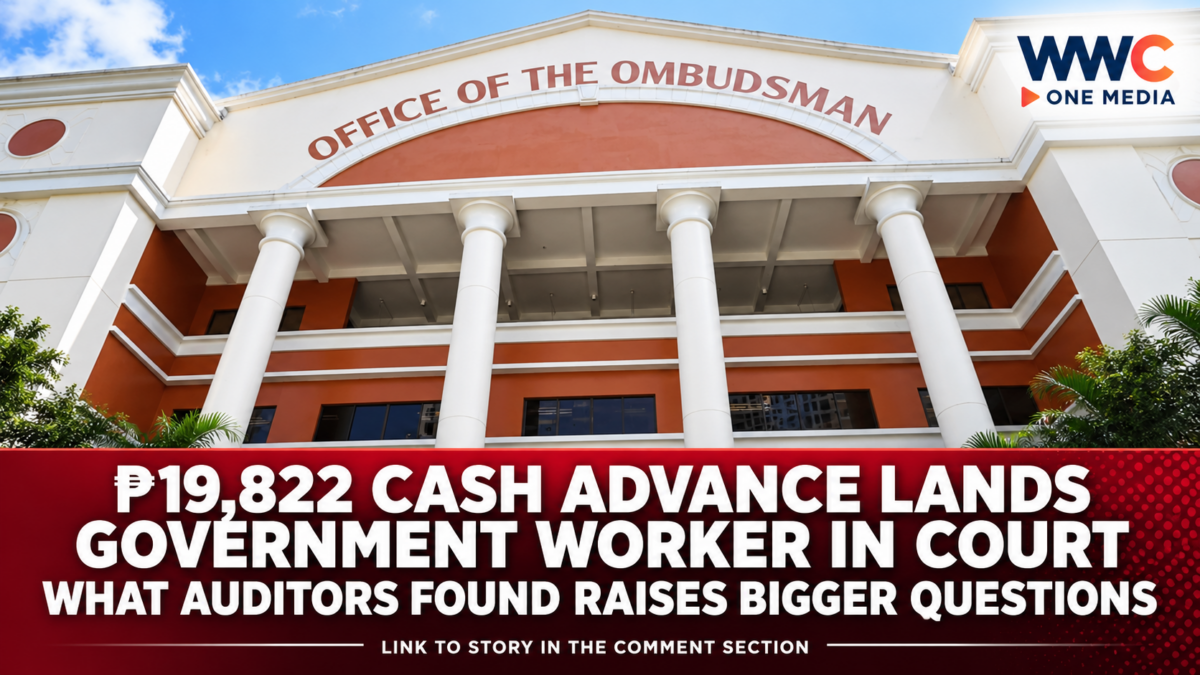
In a separate but related development, the Office of the Ombudsman reminded government workers to liquidate cash advances properly and on time.
The warning, reported by ABS-CBN News on October 21, underscores the importance of maintaining complete financial records and ensuring that public money is used for its authorized purpose.
Government cash advances are intended to cover legitimate official expenses. They are not personal funds, and employees entrusted with them must provide the necessary accounting and supporting documents.
Failure to settle advances can trigger audit findings and, depending on the circumstances and applicable law, administrative or criminal proceedings.
COA findings put government fund management under scrutiny
The Bogo Water District case also illustrates why government auditors examine outstanding cash advances. Unliquidated balances can make it difficult to determine whether money was spent for its intended purpose, whether expenses were adequately documented, and whether unused amounts were returned.
The Commission on Audit has raised similar concerns in other government agencies.
In a previous report published by the Philippine Daily Inquirer, state auditors flagged ₱1.572 billion in unliquidated cash advances at the Department of Labor and Employment based on its 2020 audit. The report raised concerns about delayed liquidation, incomplete supporting records, and the granting of additional advances to officers with outstanding balances.
Although the DOLE findings involved a different agency, period, and set of transactions, they demonstrate the broader challenge of ensuring that public funds are properly documented and accounted for.
What happens next?
The case against Metante places the spotlight on the responsibility of government employees who handle public money. Its outcome will depend on the evidence and the proceedings before the appropriate authorities.
Reports also indicated that complaints involving former Bogo Water District general manager Houdini Ancajas Jumao-as were dismissed for insufficient evidence. This is a reminder that accountability must be determined individually and on the basis of evidence, rather than assumed from an audit finding alone.
For government agencies, the lesson is clear: strengthen monitoring, require timely liquidation, and prevent outstanding advances from accumulating without adequate explanation.
For taxpayers, the issue goes beyond the amount involved. Every public fund must be traceable, properly documented, and used for its authorized purpose.
The bigger question is whether government offices can consistently enforce the rules before outstanding cash advances turn into costly legal and accountability problems.