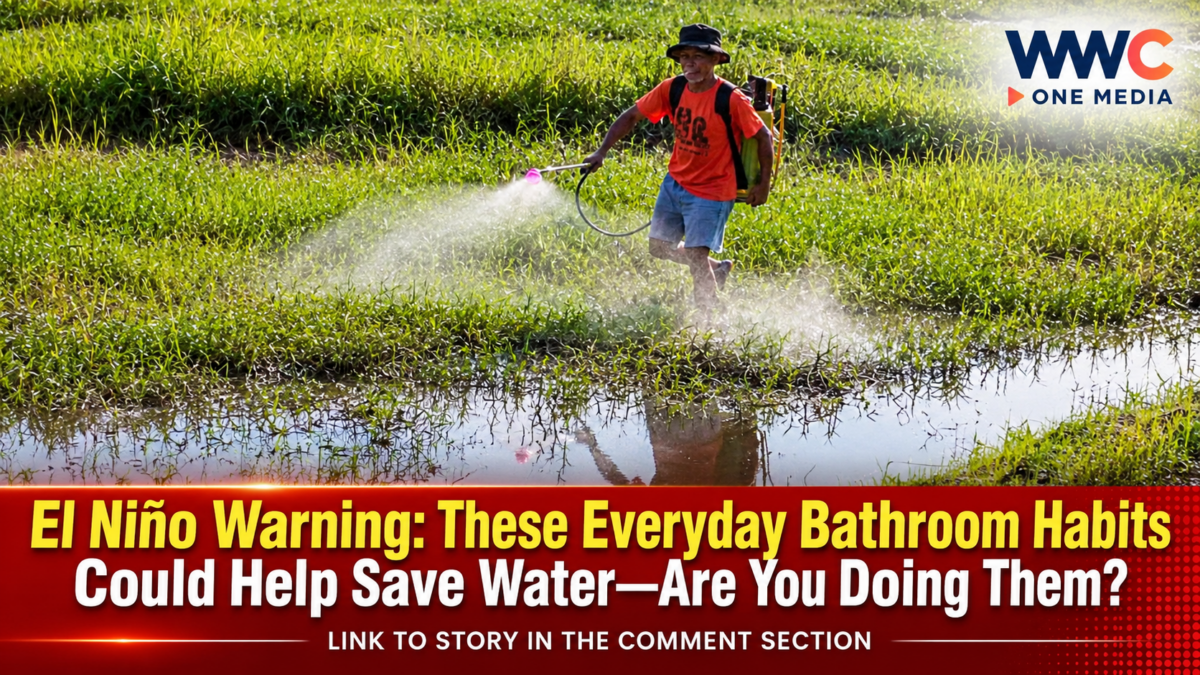
MANILA, Philippines — As the Philippines prepares for the potential effects of a stronger El Niño, households are being encouraged to rethink everyday habits that waste water, including taking long showers and leaving the faucet running while brushing their teeth.
What may seem like a small amount of wasted water in one household can add up when repeated by thousands or millions of people. Simple changes in bathrooms, kitchens and laundry areas can help reduce unnecessary consumption and ease pressure on water resources during prolonged dry conditions.
The reminder comes as government agencies warn that El Niño could bring below-normal rainfall to many parts of the country, increasing the risk of dry spells, drought and water supply stress.
Why bathroom habits matter
Two easy places to start are bathing and brushing teeth.
Instead of taking unnecessarily long showers, households can shorten bathing time and turn off the faucet whenever running water is not needed. When brushing teeth, turning off the tap between rinsing can prevent clean water from going straight down the drain.
Other useful steps include checking faucets and showerheads for leaks, fixing dripping pipes promptly and using only the amount of water necessary for daily hygiene.
These measures do not require expensive equipment or major lifestyle changes. Their value comes from consistently avoiding waste.
Five practical ways to conserve water at home
1. Take shorter showers.
Reducing shower time can lower water consumption, particularly when combined with an efficient showerhead. Where appropriate, use a pail and dipper while maintaining proper hygiene.
2. Turn off the faucet while brushing your teeth.
Open the tap only when water is needed for rinsing. The same principle applies when shaving or washing your face.
3. Repair leaking faucets and pipes.
Even a small leak can waste water over time. Check bathroom fixtures, kitchen sinks, pipes and storage tanks regularly.
4. Reuse water when it is safe to do so.
Suitable leftover water from bathing or washing can be reused for toilet flushing and outdoor cleaning, provided it does not contain harmful chemicals or pose a hygiene risk. Keep reused water separate from drinking water.
5. Avoid unnecessary water-intensive chores.
Delay nonessential activities such as washing vehicles or hosing down driveways when these use excessive amounts of potable water. Use a bucket or other water-efficient method where practical.
El Niño preparations go beyond individual households
The Department of Environment and Natural Resources (DENR), the National Water Resources Board (NWRB) and other government agencies have urged the public to conserve water as the country prepares for El Niño.
In an advisory reported by the Philippine News Agency and GMA News, the DENR encouraged households to take shorter showers, turn off faucets while brushing their teeth, repair leaks and reuse suitable household water for non-drinking purposes.
The campaign also calls for greater attention to water losses in distribution systems and for protecting supplies needed for drinking, sanitation and essential health services.
Meanwhile, the NWRB has been preparing additional water sources and possible adjustments to water allocation as authorities assess the potential effects of reduced rainfall. In an October 2026 report, the Philippine News Agency said the agency was preparing deep wells and additional water projects to help maintain Metro Manila’s supply.
These preparations are important because household conservation is only one part of the solution. Water utilities, businesses, local governments and national agencies also have roles in managing demand, repairing leaks and protecting available supplies.
What Filipinos should know about the El Niño outlook
The Philippine Atmospheric, Geophysical and Astronomical Services Administration (PAGASA) has warned that the developing El Niño could intensify and affect rainfall patterns into 2027.
In its climate advisories, PAGASA has highlighted the risk of below-normal rainfall, dry spells and drought in vulnerable areas. However, El Niño does not mean that every part of the country will experience the same conditions at the same time. Local weather patterns and tropical cyclones can still bring periods of heavy rainfall.
For this reason, households should follow official weather updates and advisories from their local water providers instead of assuming that water shortages will occur everywhere.
Small actions can make a difference
Conserving water does not mean compromising basic hygiene or drinking less water than the body needs. It means eliminating unnecessary waste while ensuring that water remains available for essential daily activities.
Families can start by shortening showers, turning off unused faucets, fixing leaks and reusing water safely. Businesses and communities can also review their water consumption and adopt more efficient practices.
As the country prepares for potentially challenging dry conditions, the question is not simply how much water is available today, but how responsibly it is being used.