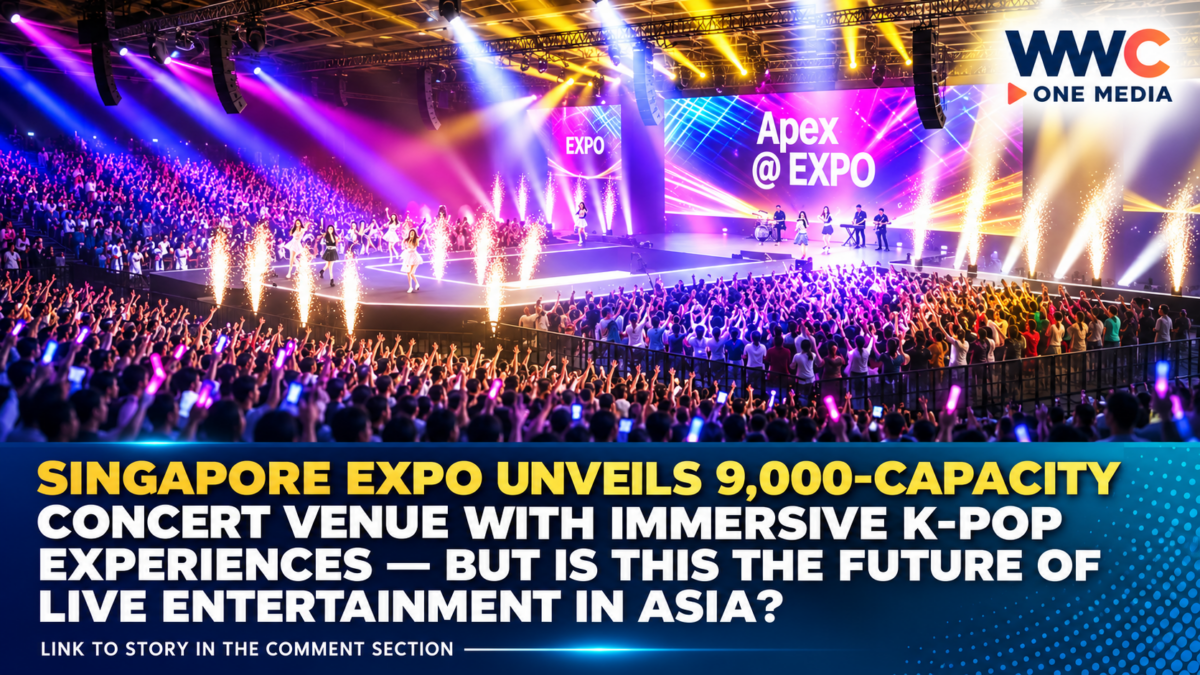
SINGAPORE, October 23, 2026 — Singapore’s live entertainment industry is entering a new chapter as Singapore EXPO expands its concert ambitions with a high-tech venue capable of accommodating up to 9,000 fans, responding to growing demand for immersive performances, elaborate stage productions and fan experiences that extend far beyond the music.
At the center of the transformation is Apex @ EXPO, an enhanced multi-purpose entertainment venue designed to accommodate large-scale concerts, virtual performers, international music acts and unconventional stage configurations.
The development reflects a broader shift in Asia’s concert industry, where promoters are increasingly looking beyond audience capacity and focusing on technology, fan engagement, comfort and operational flexibility.
For Singapore, the expansion could strengthen its position as a destination for international concert tours and large-scale entertainment events.
But the bigger question is whether upgrading concert infrastructure will be enough to meet the expectations of a new generation of fans.
A 9,000-Fan Venue Built for a New Era of Concerts
Singapore EXPO, traditionally associated with international exhibitions and business conventions, is increasingly positioning itself as a destination for live entertainment.
Its established Arena @ EXPO venue can accommodate up to 6,700 people, while Apex @ EXPO offers a capacity of up to 7,572 spectators in a fully seated arrangement or 9,000 with standing areas.
The two venues give promoters more options when deciding how to stage performances based on audience demand, technical requirements and production budgets.
Apex @ EXPO features expansive floor space, high ceilings, flexible staging configurations and advanced audiovisual capabilities designed to support increasingly complex concert productions.
The venue can also accommodate tiered seating, offering fans different viewing perspectives during performances.
Rather than relying on a single venue format, Singapore EXPO is seeking to provide adaptable spaces for concerts, esports competitions, cultural performances, interactive entertainment and major commercial events.
Virtual K-Pop Stars Bring a New Dimension to Live Performances
One of the clearest examples of this evolution came on October 17, when virtual K-pop group PLAVE performed at Apex @ EXPO.
Unlike conventional idol groups, PLAVE presents animated digital avatars powered by human performers, requiring sophisticated audiovisual systems and carefully coordinated stage technology.
Productions of this kind illustrate how live entertainment is becoming increasingly dependent on digital effects, large-format screens and immersive visual experiences.
Modern concert venues must therefore accommodate more than singers, musicians and conventional lighting.
They also need the technical infrastructure to support virtual performers, elaborate projections and potentially unconventional stage arrangements.
These developments could create new opportunities for artists and production companies experimenting with technology-driven live shows.
LE SSERAFIM Concert to Highlight the Growing Importance of Fan Experiences
The next major opportunity to showcase Singapore EXPO’s entertainment strategy comes on November 28, 2026, when South Korean girl group LE SSERAFIM is scheduled to perform at Apex @ EXPO.
The concert is expected to highlight another important trend in the K-pop industry: the growing significance of experiences surrounding a performance.
According to Singapore EXPO’s promotional feature published by CNA Lifestyle, the event will feature a Korean-style self-photo studio where fans can take pictures using customized concert-themed frames.
Such activities reflect how modern concerts are becoming social occasions that begin well before an artist appears onstage.
For dedicated fans, activities can include merchandise shopping, photography, meeting fellow supporters and participating in fan-organized gatherings.
By accommodating these activities, venues can become part of the overall entertainment experience rather than merely serving as the location of the performance.
Why Indoor Queues, Transport and Crowd Management Matter
Another major focus of Singapore EXPO’s redevelopment is the audience experience before and after concerts.
Long queues, unpredictable weather, security checks and crowd congestion can significantly affect how fans remember an event.
Singapore’s tropical climate makes indoor facilities particularly relevant, especially when concertgoers arrive several hours before performances.
Apex @ EXPO and its surrounding infrastructure provide indoor, air-conditioned areas that can support queueing, security screening and fan gatherings.
Singapore EXPO also benefits from direct MRT access, parking facilities, passenger drop-off points and multiple access routes.
These amenities are intended to help promoters manage large crowds while offering a more comfortable experience for attendees.
However, the effectiveness of crowd management and transport arrangements ultimately depends on individual event operations.
Singapore’s Concert Boom Is Creating New Opportunities
The latest development comes as Singapore continues to attract major international entertainment events.
A January 2026 report by Channel NewsAsia described strong demand across Singapore’s events sector, with organizers booking major activities well in advance.
Industry publication Bandwagon has also highlighted the importance of having a diverse range of concert venues.
Not every international performer can fill a massive stadium, while many productions require more space and infrastructure than small performance venues can provide.
Mid-sized and flexible entertainment facilities can help address this gap.
Singapore EXPO’s two concert venues offer different capacity options, potentially making it easier for organizers to accommodate a wider range of artists and live productions.
For concertgoers across Southeast Asia, including fans traveling from the Philippines, Indonesia, Malaysia and Thailand, continued investment in Singapore’s entertainment infrastructure may offer more reasons to consider the city-state for major shows.
Still, improved venues do not automatically guarantee cheaper tickets, more concerts or better access for international visitors.
Those outcomes will depend on artists’ touring schedules, promoter decisions, production costs and consumer demand.
Beyond Music: A Bigger Entertainment Strategy
Singapore EXPO’s ambitions extend beyond traditional concerts.
The venue is also scheduled to host the Pokémon World Championships in 2027, demonstrating its plans to accommodate major events across gaming, competitive entertainment and fan culture.
Ng Sim Lim, vice-president of commercial operations at Constellar, which manages Singapore EXPO, has emphasized the importance of offering organizers the flexibility to create different kinds of audience experiences.
That approach reflects a changing entertainment landscape in which physical venues must increasingly support technology, community engagement and diverse production formats.
As demand for live experiences evolves, venues that can accommodate multiple types of entertainment may have an advantage in attracting event organizers.
Could Singapore EXPO Help Redefine Asia’s Concert Industry?
Apex @ EXPO’s enhanced facilities represent more than a simple increase in concert capacity.
They reflect growing recognition that fans increasingly judge live entertainment by the entire experience, including accessibility, venue comfort, technical quality and opportunities for interaction.
But the next test will be whether the upgraded facilities deliver consistently compelling experiences across different performances.
The venue’s ability to attract major international productions, support ambitious technical requirements and manage large audiences could influence its long-term position in Singapore’s entertainment market.
For Singapore EXPO, the goal is no longer simply to build bigger concert stages. It is to make the entire concert experience part of the attraction.
And as Asia’s live entertainment industry becomes increasingly competitive, one question remains: Could the future’s most successful concert venues be defined not by how many fans they accommodate, but by everything those fans experience before, during and after the show?