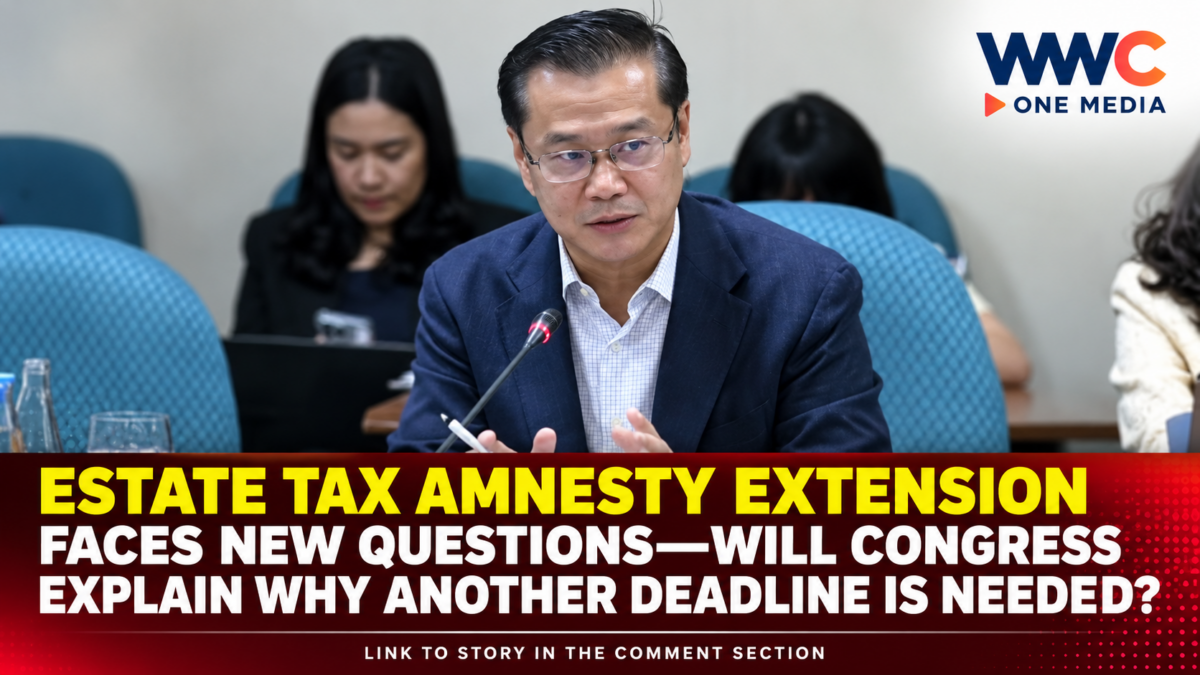
MANILA, Philippines — Senator Sherwin Gatchalian is questioning the repeated extensions of the Philippines’ estate tax amnesty program, renewing concerns over whether giving taxpayers more time is enough to address the problems preventing families from settling taxes on inherited properties.
The issue comes as lawmakers continue to pursue legislation that would reopen the amnesty window, which expired in June 2025. While supporters argue that another extension could help families transfer inherited properties legally, questions remain about whether repeated deadline adjustments are delivering the intended results.
The debate centers on a difficult policy balance: providing relief to families struggling with estate taxes while ensuring that taxpayers have a clear reason to comply within the prescribed period.
Why Gatchalian Is Questioning Another Extension
Gatchalian has previously warned that repeatedly extending a tax amnesty could weaken the program’s credibility and encourage taxpayers to expect another opportunity instead of settling their obligations before the deadline.
During Senate deliberations in 2023, the senator called for a valid and compelling justification for another extension. He also pressed government agencies to provide data on expected collections and explain why the additional time would benefit taxpayers and the government.
The concern is not simply whether another extension would help families. It is also whether the government can demonstrate that the policy improves tax compliance and generates additional revenue.
Inquirer previously reported that senators sought a data-backed explanation from the Department of Finance and the Bureau of Internal Revenue before supporting another extension. The discussions highlighted the need for clear collection targets and evidence that the proposed measure would achieve its objectives. Source: Inquirer.
Why Estate Tax Amnesty Matters to Filipino Families
Estate tax is a tax on the transfer of a deceased person’s taxable estate to heirs and beneficiaries. Settling the obligation is an important step in completing the legal transfer of inherited property.
For families who inherit land, houses or other assets, unpaid estate taxes and incomplete documentation can complicate efforts to register or transfer ownership.
The estate tax amnesty was designed to help eligible heirs settle qualifying unpaid estate taxes under more favorable terms. Under Republic Act No. 11956, the program’s previous extension allowed eligible estates to pay a flat rate of 6% without the applicable surcharges, penalties and interest covered by the amnesty.
The law extended the availment period until June 14, 2025, and expanded eligibility to estates of individuals who died on or before May 31, 2022.
The Department of Finance has argued that extending the program could help families formalize ownership and put otherwise idle properties to productive use. Source: GMA News.
Lawmakers Push to Extend the Deadline Again
The debate has continued beyond the expiration of the previous amnesty period.
In 2025, lawmakers advanced proposals to extend the program through 2028. The House of Representatives approved House Bill No. 6614 on third and final reading on December 16, 2025, according to the official congressional legislative record.
The Department of Finance also supported an extension, citing the potential to help more families settle their obligations and formalize inherited property ownership.
However, a proposed extension is not automatically a new law. The latest status of the relevant legislation must be checked against official congressional records before taxpayers assume that a new deadline is already in effect.
As of October 2026, the House legislative record also lists proposals seeking to extend the estate tax amnesty until June 30, 2028, including House Bill No. 11449, which was referred to the House Committee on Ways and Means in September 2026. These remain legislative proposals unless enacted into law. Sources: House of Representatives and House Committee on Ways and Means.
The Bigger Question: Will Another Extension Solve the Problem?
Supporters of an extension say some families need additional time because of financial constraints, documentation requirements and difficulties completing estate settlements.
But repeated extensions also raise questions about the effectiveness of the government’s approach. If taxpayers continue to struggle despite previous opportunities, lawmakers and revenue officials may need to examine whether the obstacles involve affordability, complicated procedures, limited public awareness or other administrative barriers.
A longer deadline could provide relief, but it may not resolve these underlying problems on its own.
The challenge for Congress is to ensure that any new amnesty period has clear eligibility rules, practical payment arrangements and safeguards against abuse. It must also determine whether the measure will produce meaningful improvements in compliance and revenue collection.
For Filipino families waiting to settle inherited properties, the outcome could have significant consequences. For the government, the decision will test whether another extension is a practical solution—or whether broader reforms are needed to make estate tax compliance more accessible and predictable.
The central question remains: Can another extension finally help families settle inherited properties while strengthening tax compliance, or will the cycle of postponed deadlines continue?