SINGAPORE / JAKARTA — October 20, 2026
What happens when a powerful earthquake strikes, a volcano erupts and a devastating tsunami follows — all while communications networks are threatened and rescue teams scramble to save thousands of lives?
Southeast Asia has just rehearsed that nightmare.
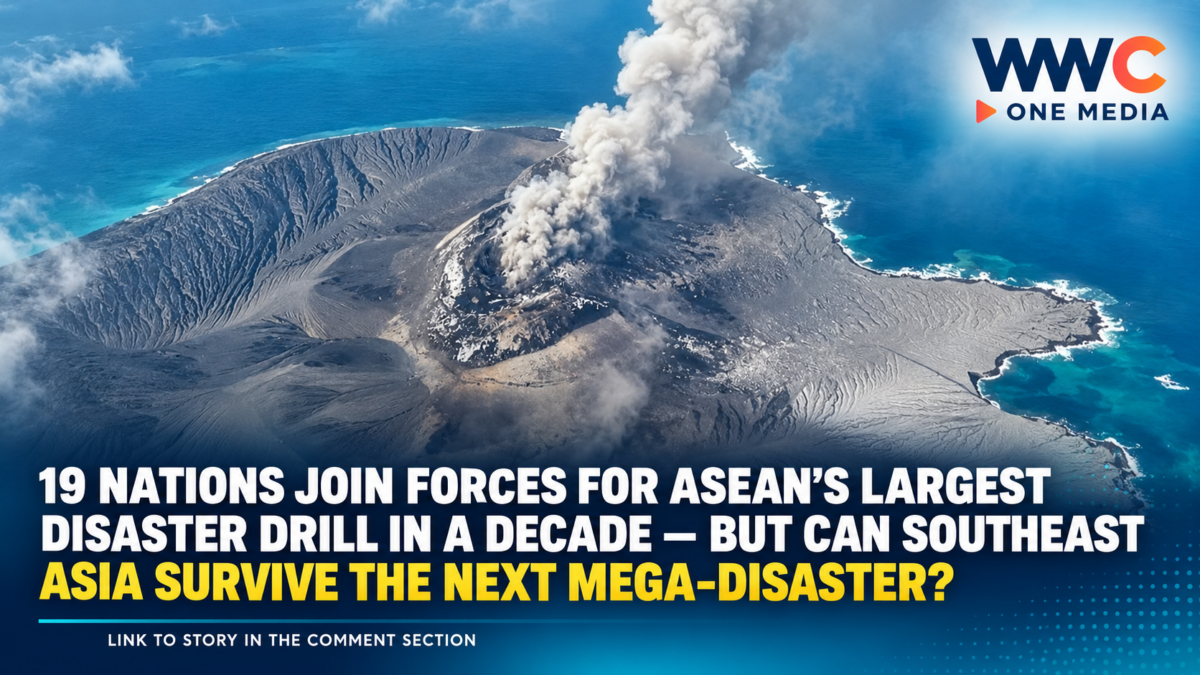
Military and civilian emergency responders from 19 countries participated in Exercise Trident Resolve 2026, one of the region’s most significant multinational disaster-response exercises, held in Banten, Indonesia, from September 20 to 26.
The exercise brought together approximately 2,200 personnel in the largest ASEAN Defence Ministers’ Meeting-Plus (ADMM-Plus) exercise in a decade, measured by the number of participants.
But behind the military helicopters, rescue missions and emergency coordination centres lies a bigger question: If a catastrophic disaster strikes Southeast Asia tomorrow, can governments and international rescue forces work together quickly enough to prevent mass casualties?
A Disaster Scenario That Could Become Reality
The exercise simulated a chain of devastating natural hazards: an earthquake, an eruption of Mount Anak Krakatau and a tsunami affecting surrounding communities.
The scenario was particularly relevant because the training took place near the real Anak Krakatau volcano in Indonesia’s Sunda Strait, an area with a history of destructive volcanic activity and tsunami disasters.
In December 2018, a tsunami struck communities along the Sunda Strait after volcanic activity triggered the collapse of part of Anak Krakatau.
The 2026 exercise was therefore more than a theoretical military drill. It tested how regional governments, armed forces, emergency medical teams and humanitarian organisations might respond when several disasters unfold together.
Training activities were conducted across seven locations and at sea, with participants practising search and rescue, medical evacuations, emergency treatment and the restoration of essential infrastructure.
Singapore Plays a Key Role in Regional Disaster Coordination
Singapore was among the major contributors to the exercise, providing coordination capabilities and supporting multinational emergency-response planning.
A central feature was the Multinational Coordination Centre, led by Indonesia with support from the Singapore Armed Forces’ Changi Regional Humanitarian Assistance and Disaster Relief Coordination Centre.
The centre allowed participating countries to exchange operational information, assess emergency conditions and organise requests for military assistance.
Singapore’s OPERA information-sharing system helped participants develop a common picture of the simulated disaster.
This matters because a major catastrophe can destroy roads, airports, telecommunications networks and other essential infrastructure, making it difficult for rescue teams to determine which communities need immediate assistance.
Even when multiple countries are willing to help, poor coordination can delay the delivery of food, medical supplies, evacuation services and emergency shelter.
The exercise also included cooperation with civilian humanitarian organisations, reflecting the need for military and non-military agencies to operate together.
US, China and Russia Cooperate Despite Global Tensions
One of the exercise’s most striking features was the participation of major powers that frequently disagree on international security issues.
The United States, China and Russia joined other regional partners in the disaster-response training under the ADMM-Plus framework.
Their participation highlighted an area where international cooperation remains possible despite broader geopolitical disagreements.
The exercise brought together all 19 ADMM-Plus participating countries, combining resources, personnel and expertise across different national military systems.
For ASEAN, the event demonstrated the value of maintaining diplomatic and defence cooperation channels that can become essential during a humanitarian emergency.
However, participation in a coordinated exercise does not guarantee that every country will respond equally quickly during an actual disaster.
Real operations would still depend on national approvals, available resources, infrastructure conditions and decisions by the affected government.
Cyberattacks and AI-Generated Disinformation Add New Risks
Natural hazards were not the only threats examined during the exercise.
For the first time in a combined ADMM-Plus field training exercise, three areas were integrated: humanitarian assistance and disaster relief, military medicine, and cybersecurity.
The cybersecurity component reflected a growing concern that emergency-response operations could be disrupted by digital attacks, communications failures or misleading online information.
During a disaster, a compromised communications system could interrupt coordination between aircraft, medical teams, search-and-rescue units and emergency command centres.
False information can create additional problems by directing assistance toward incorrect locations or spreading exaggerated claims about destruction.
Researchers Lim Junli and Ian Li of Singapore’s S. Rajaratnam School of International Studies highlighted the danger of AI-generated disaster misinformation in an October 20 commentary published by Channel News Asia.
They pointed to misleading AI-generated videos following Myanmar’s March 2025 earthquake as an example of the difficulties rescuers face when unreliable content circulates during emergencies.
As digital technologies become more important to humanitarian operations, cybersecurity and information verification are increasingly part of disaster preparedness.
Why Southeast Asia Cannot Afford to Be Unprepared
Southeast Asia faces overlapping natural hazards, including earthquakes, volcanic eruptions, tsunamis, tropical cyclones and widespread flooding.
The Philippines and Indonesia are particularly exposed to seismic and volcanic activity because of their location near active tectonic plate boundaries.
The Philippines also experiences frequent tropical cyclones, while other regional countries regularly confront flooding, landslides and extreme weather.
The 2004 Indian Ocean tsunami remains one of the region’s deadliest disaster warnings, killing more than 200,000 people across affected countries.
The 2023 Türkiye-Syria earthquakes provided another lesson: disasters can overwhelm local authorities so severely that the communities expected to provide assistance are themselves badly affected.
These events underscore the need for rescue teams to coordinate before a disaster occurs, rather than develop emergency procedures during the crisis.
ASEAN Is Preparing for an Even Bigger Test in 2027
ASEAN’s disaster-preparedness efforts will continue beyond Exercise Trident Resolve.
Singapore is scheduled to assume the ASEAN chairmanship in 2027 and has announced plans to host the 10th ASEAN Regional Disaster Emergency Response Simulation Exercise, known as ARDEX-27.
The exercise is expected to examine regional emergency-response procedures and coordination among different agencies and sectors.
The AHA Centre, ASEAN’s regional disaster management coordinating body, also maintains mechanisms for emergency logistics, response assessment, information sharing and international assistance.
These initiatives support the region’s longstanding One ASEAN, One Response framework, which aims to strengthen collective disaster action.
Nevertheless, training exercises cannot eliminate the risk of disaster or completely predict how emergency operations will unfold.
A real catastrophe could strike several countries simultaneously, damage essential infrastructure or leave international rescue teams struggling to reach isolated communities.
The Bigger Question: Will ASEAN Be Ready When Disaster Strikes?
Exercise Trident Resolve demonstrated that Southeast Asian countries and major international powers can coordinate complex humanitarian operations despite political differences.
But the greatest test of regional disaster preparedness will not be the number of countries taking part in an exercise.
It will be how quickly rescue teams can locate survivors, restore communications, transport emergency supplies and reach vulnerable communities when a real catastrophe unfolds.
For Southeast Asia’s millions of residents living in earthquake-prone, volcanic and coastal areas, the stakes could hardly be higher.
The next major disaster may strike without warning. The question is whether the region’s preparation will be enough to save lives when every minute matters.