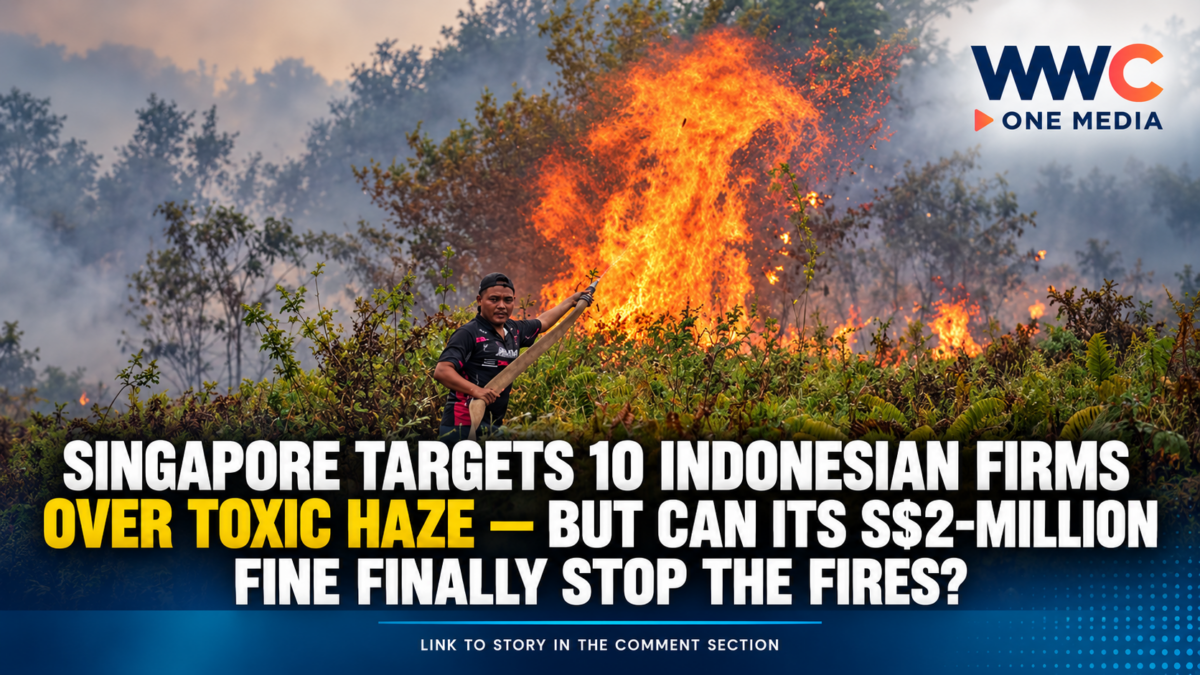
SINGAPORE, October 20, 2026 — Singapore is intensifying its crackdown on companies suspected of contributing to Southeast Asia’s worsening haze crisis, targeting three more Indonesian firms over forest and land fires in Kalimantan and bringing the total number of companies facing preventive action to 10.
The move raises the stakes in a regional environmental emergency that has affected air quality, public health and diplomatic relations, as Singapore signals that businesses linked to cross-border smoke pollution could face prosecution, substantial financial penalties and greater regulatory scrutiny.
Singapore’s National Environment Agency (NEA) announced on October 19 that it would issue preventive measure notices to PT Buana Megatama Jaya, PT Mananjung Hayak and PT Baratama Putra Perkasa.
Authorities said there were indications that smoke from fires on land covered by the companies’ concessions may have reached Singapore.
The notices follow similar action against seven Indonesian companies associated with fires in Sumatra, expanding the investigation to two major Indonesian islands.
Singapore Orders Companies to Stop Burning and Contain Fires
Under Singapore’s Transboundary Haze Pollution Act (THPA), the three additional companies are required to take steps to prevent or reduce pollution from fires on land they own or occupy.
These include deploying firefighting personnel, stopping ongoing burning, preventing new fires and submitting detailed action plans explaining how they will extinguish existing fires and prevent future outbreaks.
The notices are preventive enforcement measures, not criminal convictions. Authorities must establish the relevant legal grounds before imposing penalties for haze pollution.
Nevertheless, Singapore has made clear that it is prepared to pursue companies whose activities contribute to pollution crossing its borders.
S$2-Million Fine Looms as Singapore Threatens Stronger Action
Under the THPA, which took effect in 2014, companies found responsible for causing or contributing to transboundary haze pollution may be fined up to S$100,000 per day, subject to an overall cap of S$2 million for the relevant offence.
Separate penalties may apply for failing to comply with preventive measure notices.
The law is particularly significant because it allows Singapore to pursue certain conduct occurring beyond its territory when that conduct causes or contributes to haze pollution in Singapore.
However, gathering evidence, identifying corporate responsibility and enforcing penalties against companies operating overseas remain major challenges.
Singapore’s Minister for Sustainability and the Environment, Grace Fu, acknowledged the difficulties of conducting cross-border investigations while reaffirming the government’s commitment to taking action.
She also said Singapore had not yet heard from the seven companies previously issued notices and would continue monitoring their responses.
Singapore Warns Companies It Will Not Back Down
Senior Minister K. Shanmugam delivered an unusually forceful warning, saying Singapore would use its available legal, regulatory and economic measures against companies responsible for the haze.
He also indicated that the government was prepared to strengthen existing laws urgently if necessary.
The statements signal that Singapore’s response may extend beyond individual enforcement notices to a broader campaign targeting corporate accountability and environmental compliance.
For businesses operating in Indonesia’s plantation, forestry and agricultural sectors, the message is increasingly clear: environmental damage originating outside Singapore may still create legal and commercial consequences within the city-state.
Indonesia’s Wildfires Become a Regional Health Emergency
Singapore’s latest action comes as extensive forest and peatland fires across Indonesia continue to generate smoke affecting Southeast Asia.
Dry conditions associated with a powerful El Niño have intensified the crisis, making fires more difficult to contain and increasing the risk of further haze episodes.
Reuters reported earlier in October that the fires had contributed to widespread respiratory illnesses, disrupted air travel and school activities, and placed additional pressure on Indonesia’s emergency-response resources.
Indonesian President Prabowo Subianto has ordered additional firefighting resources as authorities face mounting demands to contain the fires and prevent further environmental damage.
The crisis has also renewed criticism of agricultural burning, weak environmental enforcement and the recurring economic incentives behind land clearing.
ASEAN Faces a Bigger Test on Environmental Accountability
The dispute extends beyond Singapore and Indonesia.
Transboundary haze has repeatedly affected Southeast Asian countries, demonstrating how pollution generated in one jurisdiction can undermine the health, economic activity and environmental security of neighboring states.
The latest enforcement measures are likely to intensify debate over whether existing regional agreements and national environmental laws can effectively discourage the practices associated with recurring forest fires.
Singapore’s decision to pursue 10 Indonesian companies marks a significant escalation in its current response.
But issuing notices is only the beginning.
The central question is whether Singapore can build legally enforceable cases against companies operating across national borders and whether the threat of tougher consequences will be enough to change land-management practices.
For millions of Southeast Asians exposed to recurring haze, the ultimate measure of success will not be the number of companies investigated or the value of fines imposed. It will be whether the fires stop and the region can finally breathe cleaner air.