SINGAPORE, October 20, 2026 — Asia Pulp & Paper (APP), one of Indonesia’s major pulp and paper producers and the company behind familiar tissue brands including Paseo and Nice, is facing renewed scrutiny in Singapore after three of its suppliers were linked to forest and land fires contributing to Southeast Asia’s worsening haze crisis.
The Singapore Environment Council (SEC) has imposed temporary restrictions on APP’s Enhanced Singapore Green Labelling Scheme certification, raising fresh questions about corporate responsibility, environmental standards and whether products linked to the paper giant could once again face consequences in Singapore’s retail market.
The move comes as smoke from fires in Indonesia continues to affect air quality across the region, increasing pressure on governments and corporations to address a recurring environmental emergency.
Three Suppliers Under Investigation as Singapore Demands Daily Reports
According to Channel NewsAsia, the SEC announced on October 19 that it had placed APP under enhanced monitoring following concerns involving three wood-fibre suppliers operating in South Sumatra.
The companies identified are:
- PT Bumi Mekar Hijau
- PT Bumi Andalas Permai
- PT Sebangun Bumi Andalas Wood Industries
All three had received preventive measures notices from Singapore’s National Environment Agency (NEA) on October 16.
The SEC’s temporary restriction, issued on October 18, requires APP to submit daily fire-response reports and demonstrate stronger fire prevention and suppression efforts across the land concessions managed by those suppliers.
The crucial distinction is that APP’s green certification has been restricted, not suspended or revoked. However, the council warned that a suspension could follow if the company fails to demonstrate effective compliance with the additional requirements.
A suspension would mean APP could no longer display the relevant Singapore Green Label certification logo on affected products.
Singapore Warns It Could Pursue Companies Behind the Suppliers
Singapore’s response may extend beyond the companies directly managing the affected concessions.
Senior Minister K. Shanmugam said on October 19 that authorities would examine not only individual concession holders but also the corporate groups and people who may ultimately control them.
The warning signals a tougher approach to corporate accountability, particularly where complicated supplier and ownership relationships could make it difficult to determine who bears responsibility for fires linked to cross-border pollution.
Singapore’s Transboundary Haze Pollution Act provides a legal framework for pursuing qualifying haze-related offences, including certain activities occurring outside Singapore.
However, preventive notices and certification restrictions do not, by themselves, establish that APP or its suppliers have committed a criminal offence.
A Troubling Return to the 2015 Haze Crisis
For APP, the latest scrutiny revives memories of the devastating 2015 haze emergency.
During that episode, major Singapore retailers removed products associated with the company from their shelves following allegations that suppliers were connected to fires in Indonesia.
NTUC FairPrice withdrew two house-brand products and 16 APP-linked products, including items sold under the Paseo and Nice brands.
The same three South Sumatra concession holders named in the latest action had also received notices from Singapore’s authorities during the 2015 crisis.
APP subsequently introduced measures intended to address environmental concerns and received enhanced green certification in 2019, helping pave the way for its products to return to supermarket shelves.
Seven years later, the company’s renewed scrutiny presents an important test of whether those sustainability improvements can withstand another severe fire season.
There has been no confirmed announcement in the cited October 19 report that Singapore retailers are removing APP products again.
Indonesia’s Wildfires Trigger a Wider Southeast Asian Emergency
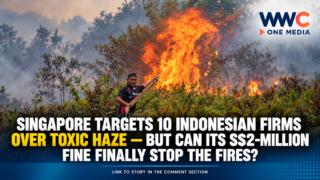
The latest developments come against the backdrop of one of Indonesia’s most severe fire seasons in years.
Reuters reported on October 15 that prolonged drought associated with exceptionally strong El Niño conditions had intensified fires across parts of Sumatra and Borneo.
The consequences have spread far beyond the affected forests.
Indonesia has recorded more than 283,000 respiratory illness cases across seven provinces, while schools, businesses and transport operations in parts of the region have been disrupted.
Authorities have deployed tens of thousands of personnel and aircraft to fight the fires, but smouldering peatlands and persistently dry conditions have complicated efforts to bring the situation under control.
In Singapore, haze has pushed air pollution into unhealthy and, at times, very unhealthy ranges, raising concerns for children, older residents and people with respiratory or cardiovascular conditions.
The crisis has renewed calls for stronger action against illegal burning, more effective land management and closer cooperation among Southeast Asian governments.
Could APP Lose Its Green Certification Completely?
The immediate question is whether Asia Pulp & Paper can satisfy the SEC’s tougher monitoring requirements.
The council’s enhanced certification framework requires participating pulp and paper producers to demonstrate effective fire prevention, zero-burning compliance and responsible supply-chain management.
Approximately 58 pulp and paper products are certified under the scheme.
For APP, maintaining certification is important because the label provides independent recognition of environmental standards and can influence how retailers and consumers assess its products.
A future suspension could damage the company’s sustainability credentials, although it would not automatically constitute a government ban on product sales.
The SEC has not announced a final certification decision or confirmed that a suspension is inevitable.
The Bigger Question: Who Is Responsible When Smoke Crosses Borders?
Singapore’s latest move illustrates how Southeast Asia’s recurring haze problem is evolving from an environmental emergency into a major corporate accountability issue.
The damage from forest and peatland fires does not stop at national borders. Smoke can travel hundreds of kilometres, creating health risks, affecting businesses and disrupting daily life in countries far removed from the original fire locations.
For companies operating large plantation and forestry supply chains, the pressure now extends beyond maintaining sustainability commitments on paper.
Regulators increasingly want evidence that preventive systems work in practice, that fires are addressed quickly and that companies can demonstrate accountability throughout their supply networks.
For APP, the next steps will depend on its fire-response reporting, the effectiveness of prevention and suppression measures, and the conclusions of Singapore’s continuing scrutiny.
The central question is no longer simply whether the smoke will clear. It is whether the companies connected to high-risk land operations can prove that another haze disaster will not happen again.