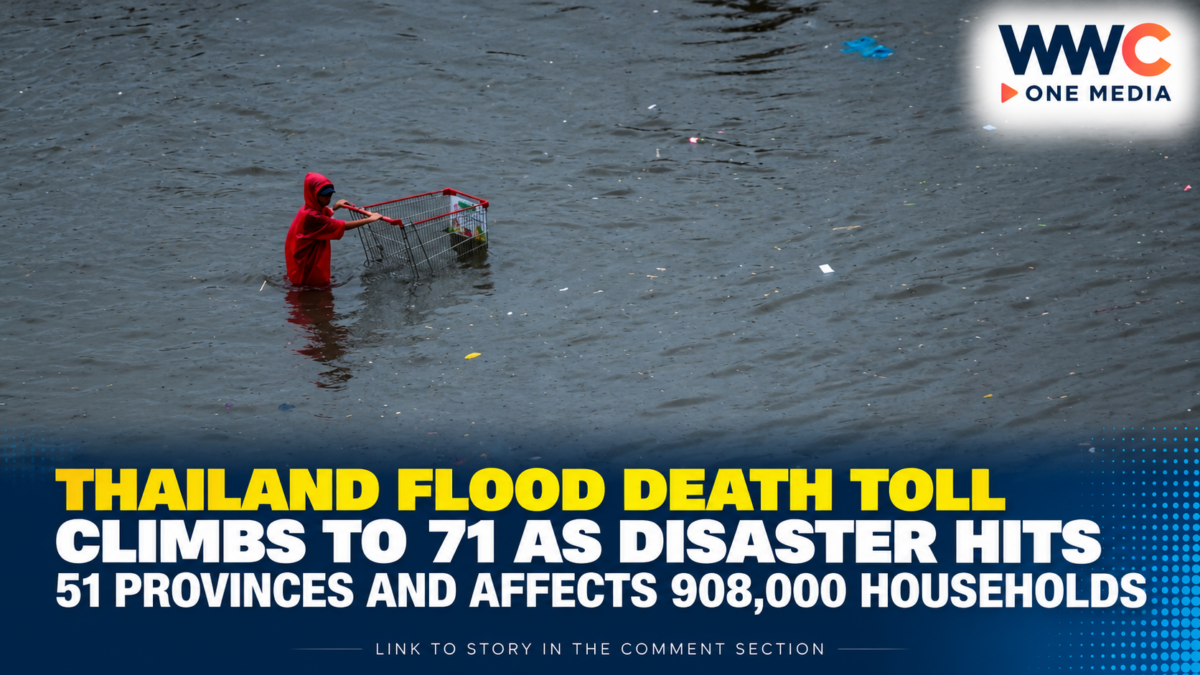
Thailand’s worsening flood crisis has claimed 71 lives since mid-September, with hundreds of thousands of households affected as floodwaters continue to threaten communities across the country.
The Interior Ministry said on Monday (Oct 12) that flooding had occurred in 51 provinces between Sept 16 and Oct 12. As of Monday, 21 provinces, including Bangkok, still had areas affected by flooding.
A total of 908,000 households have been affected, highlighting the scale of the disaster as authorities continue to manage the aftermath of weeks of heavy rain.
Flooding continues across the country
The latest figures mark a significant increase in the reported death toll. On Oct 7, the government said 60 people had died in floods since mid-September. The number had risen to 71 by Monday, according to the Interior Ministry.
The flooding has affected communities across Thailand, with overflowing rivers and persistent rainfall inundating homes, roads and public spaces.
Central Prachinburi province has been among the hardest-hit areas. Earlier reports from the Department of Disaster Prevention and Mitigation said 19 people had died there, while flooding across seven districts affected more than 188,000 people.
Bangkok has also experienced severe flooding. Heavy rainfall in late September inundated parts of the capital, leaving some streets submerged and vehicles stranded. Four deaths had been reported in Bangkok since Sept 16 as of the government’s Oct 7 update.
Although floodwaters in parts of the capital had receded, the latest national figures indicate that the wider emergency remains ongoing.
Hundreds of thousands of households affected
The 908,000 households affected by the flooding face varying degrees of disruption, with some communities still dealing with inundated areas and damaged infrastructure.
Flooding can also disrupt transport, businesses, schools and access to essential services, making recovery difficult even after water levels begin to fall.
The authorities have been working to manage flood conditions and transportation, while monitoring areas where water levels remain high.
The full extent of property damage and the financial cost of the disaster were not immediately detailed in the latest figures.
Thailand faces continuing rainy-season challenges
September is typically the peak of Thailand’s rainy season, but persistent downpours this year have placed additional pressure on communities and local infrastructure.
In Bangkok, a city intersected by canals and built partly on former marshland, intense rainfall can overwhelm drainage systems and cause water to accumulate in low-lying areas.
The latest disaster has also raised concerns about how authorities can improve flood preparedness, emergency coordination and protection for vulnerable communities.
Recovery remains a major challenge
With 71 deaths reported and 21 provinces still experiencing flooding, the immediate priority remains protecting residents and supporting affected households.
Authorities will also need to assess damage and help communities restore homes, roads and other essential infrastructure once conditions allow.
The rising death toll underscores the seriousness of Thailand’s ongoing flood emergency, while the number of affected households shows that the consequences extend far beyond the areas currently under water.