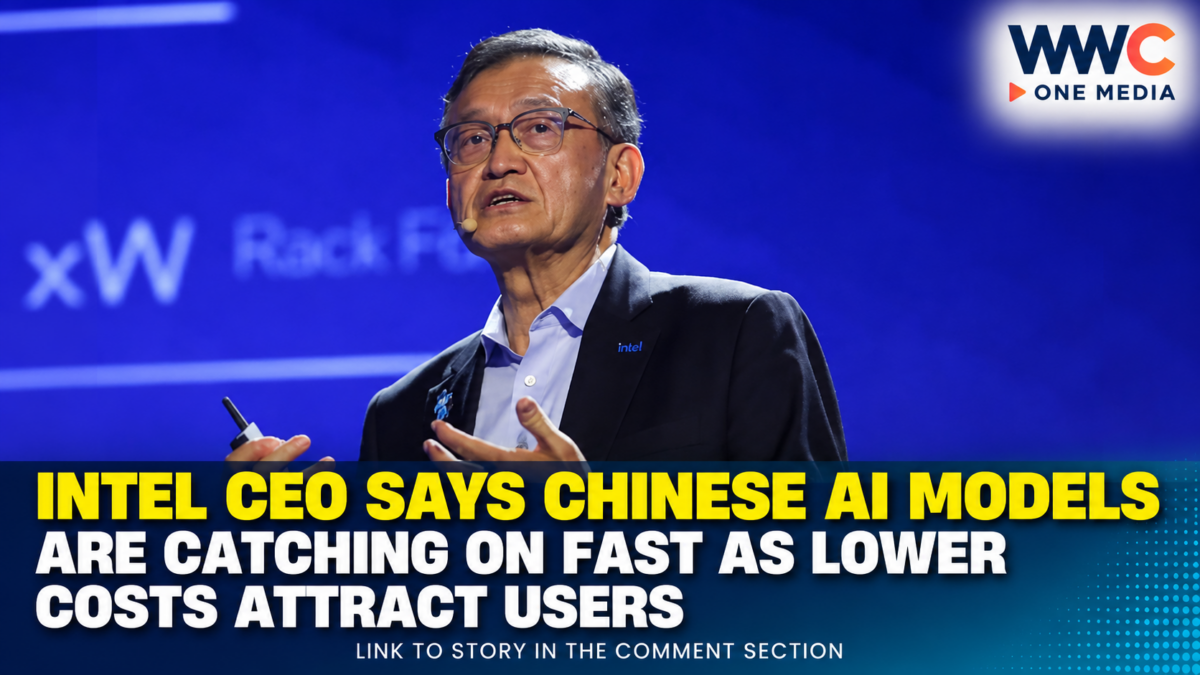
Chinese artificial intelligence models are gaining traction rapidly, with Intel chief executive Lip-Bu Tan pointing to lower operating costs and increasingly capable systems as key reasons behind their growing adoption.
Speaking at a panel organised by DBS in Singapore on Oct 12, Tan said the token costs of Chinese frontier AI models were lower and that adoption had been “very fast”.
He cited models such as DeepSeek, Kimi and GLM, saying their performance was “good enough” for users and businesses to consider them for a range of applications.
Lower costs put Chinese AI models in the spotlight
AI models process information using tokens, which are units of text or data used to measure input and output. Token-based pricing can significantly affect the cost of running AI tools, particularly for businesses handling large volumes of requests.
Lower costs could make advanced AI more accessible to companies seeking to introduce the technology into their operations, although the most suitable model will depend on the task, performance requirements and overall cost.
Tan also expressed strong support for open-source AI, arguing that it was the best way to drive efficiency. He added that the market would ultimately determine which models were best suited to different use cases.
His remarks highlight how competition in AI is not determined solely by a model’s technical capabilities. Cost, accessibility and how effectively a system performs in real-world applications also matter.
Intel CEO sees potential for quantum computing
Tan also shared his outlook on quantum computing, saying the technology could become mainstream within the next three to five years.
He noted that software would play an important role in using the infrastructure required to support the technology efficiently.
Quantum computing remains an emerging field, with researchers and technology companies exploring how it could address certain problems that are difficult for conventional computers. Its wider adoption will depend on continued advances in hardware, software and practical applications.
For now, Tan’s comments underscore two developments worth watching: the rapid uptake of lower-cost Chinese AI models and the longer-term potential of quantum computing.
As competition intensifies, businesses will have to weigh performance, cost and practical usefulness when deciding which technologies to adopt.