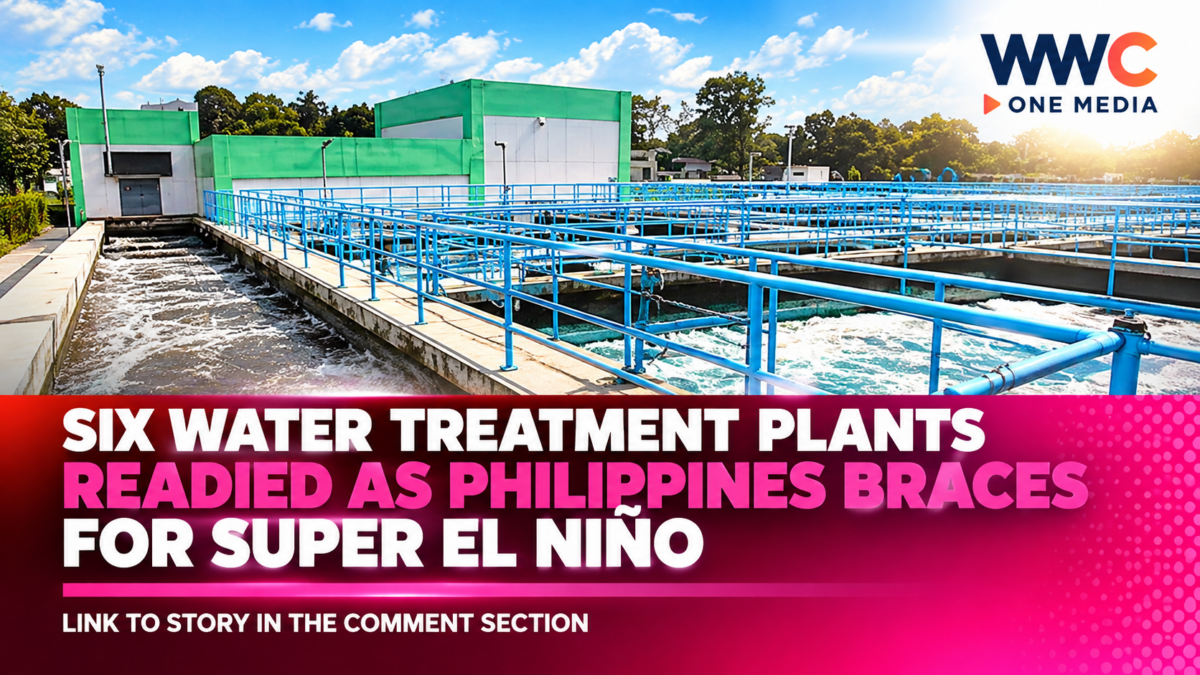
Six new water treatment plants are expected to begin operations this year as the government prepares for worsening dry conditions associated with a strong El Niño, according to the Metropolitan Waterworks and Sewerage System (MWSS).
The facilities are expected to add a combined 452 million liters per day to the water supply capacity available to Metro Manila’s two concessionaires, Maynilad Water Services, Inc. and Manila Water Co., Inc. The additional capacity is intended to help reduce the impact of declining water availability as dry conditions intensify toward the end of the year.
MWSS said it and the two concessionaires have been implementing measures to prepare for the expected effects of El Niño. The government weather agency PAGASA declared the onset of El Niño in June, raising concerns over reduced rainfall and its potential impact on water sources.
The new treatment facilities are part of efforts to expand the capital region’s water supply and provide additional sources that can supplement existing systems. Their combined output of 452 million liters daily represents a significant increase in available treatment capacity for Metro Manila.
The preparations come as authorities monitor water levels and the availability of raw water needed for treatment. Lower rainfall and prolonged dry periods can reduce inflows into major reservoirs and other water sources, increasing pressure on water utilities to maintain adequate supply for households, businesses and other users.
MWSS Department Manager Patrick James B. Dizon said the agency and its concessionaires have proactive measures in place to mitigate the expected effects of the strong El Niño. The agency has sought to reassure the public that contingency measures are being prepared ahead of the period when dry conditions are expected to become more pronounced.
Water availability in Metro Manila is closely linked to conditions at Angat Dam, a major source of the capital region’s water supply. The government has also been adjusting water allocations from the reservoir as part of conservation measures.
The National Water Resources Board reduced the October allocation from Angat Dam to MWSS to 44 cubic meters per second from the usual 50 to 52 cubic meters per second, reflecting efforts to conserve available resources ahead of the anticipated dry spell.
The impact of El Niño is not limited to Metro Manila. Prolonged dry conditions can affect agricultural production, hydropower generation, reservoir levels and water availability in other parts of the country, making early preparation important for both public utilities and local governments.
For water consumers, the additional treatment capacity is expected to provide another layer of protection as authorities manage available supplies. However, treatment facilities alone cannot eliminate the effects of prolonged drought if raw-water sources continue to decline.
Authorities are therefore expected to continue monitoring reservoir levels, rainfall patterns and water demand while coordinating with water concessionaires on conservation and contingency measures.
The six facilities are part of a broader effort to strengthen Metro Manila’s water security as the Philippines enters a period of heightened concern over El Niño. Their scheduled operation this year is intended to provide additional supply capacity at a time when maintaining reliable access to water could become more challenging.