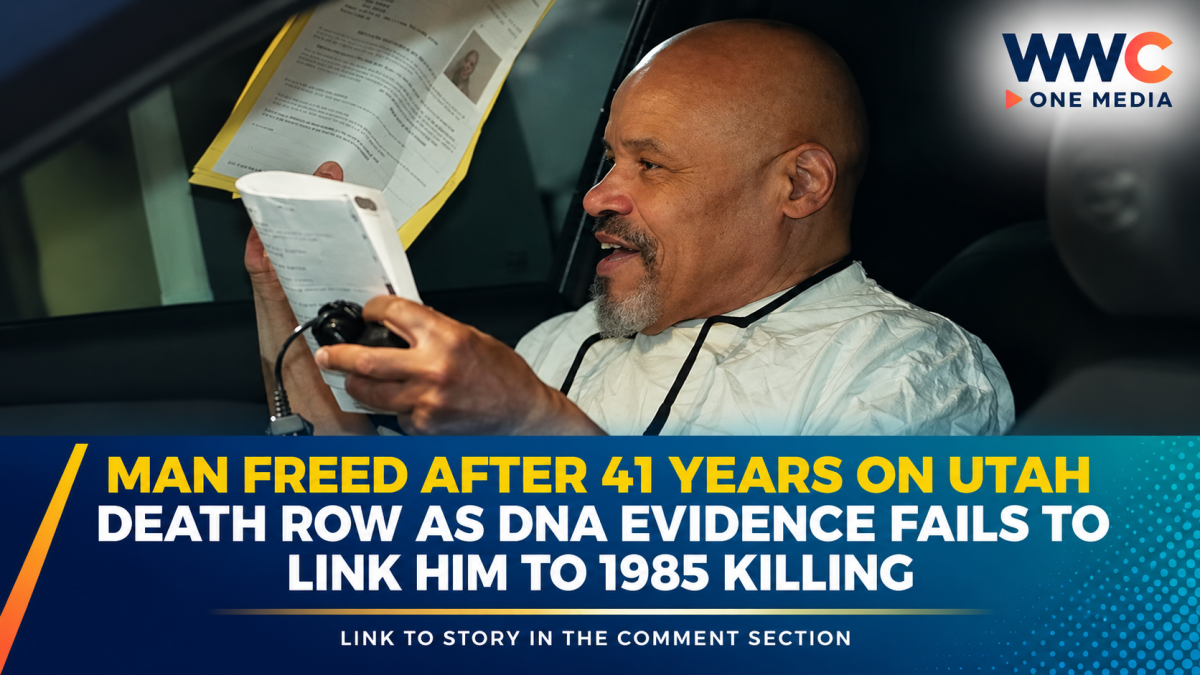
A 71-year-old man who spent more than four decades on Utah’s death row has been released on bail while awaiting a new trial in the 1985 killing of Eva Olesen, after newly analyzed DNA evidence failed to match him to genetic material found at the crime scene.
Douglas Stewart Carter was convicted of killing Olesen, the aunt of the Provo police chief at the time. He was sentenced to death in 1985 and again after a 1992 retrial. Carter has consistently maintained his innocence and said the confession used against him was coerced.
The latest DNA analysis, received by prosecutors on Sept. 22, excluded Carter as a possible match to blood found on a doorknob and genetic material recovered from the handle of the knife used in the killing. Prosecutors subsequently withdrew their notice seeking the death penalty as they reassess the case.
Carter’s conviction had already come under renewed scrutiny. Two witnesses who testified that Carter had bragged about the killing later recanted their testimony, saying police and prosecutors had pressured them, threatened them with deportation and provided them with money or other benefits. The Utah Supreme Court ordered a new trial in 2025 after finding multiple instances of investigative misconduct.
Despite the new evidence, Carter has not been cleared of the charge. The judge said the DNA results further weakened the prosecution’s case but did not rule out the possibility that a jury could still find him responsible for the killing.
Carter was released on Sept. 28 under conditions that include wearing a GPS monitor and having no contact with Olesen’s family. A retrial is scheduled for 2027, while prosecutors continue reviewing the remaining evidence and whether to proceed with the aggravated murder charge.
Olesen’s family has expressed concerns about Carter’s release, saying the absence of a DNA match does not by itself establish that he was not involved. Carter’s defense, meanwhile, has urged prosecutors to dismiss the remaining case and has pointed to other potential suspects and alleged problems with the original investigation.