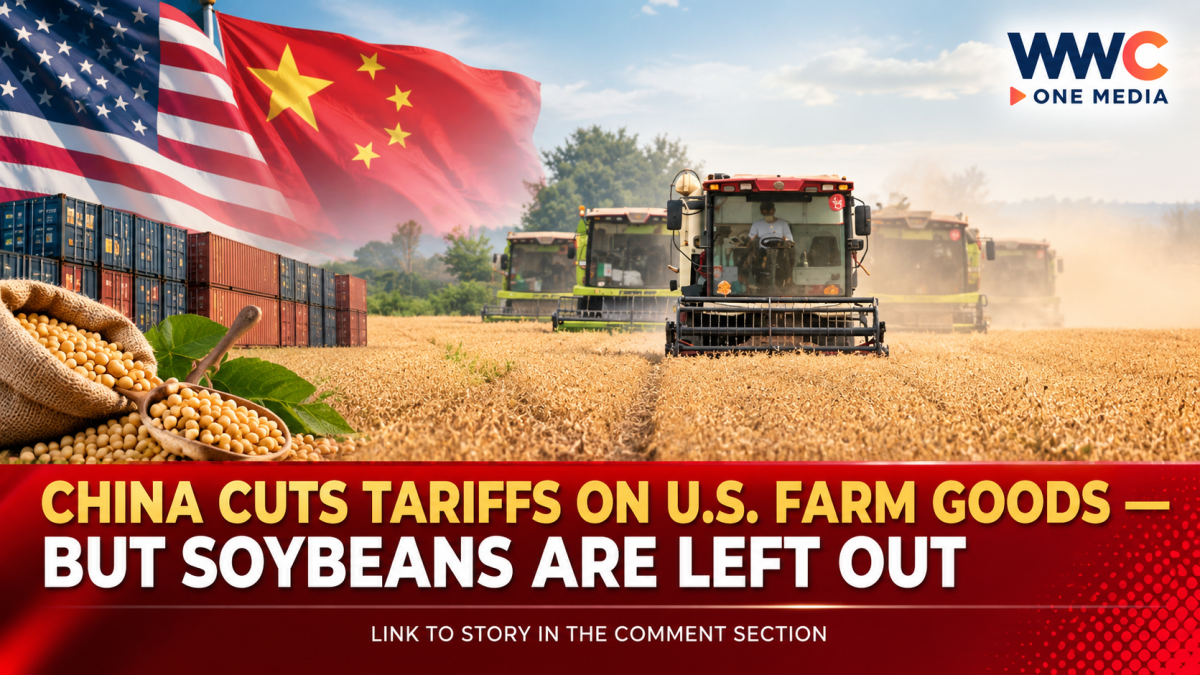
BEIJING — China is moving to lower tariffs on a broad range of U.S. agricultural products, but one of the most closely watched commodities is missing from the list: soybeans.
China’s Commerce Ministry said Monday that the two countries had agreed on a framework covering roughly $30 billion of imports in each direction, with China set to reduce tariffs on selected U.S. products. More than 90% of the products covered by the framework are expected to receive most-favored-nation tariff treatment after the countries complete their respective domestic procedures.
The Chinese list includes agricultural products such as corn, wheat, sorghum, vegetable oils, soybean meal, meat and dairy products. But whole U.S. soybeans were excluded, leaving the commodity facing an additional 10% tariff.
Soybeans emerge as the biggest sticking point
The exclusion is significant because soybeans are among the most important U.S. agricultural exports to China.
Chinese state-owned agricultural companies Sinograin and COFCO have already purchased more than 12 million metric tons of U.S. soybeans, according to Reuters, putting purchases at nearly half of the 25 million tons the White House has said China committed to buy annually through 2028.
Yet the continued tariff means private Chinese crushers face higher costs when purchasing U.S. soybeans, potentially limiting how much of the crop can move through normal commercial channels.
China has also expanded soybean sourcing from other major suppliers, particularly Brazil, making the commodity a sensitive part of the broader U.S.-China agricultural relationship.
A broader tariff thaw is taking shape
The agricultural tariff reductions are part of a wider effort by Beijing and Washington to stabilize trade relations.
The two governments agreed to establish a U.S.-China Board of Trade, while an agricultural working group is expected to address issues including market access and regulatory concerns. China said the agricultural group is scheduled to hold its first meeting by the end of 2026.
The countries also agreed to reciprocal tariff reductions covering approximately $30 billion in goods on each side. China’s list includes agricultural products, medical equipment, personal-care products and coal, while the U.S. list covers products including toys, household goods and other consumer items.
The measures follow last week’s meeting between Chinese President Xi Jinping and U.S. President Donald Trump, where the two sides sought to move trade relations toward greater stability.
Why the soybean decision matters
The soybean exclusion highlights how the latest tariff agreement does not resolve every issue in U.S.-China agricultural trade.
For American farmers and exporters, China remains a critical market. For Beijing, meanwhile, maintaining multiple sources of agricultural imports can provide flexibility in managing supply, prices and trade relations.
The latest arrangement therefore represents a partial easing rather than a complete removal of trade barriers.
China’s decision to lower tariffs on many U.S. farm products could open additional opportunities for American exporters. But with soybeans still facing the extra tariff, one of the most commercially important pieces of the agricultural relationship remains unresolved.
And that leaves the next move closely tied to one question: Will Washington and Beijing eventually bring U.S. soybeans into the tariff-cut agreement — or will the commodity remain at the center of their trade negotiations?
WWC ONE MEDIA G,A