SEOUL — One of Seoul’s best-known traditional arts districts is preparing to turn back the clock while looking firmly toward the future.
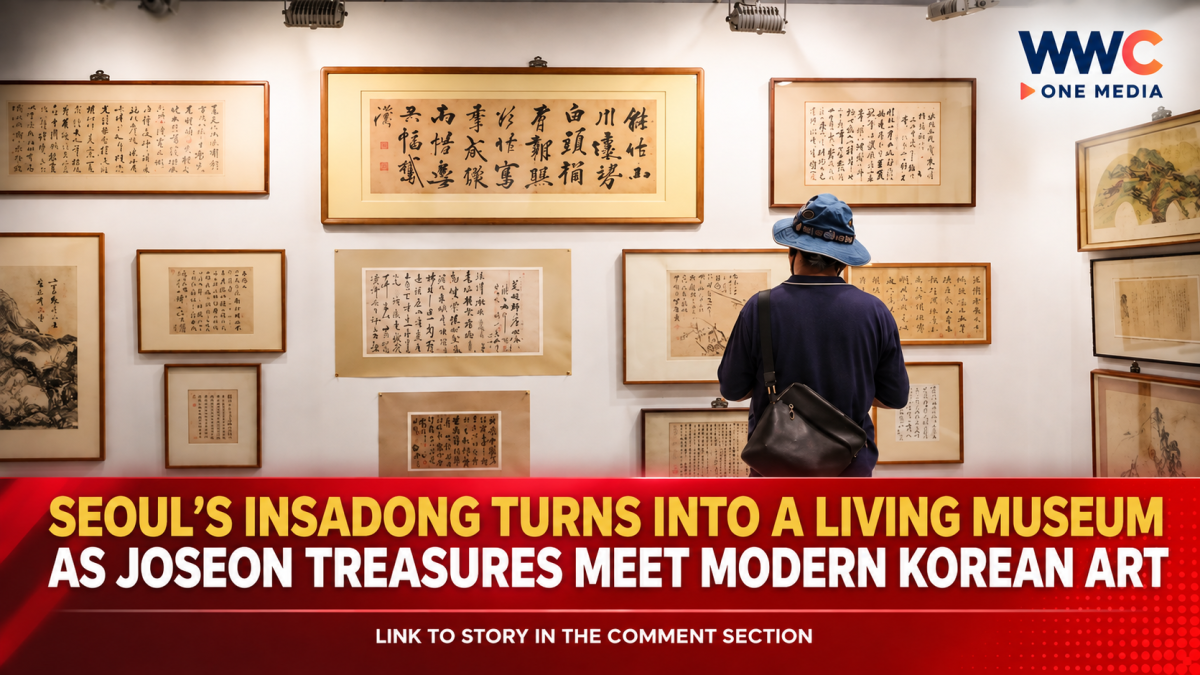
The 2026 Insadong Antique & Art Fair, part of the 39th Insadong Traditional Cultural Festival, will run from October 1 to 4 across Insadong in Jongno District, bringing together Korean antiques, Joseon-era artifacts, traditional crafts, contemporary art, tea culture and hands-on cultural experiences.
The four-day event will center on Insa Art Plaza and Anyoung Insadong, transforming the neighborhood into a showcase of Korea’s artistic heritage and its emerging creative scene.
Joseon treasures take center stage
One of the major attractions will be the fifth Antique Fair at Insa Art Plaza.
Visitors will be able to see Korean antiques including porcelain, traditional wooden furniture, musical instruments, jewelry and other objects, alongside rare antiques collected from overseas. The Korea Tourism Organization notes that Insadong remains a major destination for traditional Korean art and antiques, with dozens of specialty shops offering ceramics, woodcraft, metalwork and historic artworks.
The fair will also spotlight traditional minhwa, or Korean folk painting, alongside works by emerging contemporary artists. Guided gallery tours will give visitors another way to explore Insadong’s creative landscape.
From traditional tea to young artisans
The festival will extend beyond antique displays.
A tea and craft exposition at Insa Art Plaza and Anyoung Insadong will highlight traditional Korean tea, handmade tea ware and contemporary craft. Visitors can also encounter traditional Korean music performances, demonstrations of pyogu, the craft of mounting paintings and calligraphy on scrolls, pottery workshops and Korean food experiences.
The opening ceremony on October 1 will begin at 1:30 p.m. with a large-scale calligraphy performance using giant brushes, followed by traditional music and official remarks.
Why Insadong remains important
The festival comes as Insadong continues to balance its reputation as a historic center of Korean traditional culture with Seoul’s rapidly changing urban landscape.
For Jongno District officials and organizers, the event is not simply an exhibition. It is also intended to support traditional culture businesses and maintain the neighborhood’s distinctive identity.
That mission is particularly significant in Insadong, where antique shops, galleries, traditional craft businesses and cultural venues have long operated alongside newer tourism and retail developments.
The 2026 fair therefore offers something broader than a display of old objects: it places Korea’s artistic past beside the work of a new generation of creators.
And for visitors, that creates an unusual opportunity — to see Joseon-era craftsmanship, traditional Korean culture and contemporary creativity occupying the same streets within a single four-day festival.
With Seoul continuing to expand its global cultural profile, Insadong’s latest festival raises a bigger question: Can a historic arts district preserve its identity while becoming part of Korea’s next cultural chapter?
WWC ONE MEDIA G,A