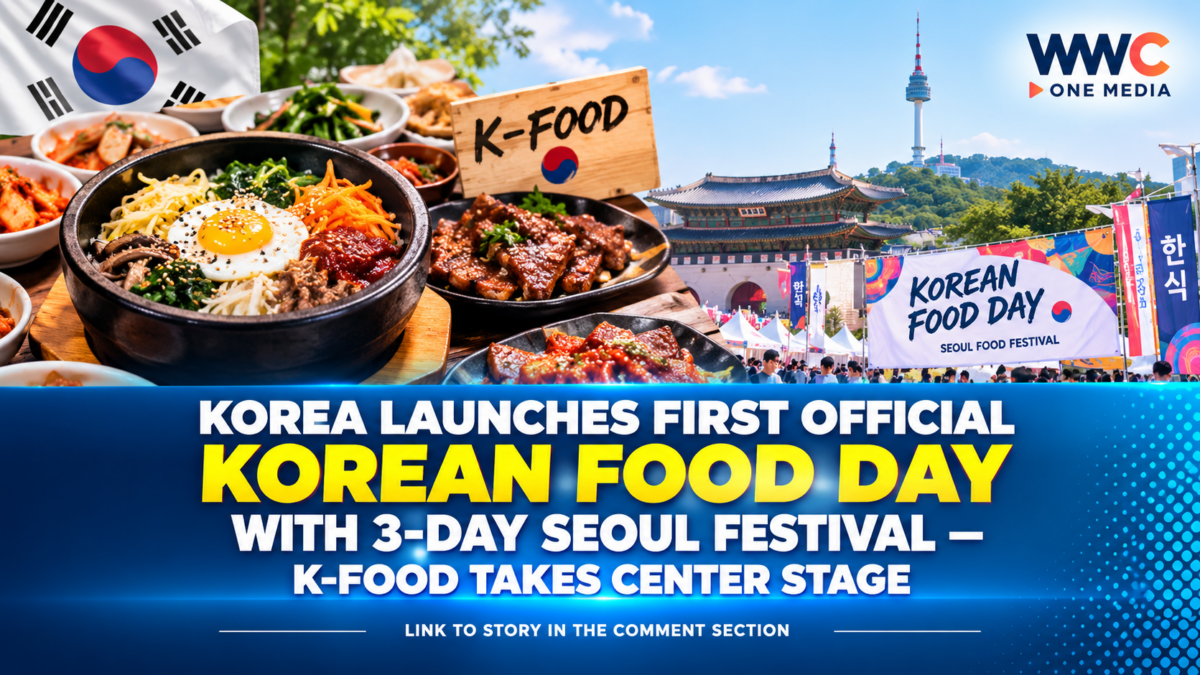
SEOUL, South Korea — Korea is putting its culinary heritage in the global spotlight with the country’s first legally designated Korean Food Day, backed by a three-day festival bringing together chefs, food creators, cultural experts and the food industry in Seoul.
The inaugural Korean Food Day, observed on October 24, will be celebrated through HANSIK FESTA, scheduled for October 23–25 at the National Museum of Korea in Seoul.
The event is jointly organized by the Ministry of Agriculture, Food and Rural Affairs and the Ministry of Foreign Affairs, marking a major push to position Korean cuisine not only as cultural heritage but also as a growing global industry.
Three Days of Korean Food, Culture and Innovation
HANSIK FESTA will feature a packed program designed to showcase both traditional Korean cuisine and modern interpretations of K-food.
The opening day will include the first Korean Food Day ceremony and a conference examining the future of Korean cuisine, including its cultural and economic value and its expanding role in international dining.
Among the speakers are chefs Ok Dong-sik and Son Jong-won, producer Lee Wook-jung, trend researcher Park Hyun-young and Kim Sook-jin of CJ CheilJedang.
Visitors will also be able to watch cooking demonstrations featuring master chef Lee Ha-yeon, chef Han Shin-hee, monk Woo Kwan and chef Park Joo-eun, alongside food creators including Magic Boy Kim Chef and Eunsujeo.
The festival will go beyond food tasting, with cooking classes, a Korean food quiz, cultural performances, a food-and-film discussion, company showcases and restaurant pop-ups.
A flea market will also offer Korean ingredients, desserts, tableware and other products connected to Korean food culture.
Why October 24 Matters
Korean Food Day falls on October 24, a date organizers say reflects the connection between harmony, completion and Korea’s traditional seasonal calendar.
The government says the date combines the symbolism of the number 10 with Korea’s 24 solar terms, highlighting the relationship between food, nature and seasonal change that is central to Korean culinary traditions.
The establishment of the day comes as Korean cuisine continues to gain international attention alongside the broader global expansion of Korean culture.
Foreign Ministry officials have emphasized that Korean food can serve as a tool for cultural diplomacy by creating connections between Korea and people around the world.
From Traditional Hansik to Global K-Food
Organizers say the Seoul festival is designed to bridge Korea’s culinary heritage with contemporary food trends and innovation.
That means visitors can expect everything from traditional dishes and cooking techniques to modern desserts, food technology and new interpretations of Korean cuisine.
The government has also been pursuing a broader K-Food Festa initiative, linking 20 major food festivals across Korea between October and November under one promotional brand.
Together, the initiatives reflect a larger ambition: to transform the popularity of Korean food into a stronger cultural and economic presence overseas.
With Korean Food Day now officially on the national calendar, October 24 could become another major annual date in Korea’s expanding global K-culture story — this time served on a plate.
WWC ONE MEDIA G,A