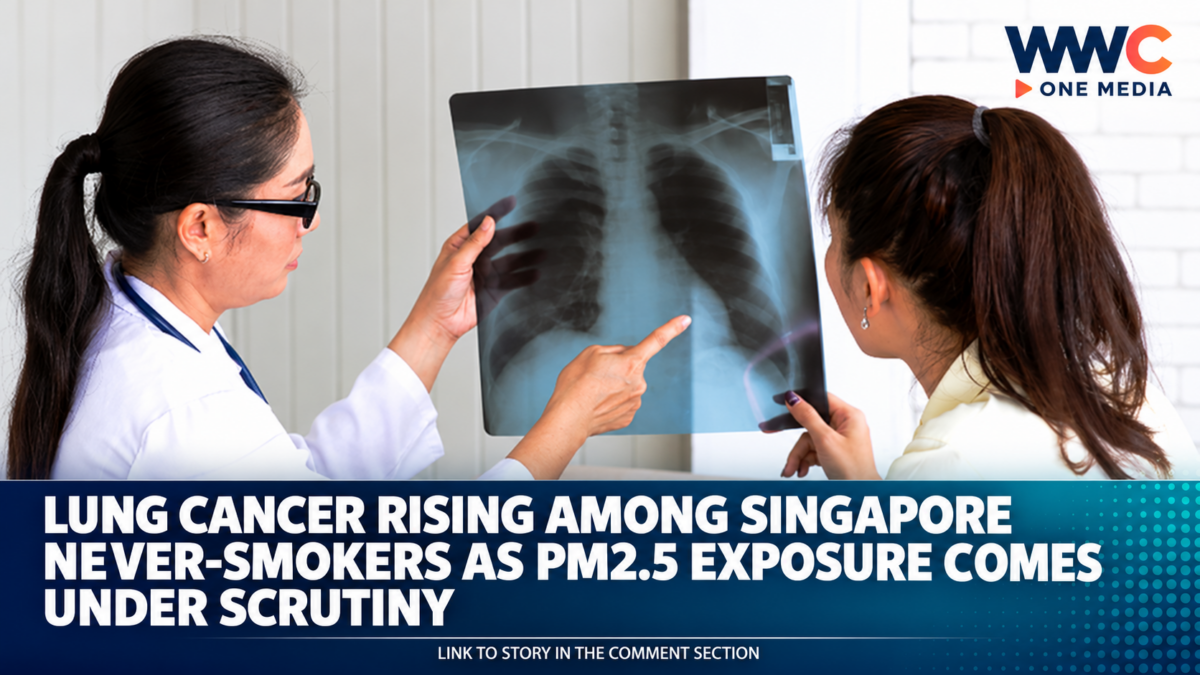
Lung cancer is becoming increasingly common among people in Singapore who have never smoked, according to a new local modelling study, prompting questions over whether long-term exposure to fine particulate pollution could be contributing to the trend.
In a written parliamentary reply issued on Oct 8, Health Minister Ong Ye Kung said a 2026 modelling study based on local data found that lung cancer incidence among never-smokers had increased in both men and women.
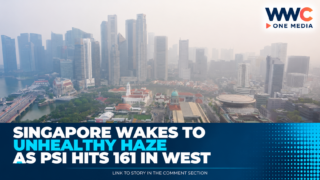
The finding comes as Singapore experiences another period of haze, with authorities warning of elevated to unhealthy air quality in parts of the country. However, the Ministry of Health stressed that it is too early to establish that periodic haze exposure is responsible for the increase in lung cancer among never-smokers.
Lung cancer incidence rising among never-smokers
The issue was raised in Parliament by Bishan-Toa Payoh GRC MP Cai Yinzhou, who asked the Ministry of Health about the trend in lung cancer among never-smokers over the past decade.
He also asked whether the Government had assessed the contribution of long-term exposure to PM2.5, including particles from transboundary haze, and whether the Singapore Cancer Registry could collect environmental exposure information such as residential air quality.
In his written answer, Ong said the 2026 modelling study found an increasing incidence of lung cancer among never-smokers of both sexes.
That does not mean that all of these cases are linked to air pollution.
The ministry said environmental exposure is multifactorial and can depend on a person’s individual circumstances, including measures taken to reduce exposure and the amount of time spent in locations outside the home.
PM2.5 linked to higher lung cancer risk
PM2.5 refers to fine particulate matter measuring 2.5 micrometres or smaller.
Because the particles are extremely small, they can penetrate deep into the respiratory system.
Ong said international studies have found an association between PM2.5 exposure and a higher risk of lung cancer.
However, he stressed an important limitation: the relationship is generally associated with long-term exposure, meaning the effects may take years to become apparent.
This makes it difficult to determine whether Singapore’s periodic episodes of transboundary haze have contributed to the country’s lung cancer trends.
“The effect of our periodic haze exposure will only be known much later when studies are done to correlate environment factors and disease prevalence,” Ong said in the parliamentary reply.
Haze exposure is being considered, but no direct link established
Singapore periodically experiences transboundary haze, particularly when winds carry smoke from vegetation and peat fires in neighbouring parts of Southeast Asia.
The issue has again become relevant this month.
On Oct 7, the National Environment Agency reported that smoke plumes from southern Sumatra and hotspots in Kalimantan were drifting towards Singapore.
At 6pm that day, one-hour PM2.5 readings ranged from 71 to 136 micrograms per cubic metre, classified as Elevated, while the 24-hour Pollutant Standards Index ranged from 105 to 140, within the Unhealthy range.
NEA advised healthy people to reduce prolonged or strenuous outdoor physical activity when the 24-hour PSI reaches the Unhealthy range.
Elderly people, pregnant women and children were advised to minimise prolonged or strenuous outdoor exertion, while people with chronic heart or lung conditions were advised to avoid such activity when the PSI is Unhealthy.
But the current haze episode should not be interpreted as evidence that it is causing the country’s rising lung cancer incidence.
Cancer develops over much longer periods, and establishing a relationship between environmental exposure and disease requires detailed long-term data.
Smoking remains the biggest risk factor
Despite the growing concern about lung cancer among people who have never smoked, the Health Ministry emphasised that smoking remains the top risk factor for lung cancer.
This distinction is important because lung cancer can develop for many reasons.
A person’s overall risk can be influenced by tobacco exposure, environmental pollution, occupational exposures, genetics and other factors.
The ministry said environmental exposure is “multifactorial”, meaning that it would be difficult to attribute an individual’s cancer to a single source of pollution based simply on where that person lives.
Other lifestyle measures can also reduce cancer risk. The ministry recommends smoking cessation, limiting alcohol consumption and maintaining a healthy diet as ways of reducing overall cancer risk.
Calls for better environmental data
The parliamentary question also raised the possibility of expanding the information collected through Singapore’s national cancer surveillance system.
Cai asked whether the Singapore Cancer Registry could collect environmental exposure data, including residential air quality, to help researchers investigate potential relationships between pollution and cancer.
Such information could potentially allow researchers to compare long-term exposure patterns with disease prevalence.
But the Government has not indicated that residential air quality alone would provide a complete answer.
People spend substantial amounts of time outside their homes — commuting, working, studying and travelling — meaning that exposure can vary significantly throughout the day.
Individual behaviour can also affect exposure, including whether people spend more time indoors during haze episodes or use air filtration and other mitigation measures.
Singapore has already examined screening for non-smokers
The latest findings also come months after Parliament discussed whether Singapore should expand lung cancer screening to people who have never smoked.
In May, the Ministry of Health said it was reviewing existing lung cancer screening guidelines following questions about whether low-dose computed tomography (LDCT) should be offered more broadly to non-smokers.
The discussion reflects the challenge posed by changing patterns of disease.
Traditional lung cancer screening programmes have generally focused on people at higher risk because of factors such as age and significant smoking history. Expanding screening to large numbers of people at lower individual risk could also result in false positives, unnecessary procedures and additional healthcare costs.
Singapore therefore continues to assess whether its screening approach should be adjusted to reflect local disease patterns.
Why the trend matters
The rise in lung cancer among never-smokers is particularly significant because it points to a group that may not fit traditional assumptions about who is at risk.
It also raises questions that cannot be answered by smoking statistics alone.
If researchers can identify environmental, genetic or other factors contributing to the increase, that could eventually help improve prevention strategies and determine whether certain groups would benefit from earlier detection.
But the Health Ministry’s latest response is cautious.
The Government has acknowledged that PM2.5 is associated with increased lung cancer risk based on international evidence, while also making clear that there is currently no established causal link between Singapore’s periodic haze exposure and the rising incidence of lung cancer among local never-smokers.
For now, the focus is on collecting better evidence.
As Singapore continues to experience periodic haze and other forms of air pollution, long-term monitoring of both environmental conditions and cancer incidence could provide a clearer picture of whether the two trends are connected.
Until then, officials continue to emphasise that smoking remains the country’s most important established risk factor for lung cancer, while environmental pollution is an area requiring further study.