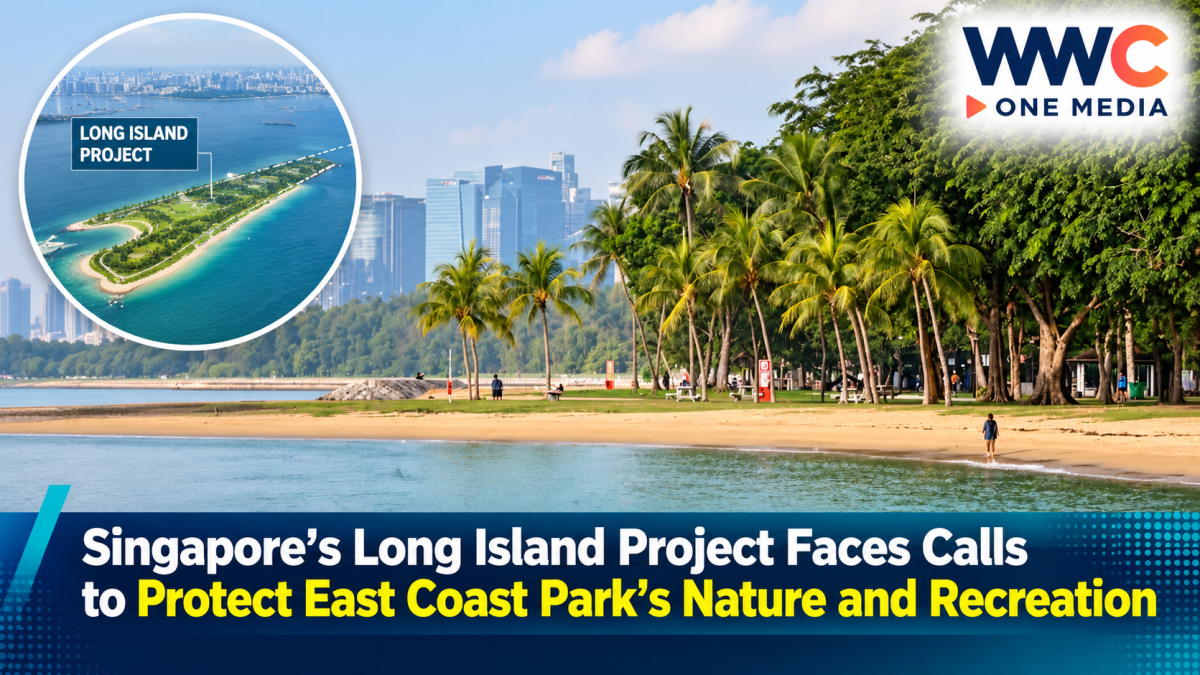
SINGAPORE — Singapore’s ambitious Long Island coastal-protection project is entering a new phase, but public feedback is putting two priorities firmly in the spotlight: preserving East Coast Park’s recreational character and limiting the impact on marine and coastal ecosystems.
The Housing and Development Board (HDB) received 430 responses to an environmental study covering preparatory works for the proposed Long Island project. Among the recurring concerns were the need to protect recreational activities and minimise effects on habitats and marine life along East Coast Park.
The feedback comes as Singapore prepares to begin preparatory works from the end of 2026, ahead of the much larger reclamation project planned for the future.
Bedok Jetty, Longkang Point Among Recreational Concerns
East Coast Park is widely used for cycling, jogging, swimming, fishing and other leisure activities.
Public feedback specifically highlighted popular locations such as Bedok Jetty, a fishing spot, and Longkang Point, known for seasonal surfing.
HDB said it intends to minimise disruption to existing recreational activities during the preparatory works. Beaches will remain accessible, while exercise paths and tracks will continue to be available for park users.
The works will be phased, with the first phase taking place offshore. Authorities have said the preparatory works will be carried out progressively to reduce disruption to water-based activities.
Marine Life Is Another Major Concern
The environmental discussion extends beyond recreational use.
Feedback called for clearer information on how corals, seagrass and marine animals could be affected by the works.
East Coast Park is also an important nesting area for the critically endangered hawksbill turtle. HDB said agencies will work with experts to explore measures that can reduce risks to nesting turtles.
The National Parks Board is already involved in monitoring the shoreline for turtle nests and relocating eggs to a hatchery at the Sisters’ Islands Marine Park when appropriate.
The government’s environmental study found that some coral and seagrass areas could experience short-term, localised effects from sediment plumes. However, it assessed the majority of nearby coral and seagrass habitats, including those around Sisters’ Islands Marine Park, as largely unaffected by the preparatory works.
Why Singapore Is Building Long Island
Long Island is designed primarily as a long-term coastal protection project.
Singapore faces rising risks from sea-level rise because significant portions of the island are low-lying. The proposed project would create a new coastal defence system while also creating additional land and a future reservoir.
The Urban Redevelopment Authority describes Long Island as part of Singapore’s broader strategy to strengthen coastal resilience and prepare for future land and water needs.
The project is expected to take decades to plan, design and implement.
That means the preparatory works now being planned do not represent the final shape of Long Island.
Why Not Simply Build a Larger Seawall?
One of the alternatives considered was a new seawall reaching up to about 3 metres high along the East Coast from Marina East to Tanah Merah.
However, authorities said that option would require tidal gates and pumping stations occupying an area equivalent to roughly 15 football fields.
HDB said such infrastructure would take up substantial space within the existing East Coast Park and could significantly affect accessibility for recreational, sports and park users.
The Long Island approach is therefore being developed as a broader coastal-protection strategy rather than simply placing a large seawall along the existing shoreline.
Sea Sports Will Face Some Disruption
While land-based activities are expected to continue, some water-based activities will be affected.
Government assessments identified kiteboarding as the most affected sea sport, with other water sports expected to experience minor to moderate impacts.
Authorities plan to phase the works and work with affected users to identify alternative areas for activities.
The second phase of preparatory works east of Bedok Jetty is also being timed around major international sporting events. The government has said this phase will begin only after events including the 2029 SEA Games, allowing water sports to continue in that area in the meantime.
Preparatory Works Are Not the Final Reclamation
This distinction is crucial.
The environmental study released in June focused on preparatory works, including activities such as removing seabed obstructions and moving materials into the waters.
Singapore’s authorities say the eventual reclamation profile has not been finalised.
Further environmental and engineering studies are continuing, and the main reclamation works will only proceed after additional technical assessments, mitigation planning and public engagement.
The government says another phase of public engagement is expected to begin from the end of 2026.
Balancing Climate Protection With Nature
The Long Island project illustrates one of Singapore’s central planning challenges: protecting a densely developed coastal city from climate risks while preserving the environmental and recreational qualities that residents value.
The environmental study predicted an overall minor impact from the preparatory works, while also identifying specific areas requiring mitigation and monitoring.
An Environmental Monitoring and Management Plan is expected to track factors including water quality, suspended sediment, noise and dust throughout the preparatory works. Silt screens will also be used to contain sediment plumes where required.
At the same time, public feedback shows that the project is being watched not only as a climate-adaptation effort, but also for what it could mean for one of Singapore’s best-known recreational coastlines.
The bigger question now is how Singapore can build a stronger defence against rising seas without losing the natural and recreational character that makes East Coast Park so valuable to the public.