
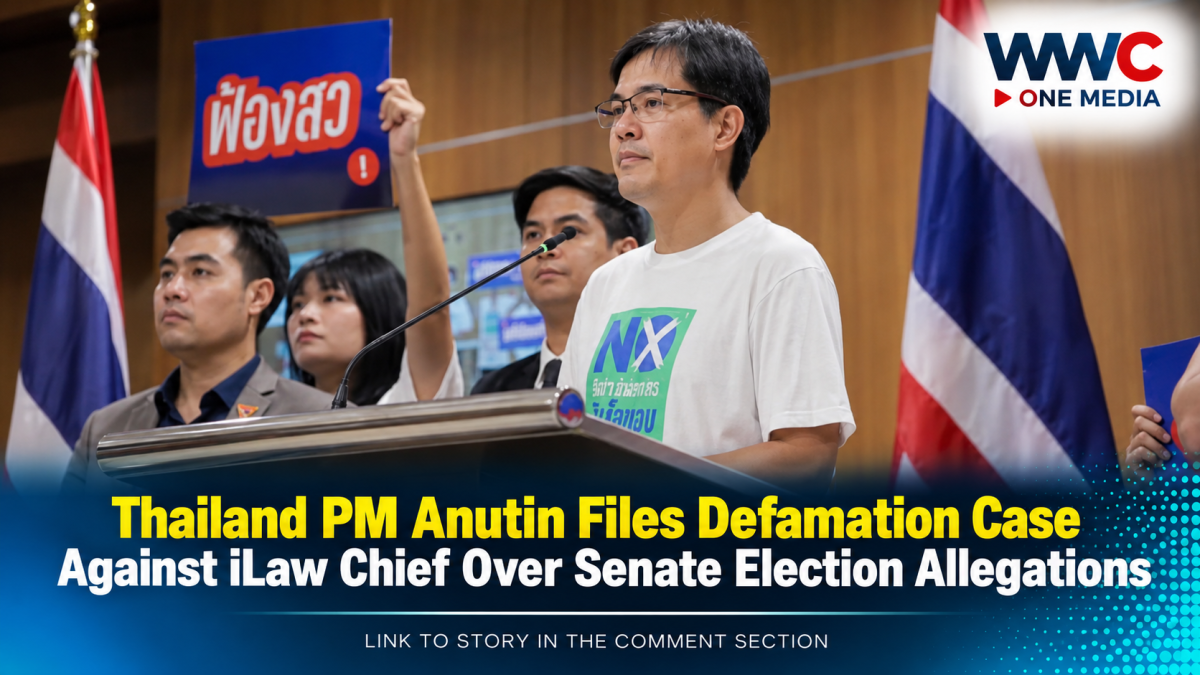
BANGKOK, Thailand — Prime Minister Anutin Charnvirakul has filed a criminal defamation-by-publication lawsuit against Yingcheep Atchanont, director of Thai legal watchdog iLaw, over statements linking the prime minister to alleged irregularities surrounding Thailand’s 2024 Senate selection.
The lawsuit was filed at Bangkok’s Criminal Court on Tuesday, September 15, by lawyer Sittichok Singhaseni, acting under authorization from Anutin. According to Nation Thailand, the case was brought in Anutin’s personal capacity rather than in the name of the ruling Bhumjaithai Party.
The court has scheduled a preliminary examination for December 14, 2026.
What Triggered the Lawsuit?
The dispute centers on comments Yingcheep made during an interview at Parliament on July 21, when he discussed alleged collusion surrounding the 2024 Senate selection and referred to Anutin as being among those allegedly connected to the matter.
Anutin’s legal team maintains that the allegations are false and defamatory. The lawsuit seeks a judicial determination concerning the statements but does not seek monetary compensation, according to reports from Nation Thailand and Bangkok Post.
Yingcheep and iLaw have been involved in monitoring and documenting issues surrounding Thailand’s Senate selection process, making the dispute part of a wider political and legal controversy over the 2024 Senate election.
Lawsuit Comes as Senate Case Moves Forward
The legal action comes shortly after Thailand’s Election Commission took another major step in the broader Senate controversy.
On September 14, the Election Commission voted to refer 26 sitting senators to the Supreme Court over allegations related to the 2024 Senate selection. Reports said the commission decided that there were insufficient grounds to proceed against the Bhumjaithai-linked figures under separate allegations of political assistance.
The developments have kept the disputed Senate selection process in the political spotlight.
The 2024 selection involved a complex system in which candidates were selected through multiple rounds rather than by a direct nationwide popular vote. Allegations of organized coordination and manipulation have been examined by Thai authorities and civil-society groups.
Anutin Had Announced Legal Action Earlier
The lawsuit was not entirely unexpected.
Anutin announced in July that he intended to pursue a criminal defamation complaint against Yingcheep after iLaw presented information concerning alleged Senate-election irregularities. At the time, representatives of Bhumjaithai said other people named in iLaw’s submissions could also consider legal action.
Yingcheep subsequently challenged the allegations and called for the people implicated in the Senate controversy to explain their positions publicly.
Rights Groups Raise Free-Expression Concerns
The case has also drawn attention from international human-rights organizations.
The International Federation for Human Rights (FIDH) and the World Organisation Against Torture (OMCT) previously urged Anutin not to pursue the criminal complaint, arguing that Yingcheep’s work involved monitoring public affairs and promoting democratic accountability.
Those organizations’ statements represent their assessment of the case; they do not determine the legal merits of the defamation complaint.
Meanwhile, Anutin’s legal representatives have maintained that the lawsuit concerns statements they consider defamatory and that it is being pursued through the courts rather than as a political-party action.
Court Battle Now Shifts to December
The December preliminary examination will be an important procedural stage in determining how the case proceeds.
For now, the lawsuit remains an allegation by Anutin that Yingcheep’s statements constituted criminal defamation. The court has not yet issued a final ruling on the merits of those allegations.
The case places Thailand’s continuing debate over the 2024 Senate selection, political accountability and freedom of expression before the courts.
With the preliminary examination scheduled for December, attention now turns to what evidence and arguments both sides will present — and how the court will handle the increasingly prominent dispute.
WWC ONE MEDIA G.A




Leave a Reply